threads of the sixties
Late 1960's & Early 1970's
1969 Aqua sheath dress
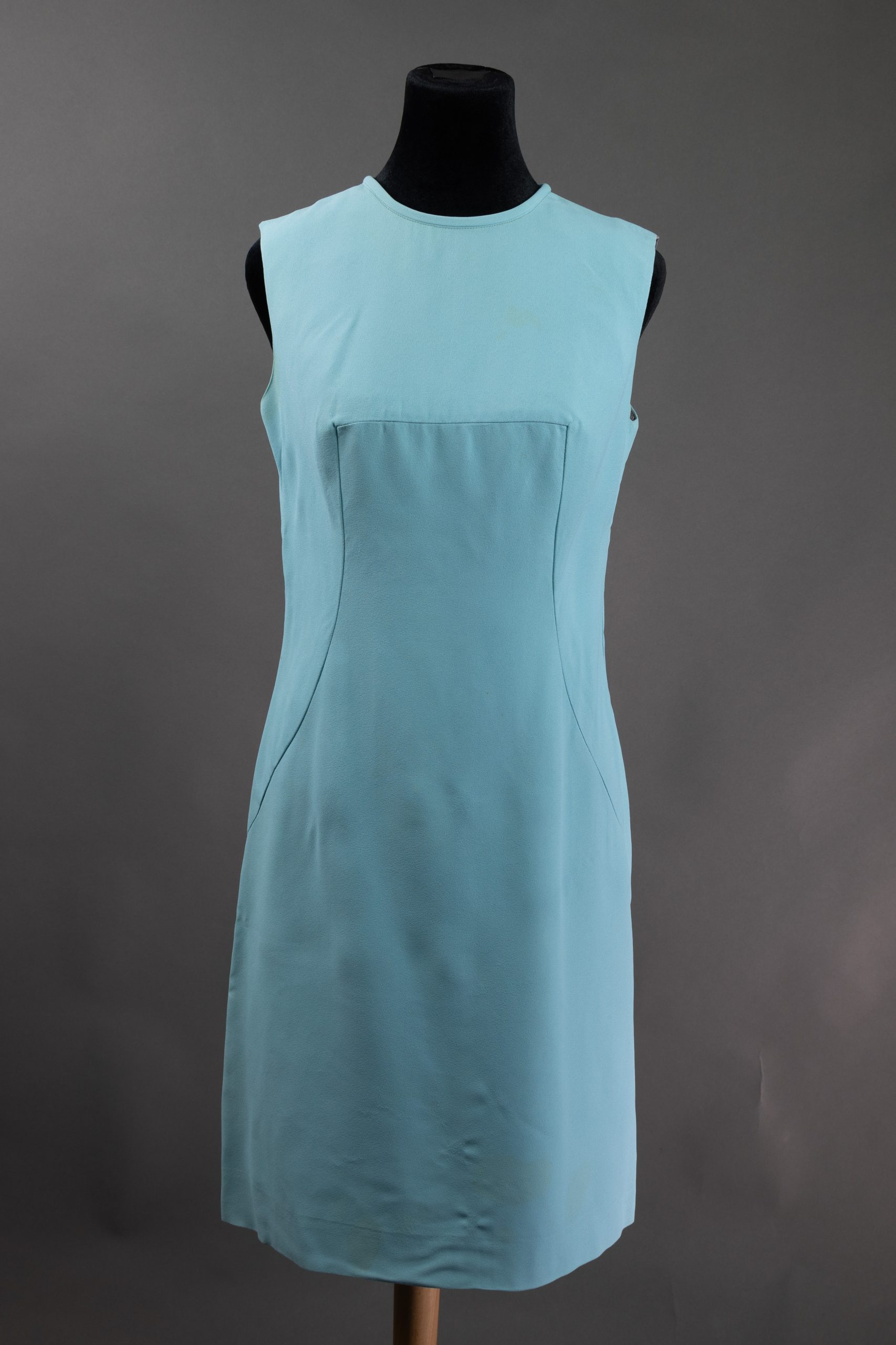
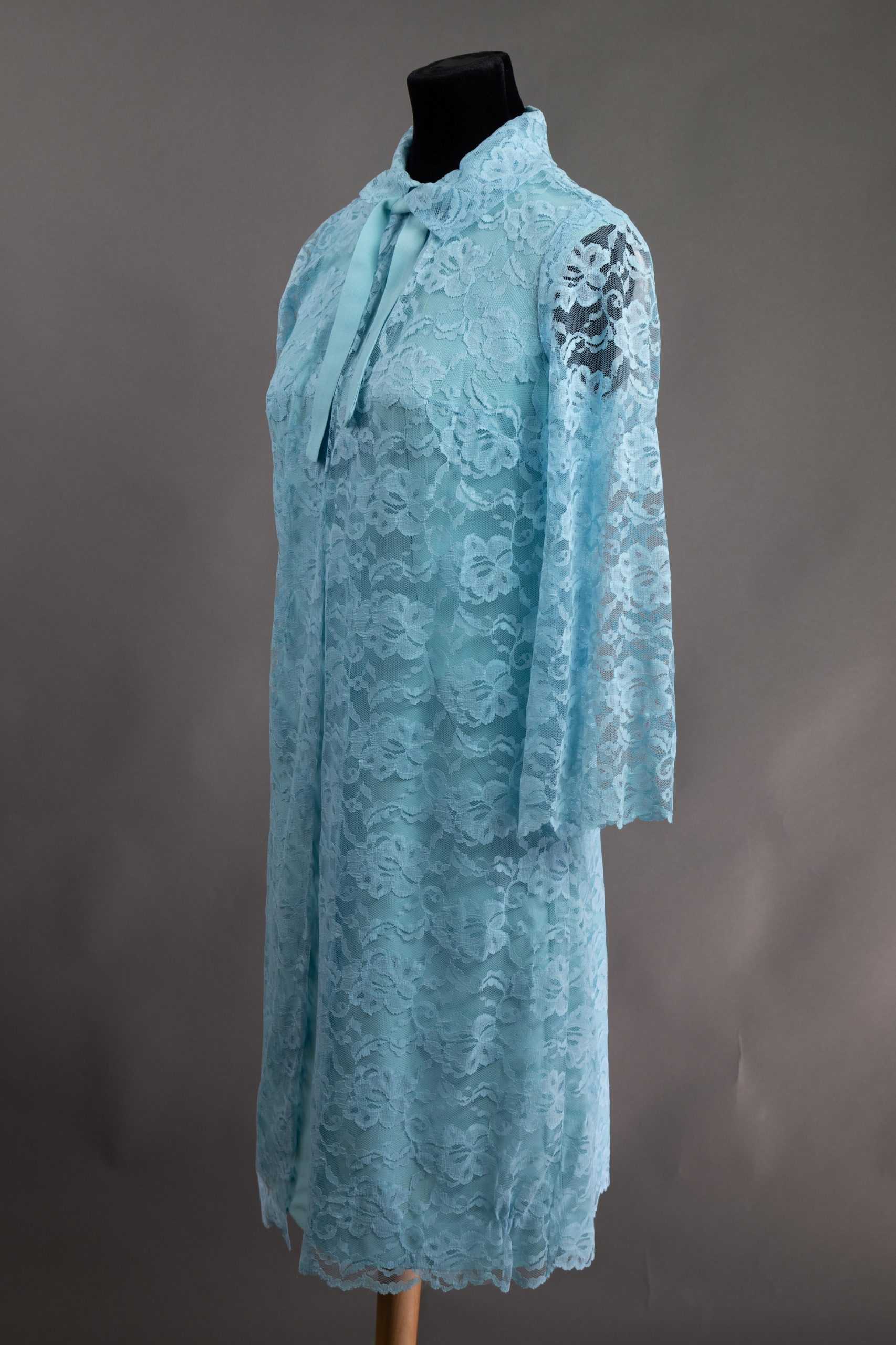
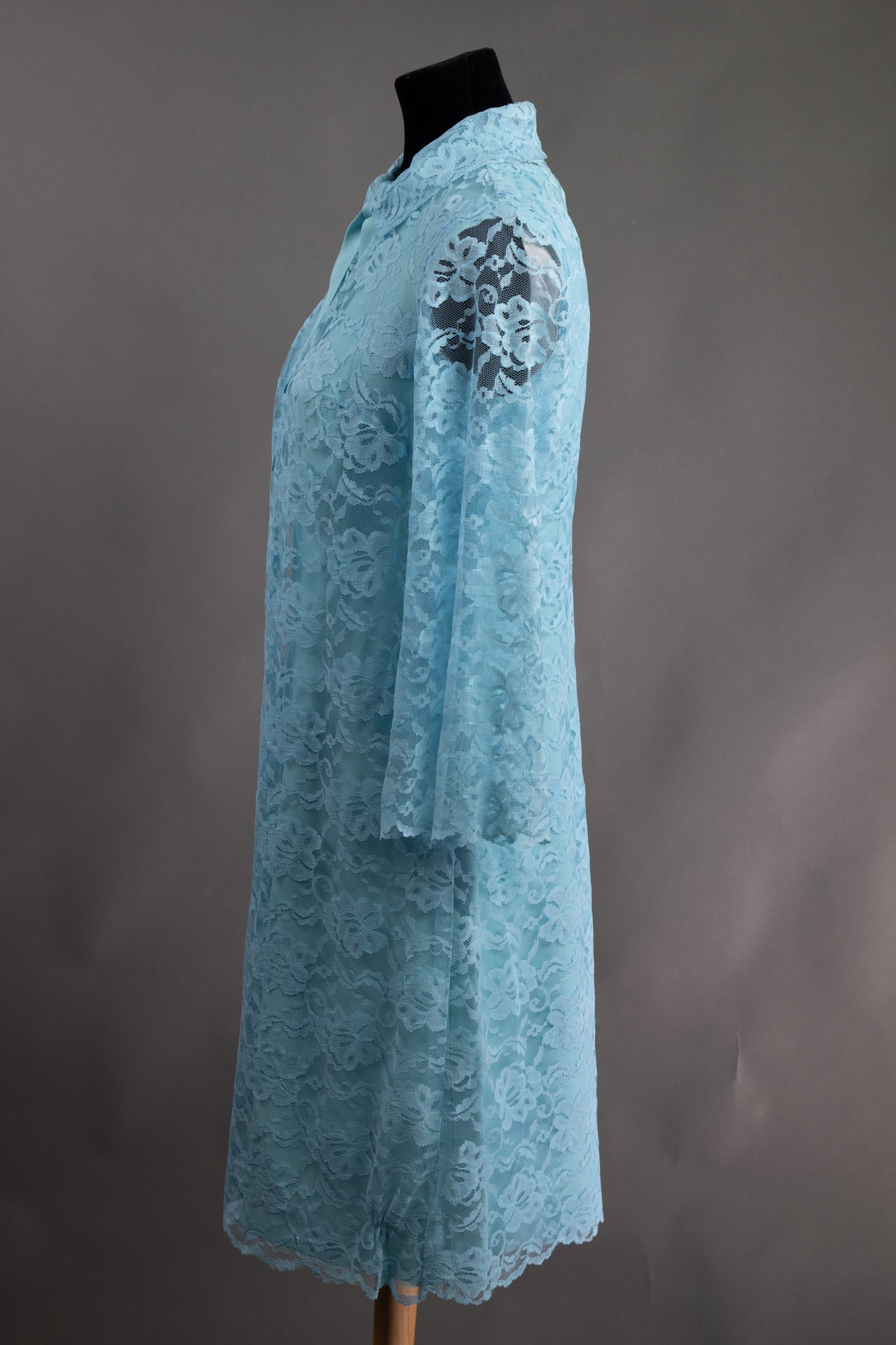
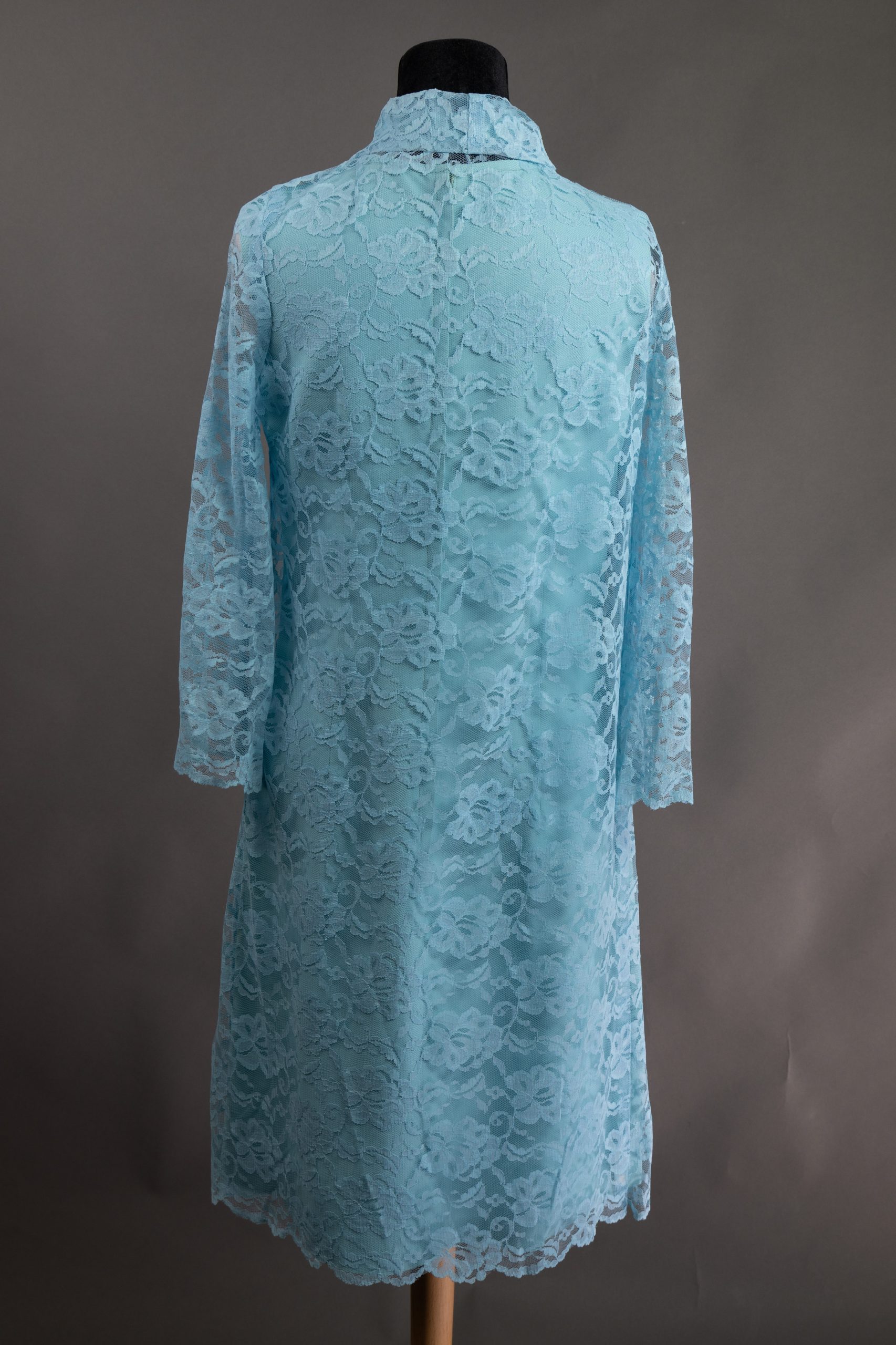
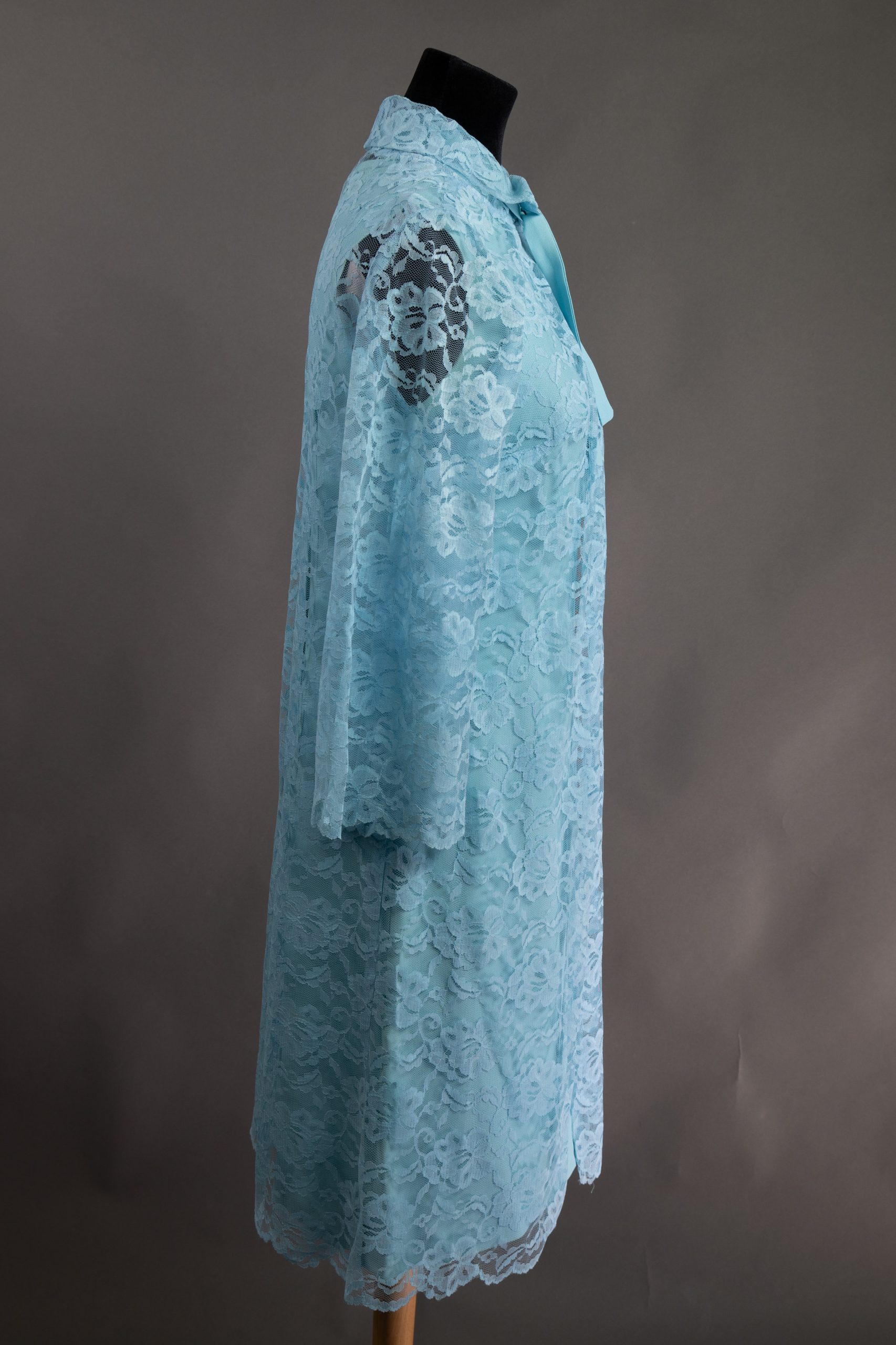
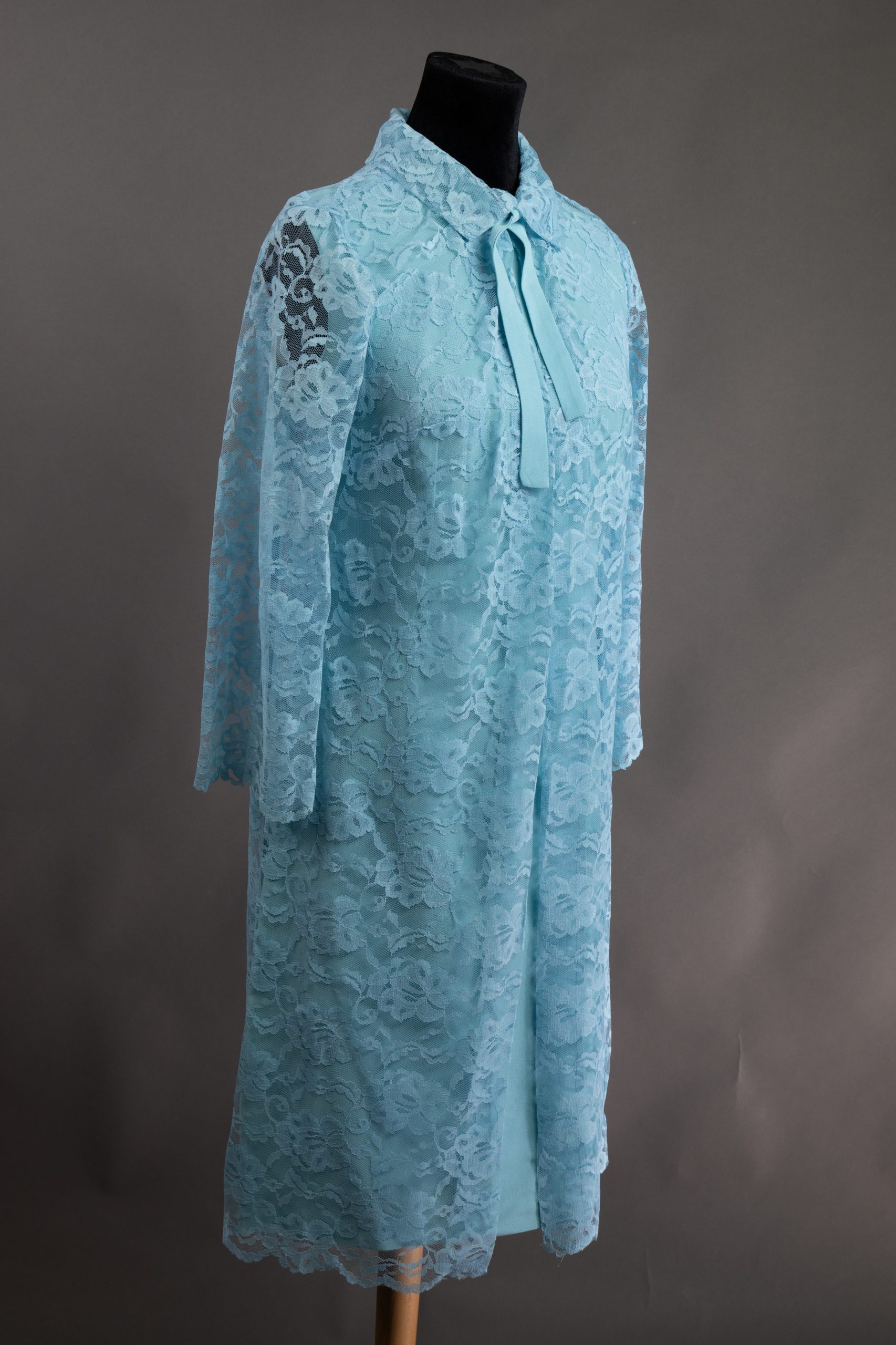
Material: polyester
Donor's story
Margaret Mae Lentz (1925-2023), formerly lived in Bremrerton, now resides in Shelton, WA.
Donor’s daughter Carol Ann divorced Phil Cornish January 20, 1971 and later married Samuel J. Smyth.
Affectionately known as Mimi, Margaret was always the family member who brought everyone together for Thanksgiving or Christmas at John and Margaret’s Bremerton home, or a summertime gathering at Lost Lake. Mimi was born in Elma, Grays Harbor County, WA, on September 27, 1925 as Margaret Mae Newquist and was raised in Tacoma. She and John had three children, son Frank George Lentz and two daughters, Carol Ann Lentz Cornish Smyth, and Janet Lentz Breuel. Mimi’s love of family inspired her to hunt for long lost relatives through her genealogy searches. She was always busy with hobbies, such as photography, making dollhouses, sewing clothing, and creating all sorts of needle work mementos to commemorate special family birthdays and weddings. She loved to waterski and had her last jump in the lake was in 2019.
Donor’s husband, John George Lentz, was born Chehalis 1920, died Bremerton 2005 and is buried at Mountain View Memorial Park in Lakewood WA. He married Mimi in Shelton WA in 1950 when she was 24 and he was 29. He worked as a cutterman (operator of a machine for cutting rolls of paper or to a specific length) for Raijoinier, Inc. in Shelton. After relocating to Bremerton, John worked as a City Street Department equipment operator and by 1982 became Foreman of the City Street Department. Mimi worked as an office secretary for Bremerton School District and volunteered with the Puget Sound Genealogy Society.
Description
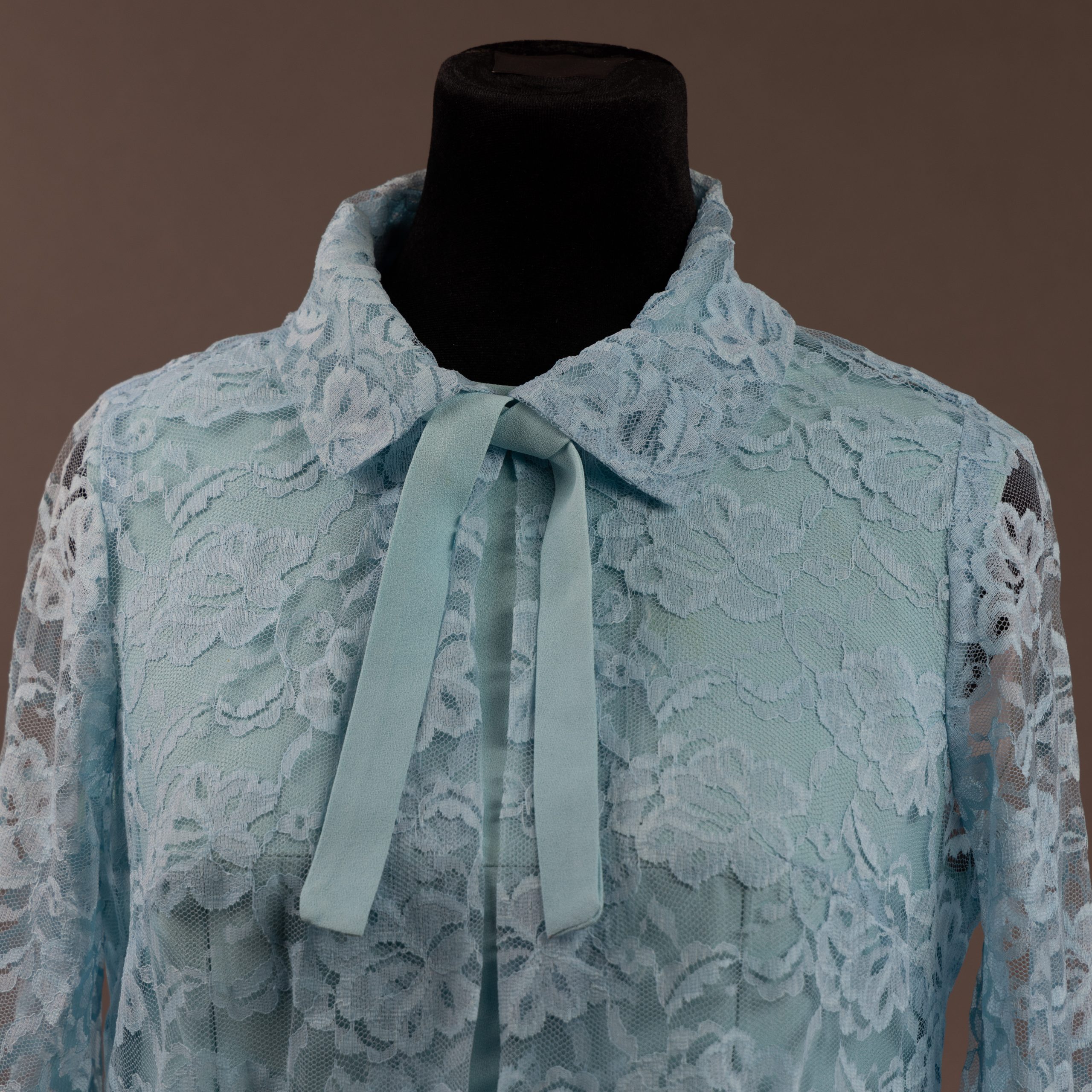
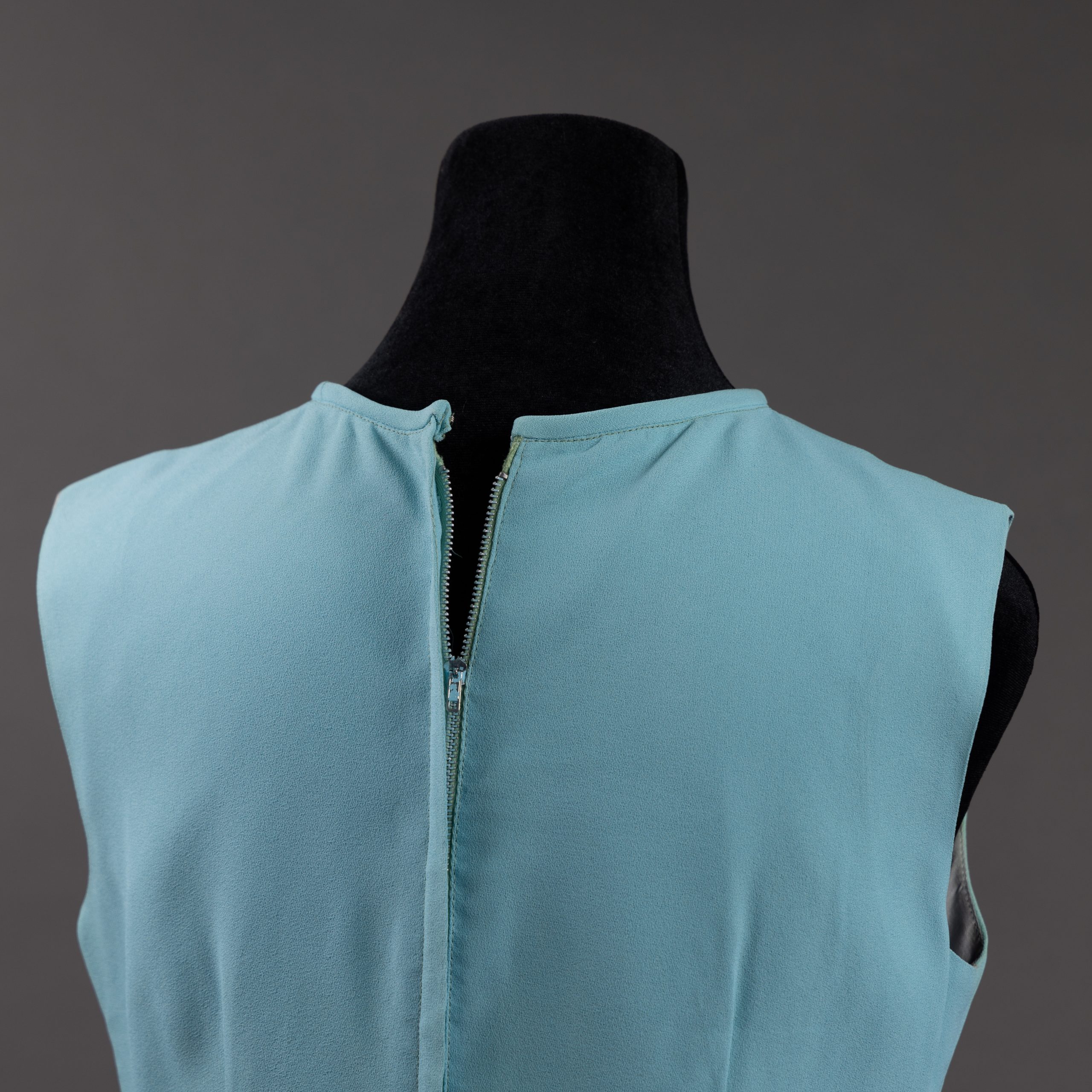
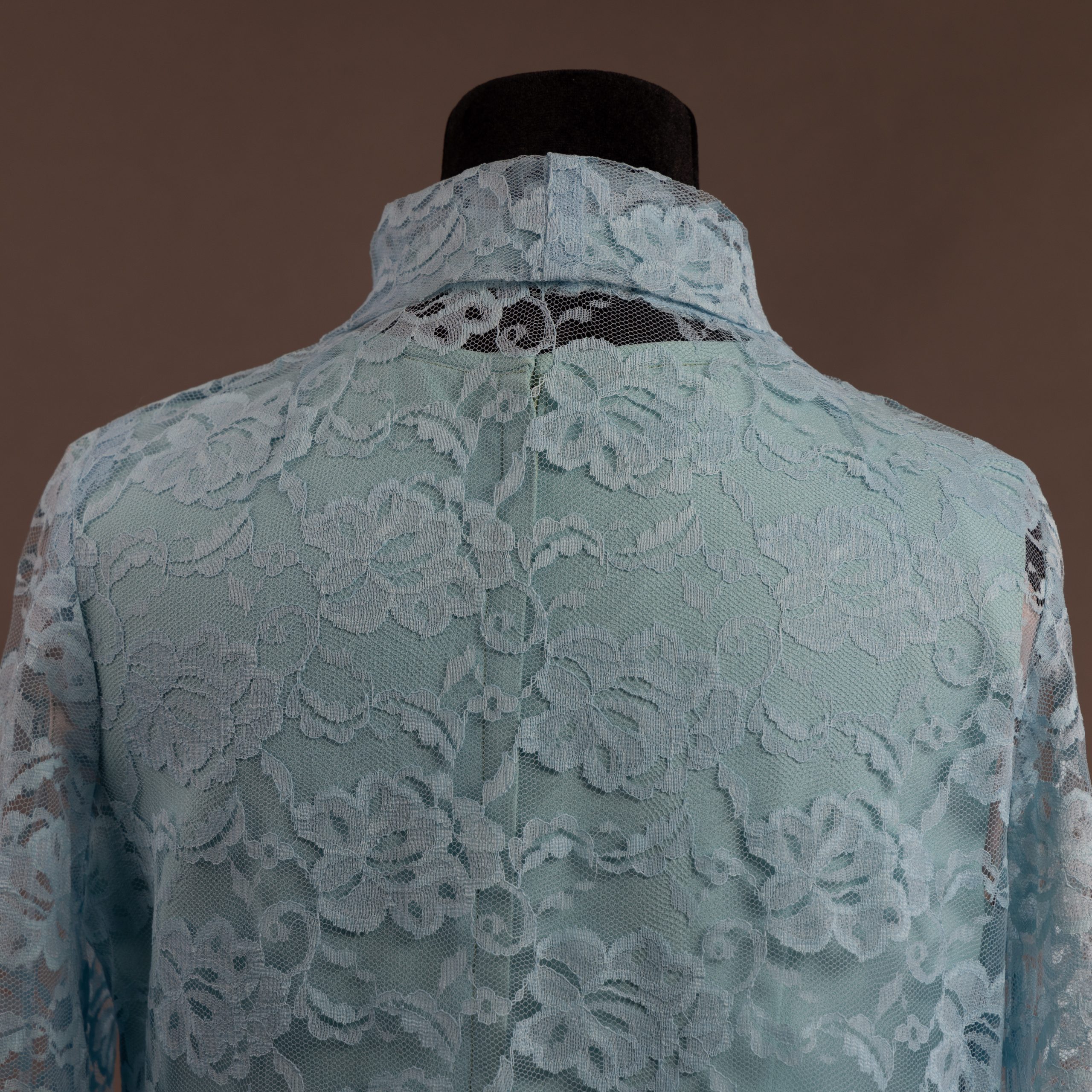
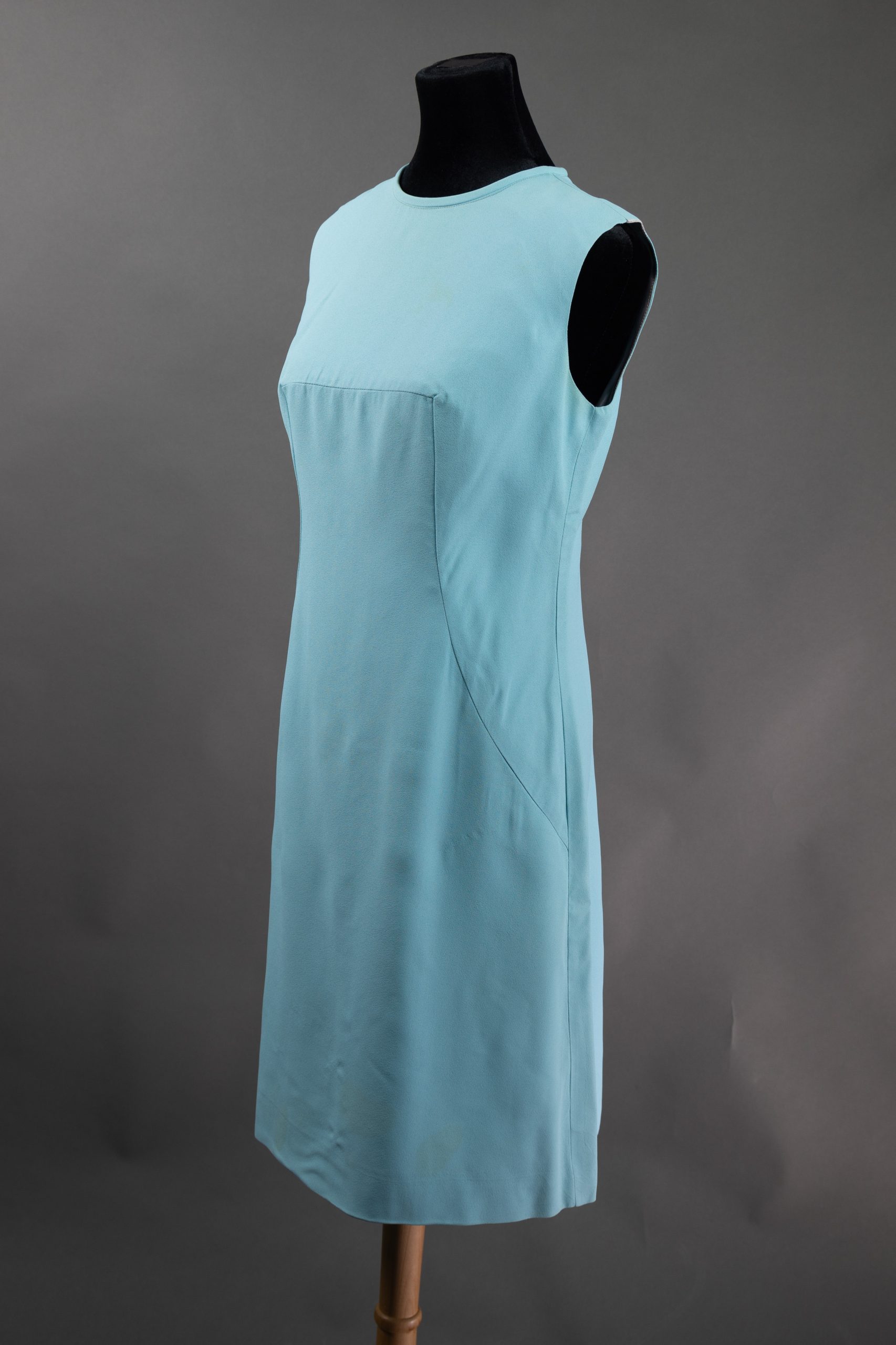
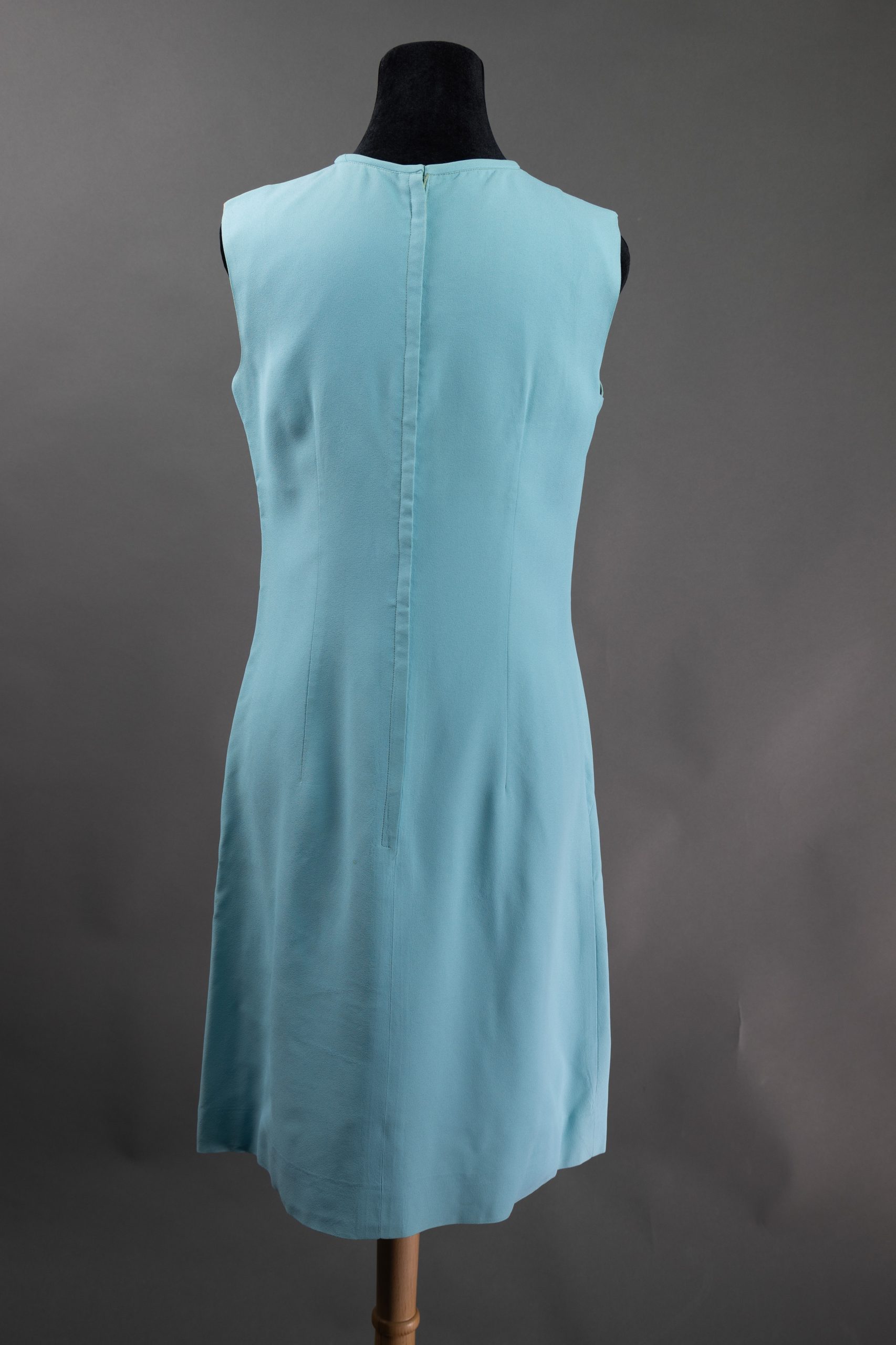
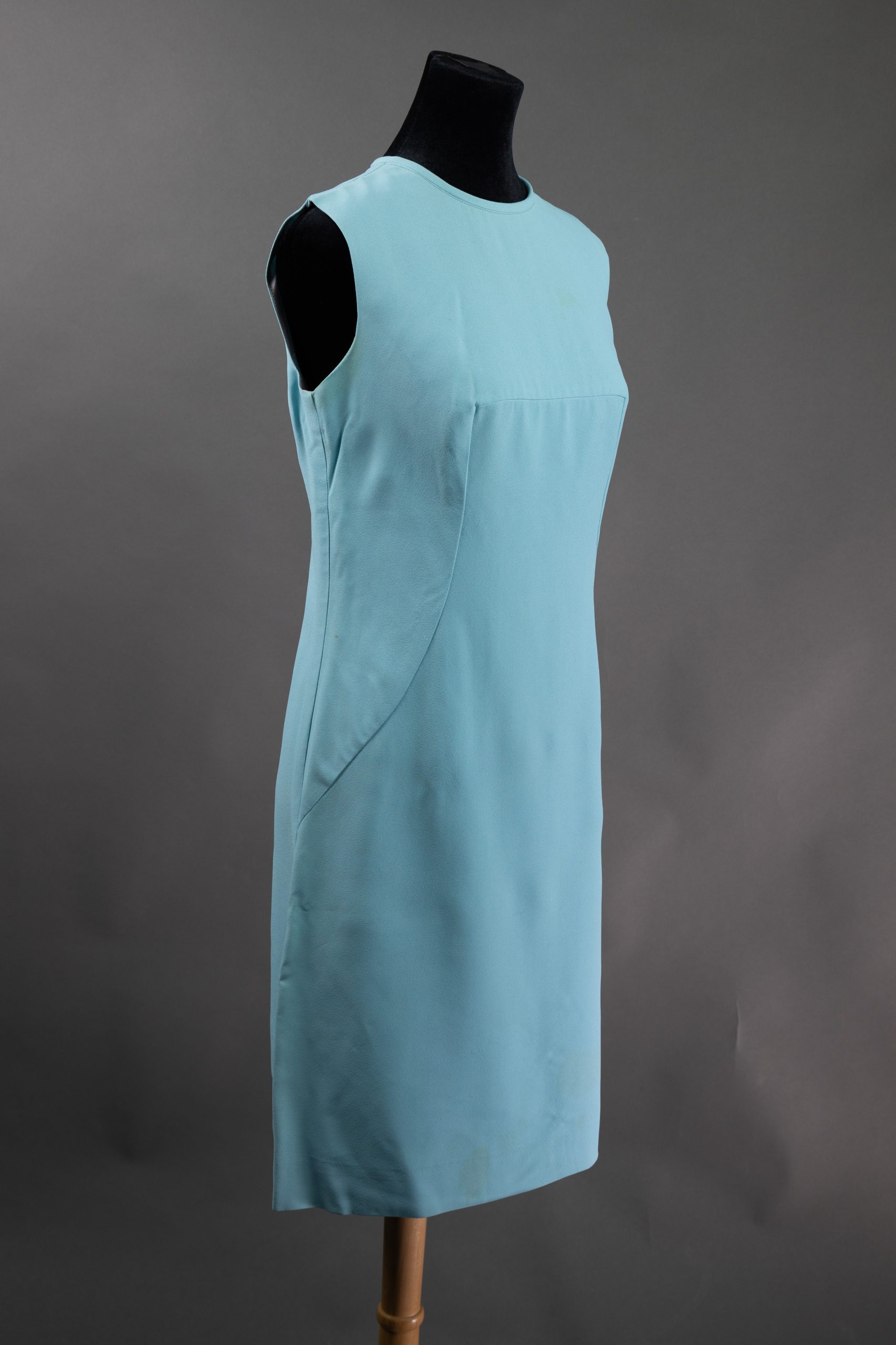
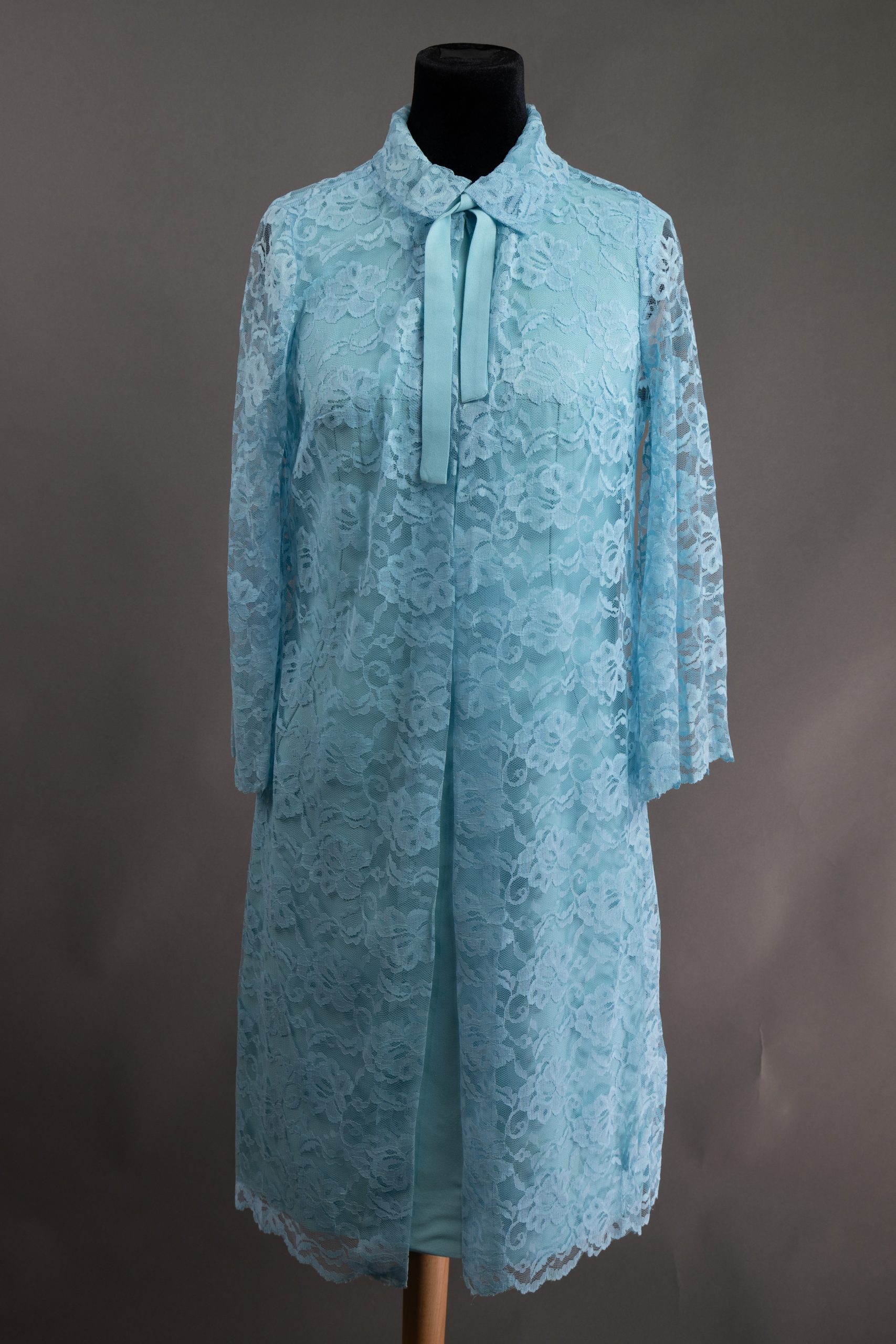
Mother-of-the-Bride dress and lace jacket worn by donor for her daughter Carol Ann’s wedding September 6, 1969, to Philip Carter Cornish at the United Methodist Church, 1150 Marine Drive, Bremerton. Shift dress is classic 1960s style: knee-length aqua polyester crepe with aqua acetate lining and a metal back zipper. Bust darts curve to hips. A matching unlined aqua lace dress-length jacket is also polyester and features a scalloped hem. No label—both garments were made by the donor. Unknown if she used a commercial dress pattern or designed the outfit herself.
Shift dress context
The 1920s flapper’s sack dress evolved in the 1960s into a modified form called the shift. A shift dress is a simple, short (at or above-the-knee) dress. The bust is fitted with darts, and the skirt is either cut straight or with a slight A-line. The dress lacks waist definition and hangs from the shoulders. Shift dresses were originally sleeveless. In the 1920s designers such as Chanel started to create loose, corsetless dresses which were worn by flappers as the antidote to stiff, corseted Edwardian apparel. When the shift dress became popular in the late 1950s and early 1960s, American youth culture was at its height. The dress represented the young, free and revolutionary attitudes of the time. Designers such as miniskirt pioneer Mary Quant took up the style for street wear and couture designers such as Givenchy and Balenciaga designed shift dresses for their affluent clients. Typically the shift dress is minimalist in its detailing. This lack of embellishment is key to its very simple look. The de-emphasized waist allows women to move around freely without constraints. This style tends to downplay and sometimes conceals female curves but is definitely a comfortable choice.