threads of the sixties
Early 1960's
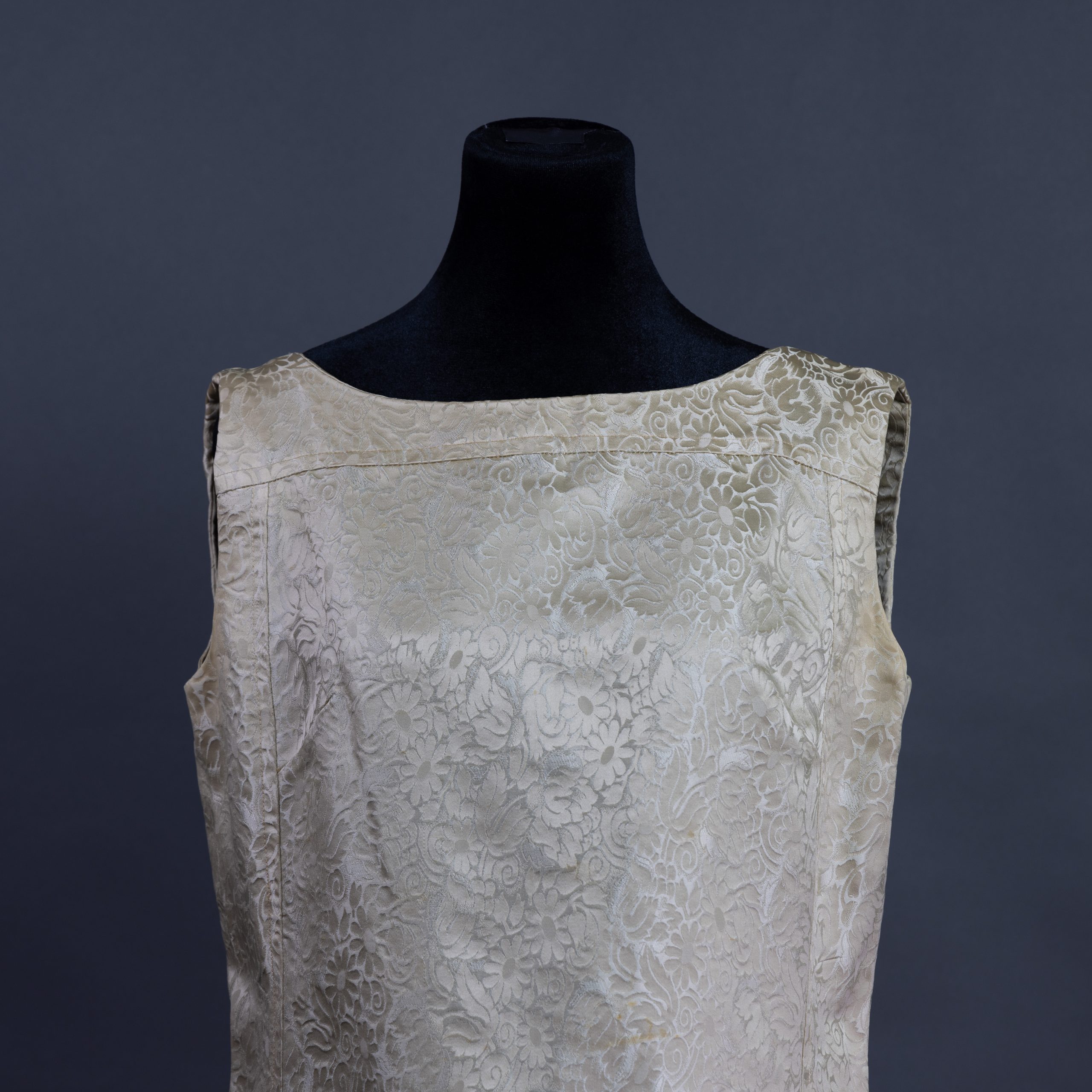
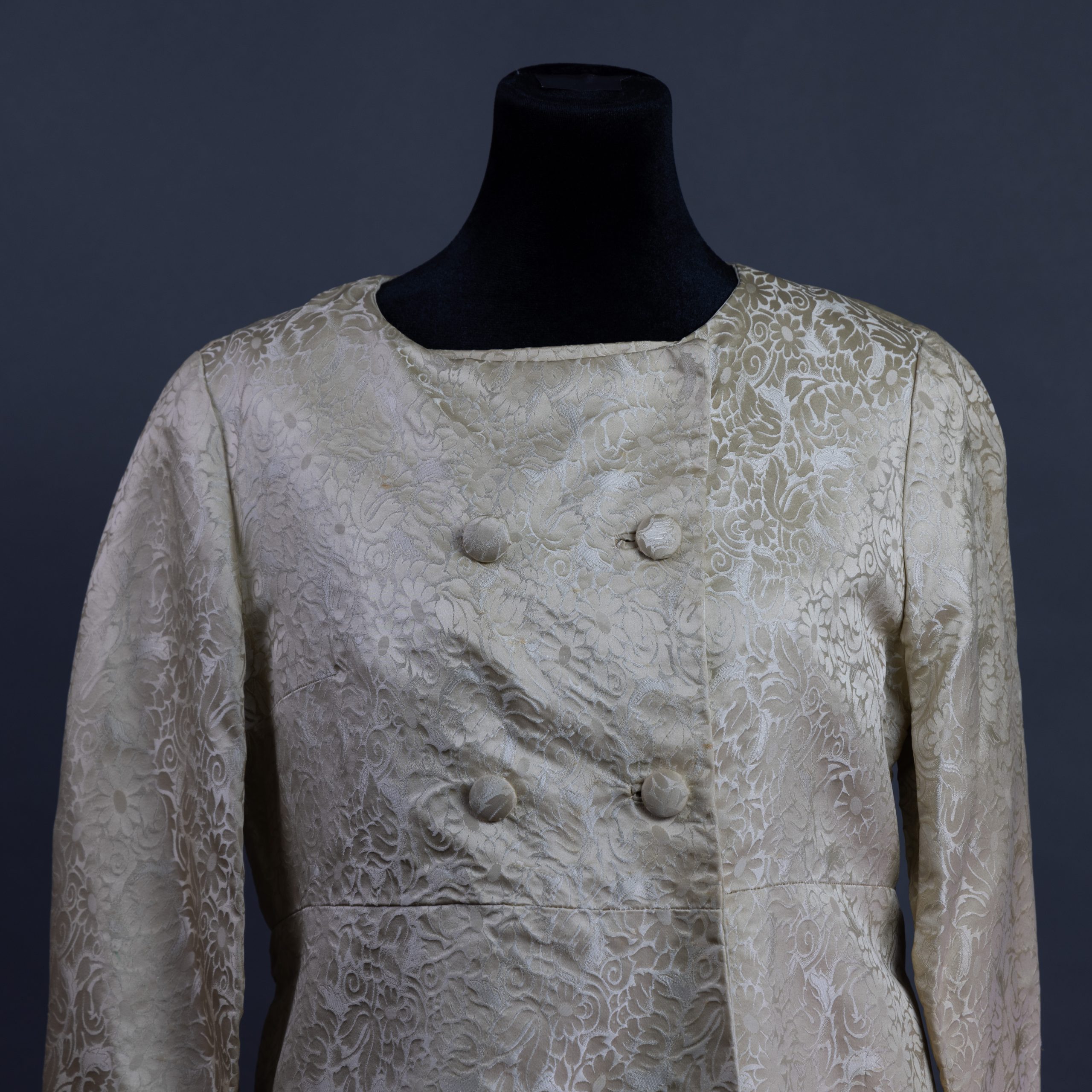
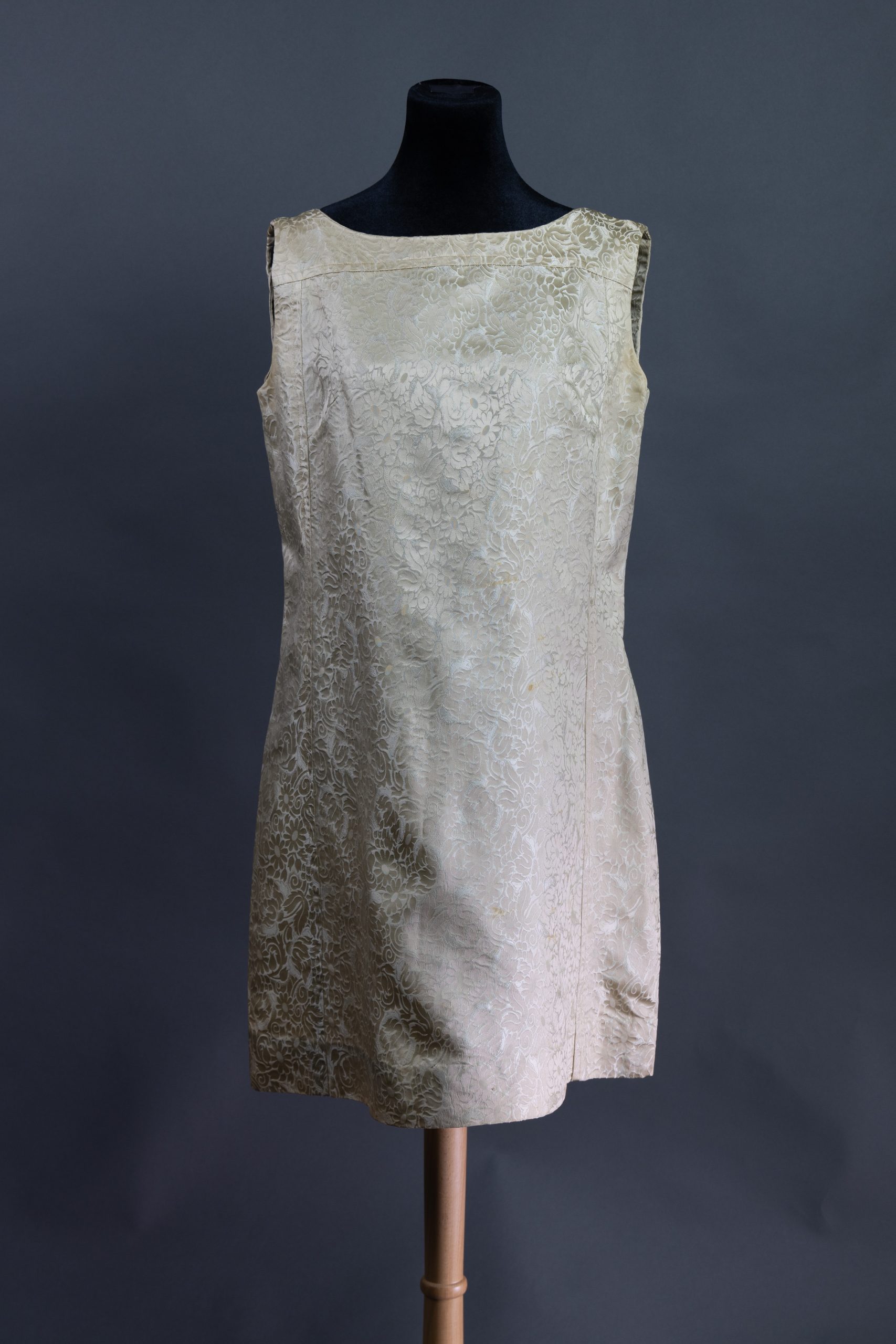
1963 Champagne gold matching evening dress and coat
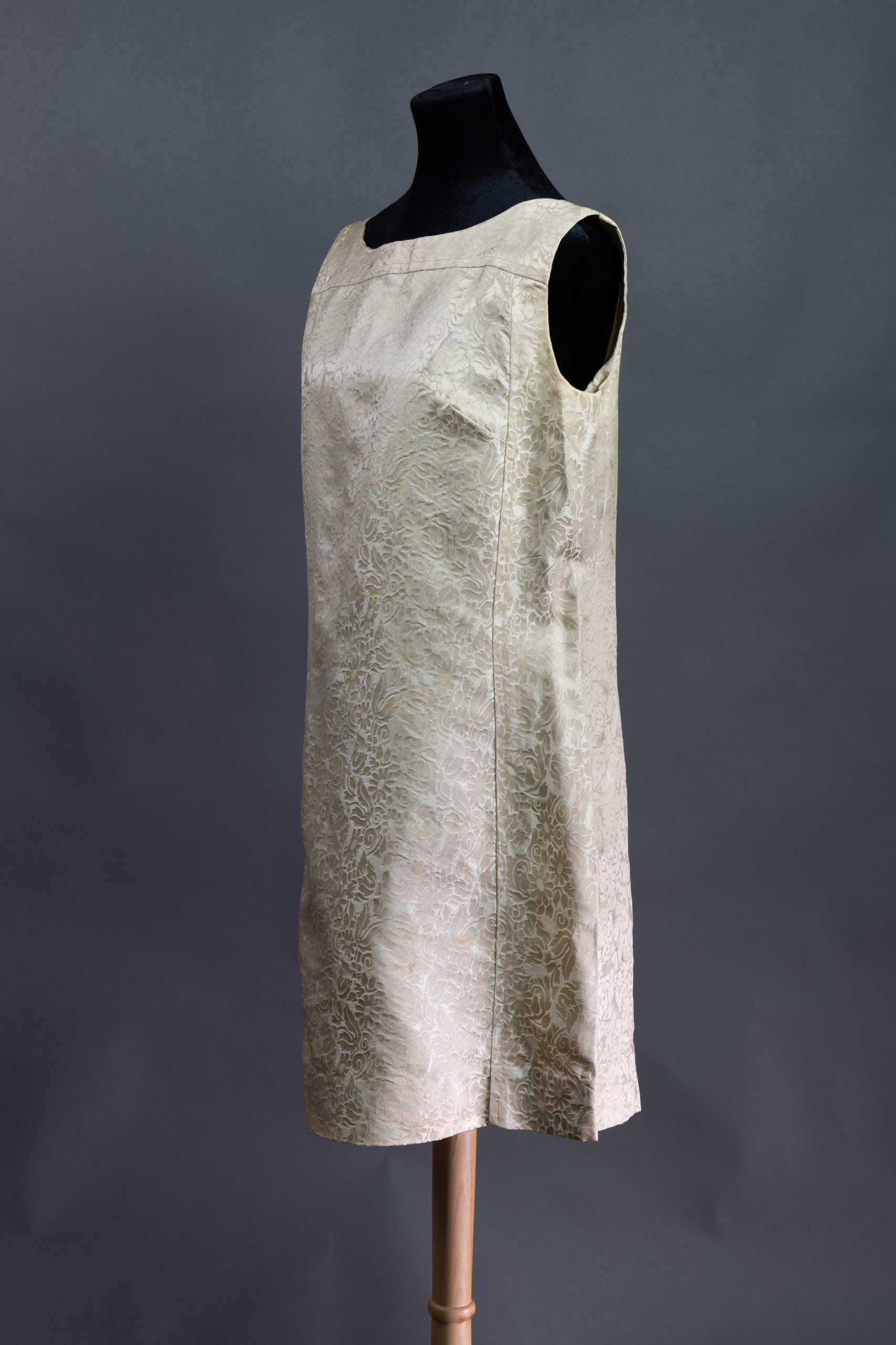
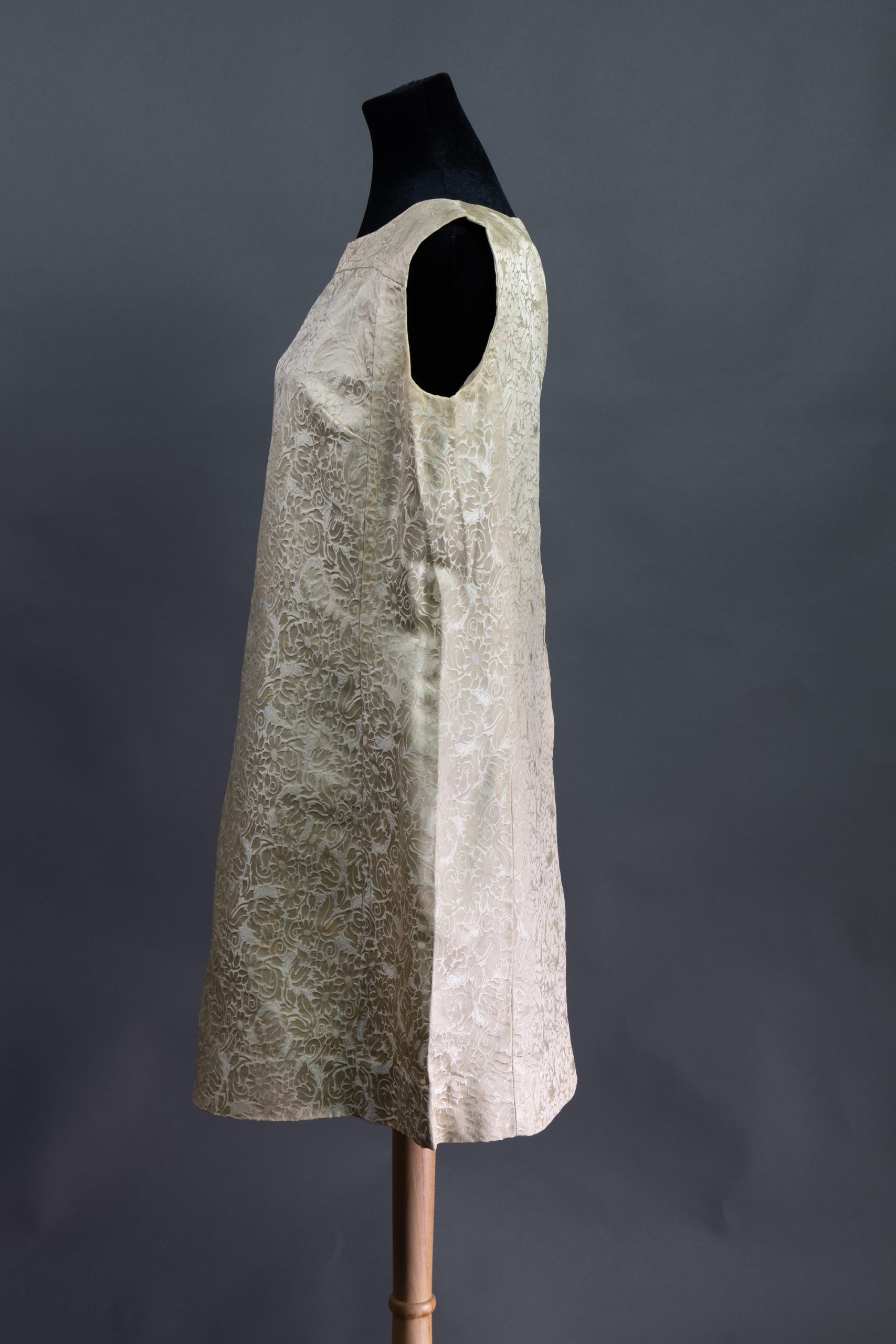
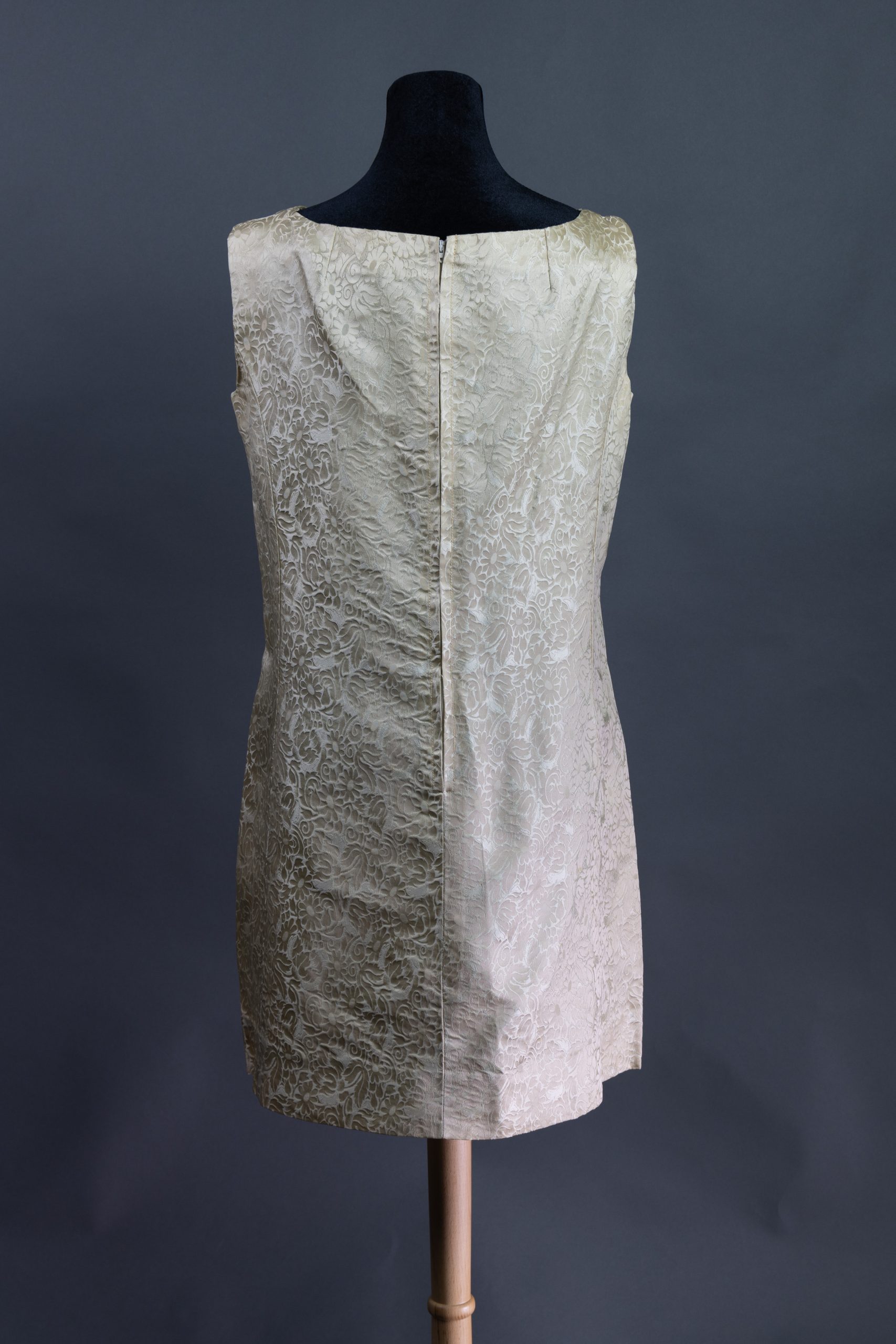
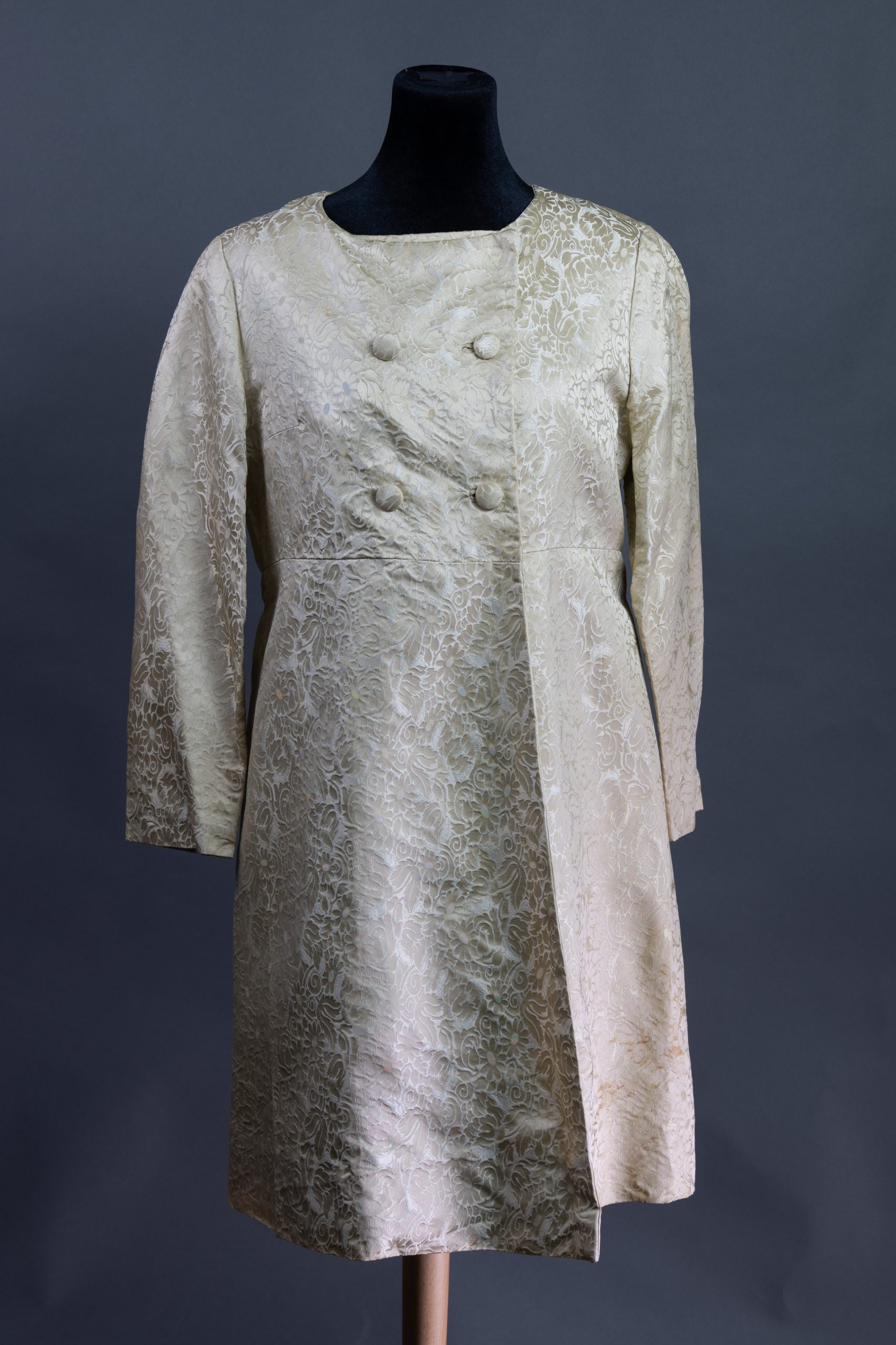
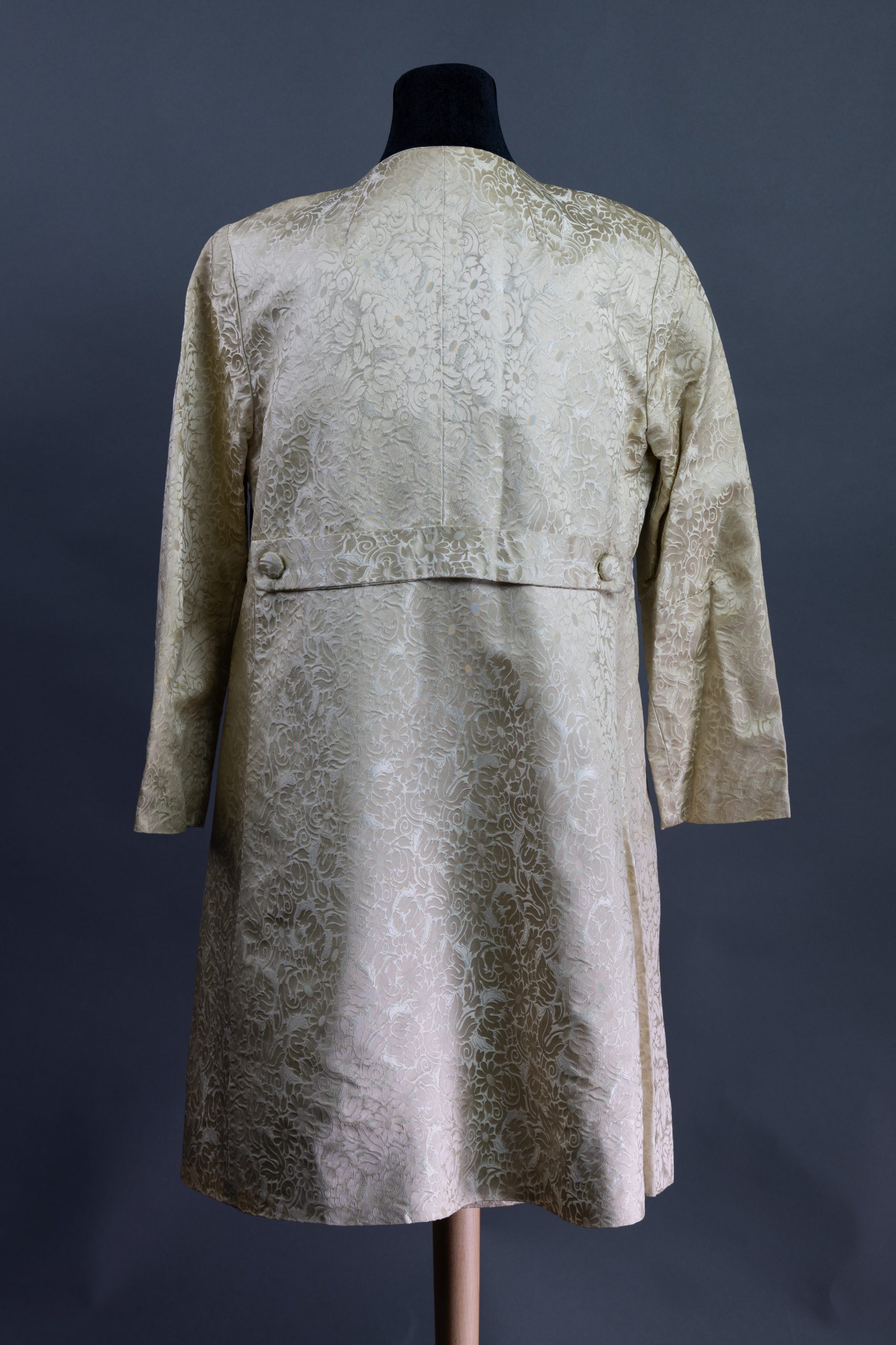
Material: likely polyester
Donor's story
Carolyn McClurkan, resident of Bremerton, WA.
McClurkan grew up in Memphis and met her husband, pediatrician J.M. (Mike) McClurkan, when she was in graduate school at Tulane University in New Orleans and he was attending there as a medical student. She earned a master’s degree in Spanish, which helped launch her interest in history and culture. While her husband served as commanding officer of the Navy hospital in Guam, she began working at the Micronesian Area Research Center at the University of Guam. Later she earned a second master’s degree from the University of Washington in Library and Information Science and became a member of the Academy of Certified Archivists. She has archived many interesting collections, including those of Dorothy Stimson Bullitt, founder of KING-TV in Seattle. The bound button holes she stitched for this coat reveal an accomplished sewer.
Description
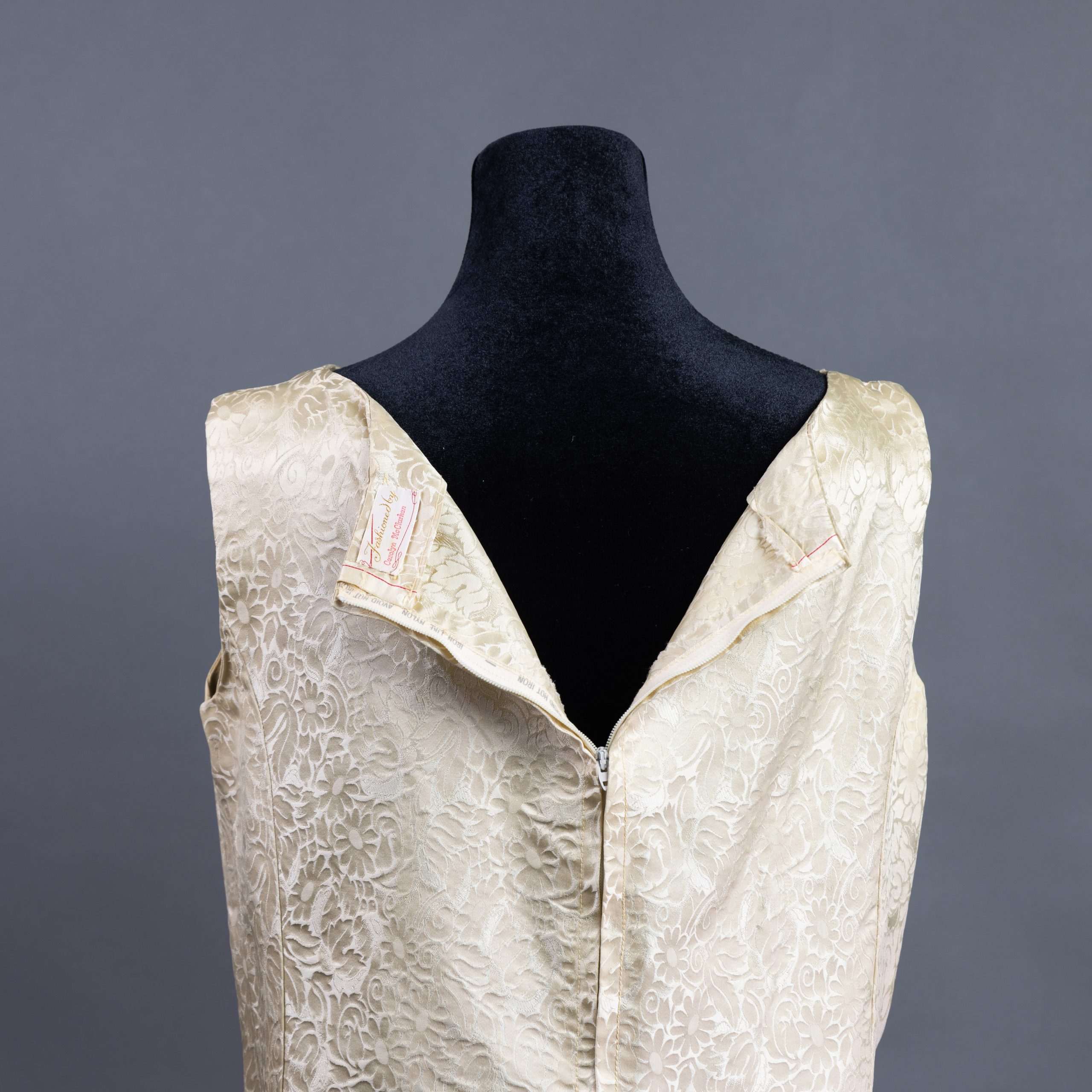
Knee length matching evening dress and coat. Coat has long sleeves, empire waist, round collar and matching acetate lining. Shift dress is unlined, sleeveless, back Talon zipper, and a boatneck. Coat has double breasted buttons on upper bust. Fabric, likely polyester, bears a gold embossed metallic pattern. The coat features covered buttons, bound buttonholes and a decorative back band. Donor’s label stitched inside top of dress. The donor made this dress during the summer of 1963 using a commercial pattern. It was her “going away” dress after her wedding on August 16, 1963.
Shift Dress Context
The 1920s flapper’s sack dress evolved in the 1960s into a modified form called the shift. A shift dress is a simple, short (at or above-the-knee) dress. The bust is fitted with darts, and the skirt is either cut straight or with a slight A-line. The dress lacks waist definition and hangs from the shoulders. Shift dresses were originally sleeveless. In the 1920s designers such as Chanel started to create loose, corsetless dresses which were worn by flappers as the antidote to stiff, corseted Edwardian apparel. When the shift dress became popular in the late 1950s and early 1960s, American youth culture was at its height. The dress represented the young, free and revolutionary attitudes of the time. Designers such as miniskirt pioneer Mary Quant took up the style for street wear and couture designers such as Givenchy and Balenciaga designed shift dresses for their affluent clients. Typically the shift dress is minimalist in its detailing. This lack of embellishment is key to its very simple look. The de-emphasized waist allows women to move around freely without constraints. This style tends to downplay and sometimes conceals female curves but is definitely a comfortable choice.