threads of the sixties
Mid 1960's
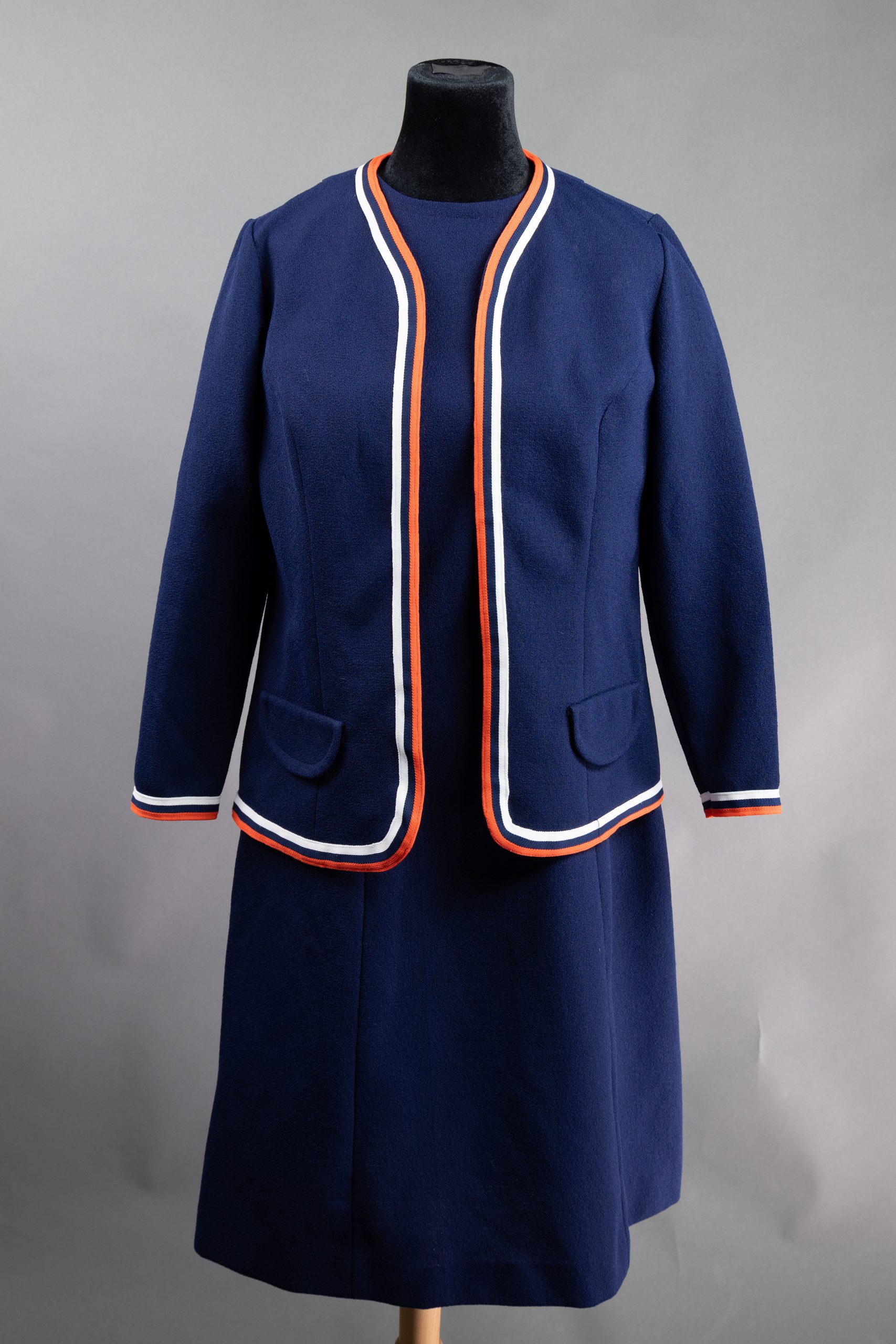
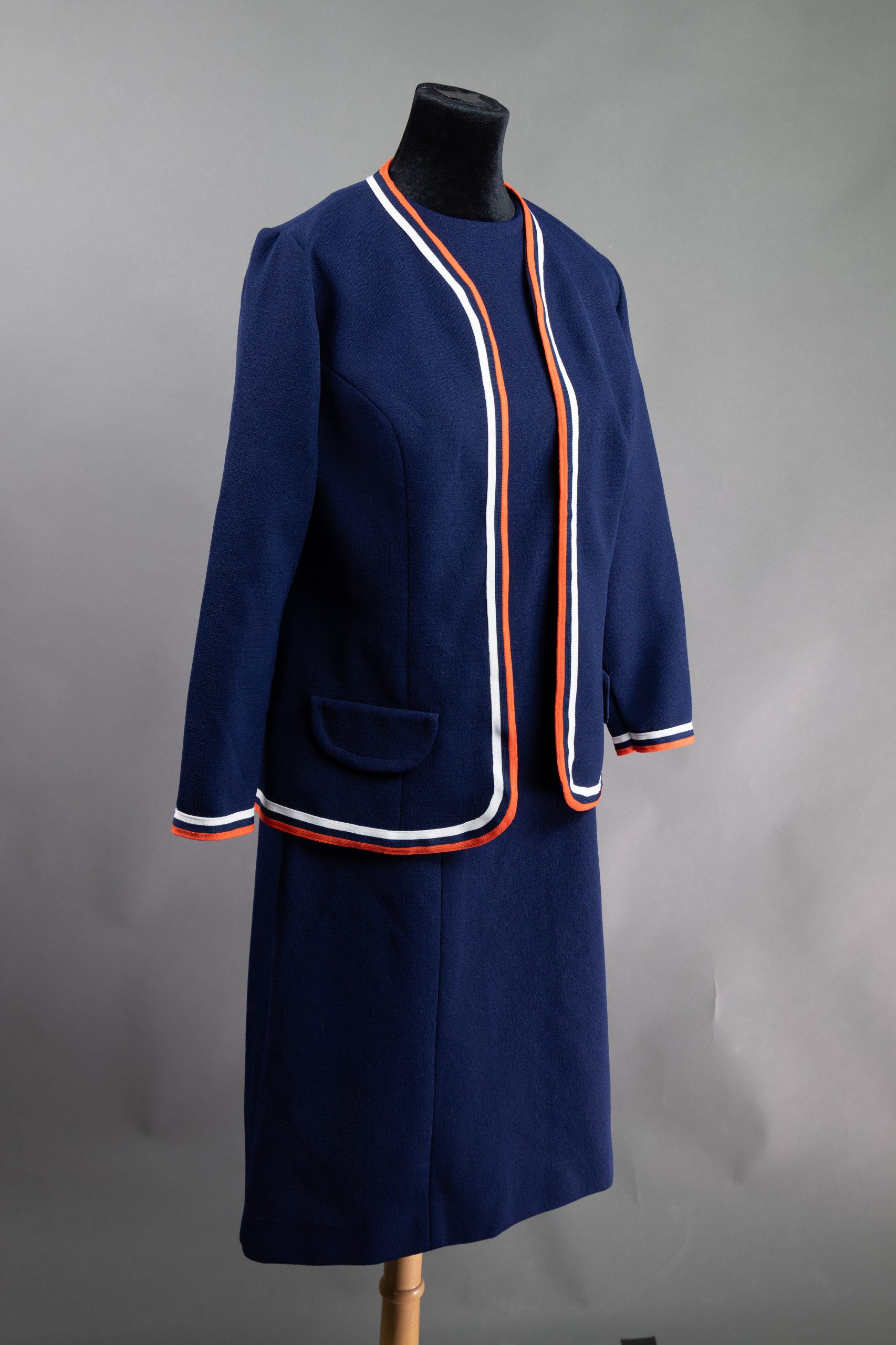
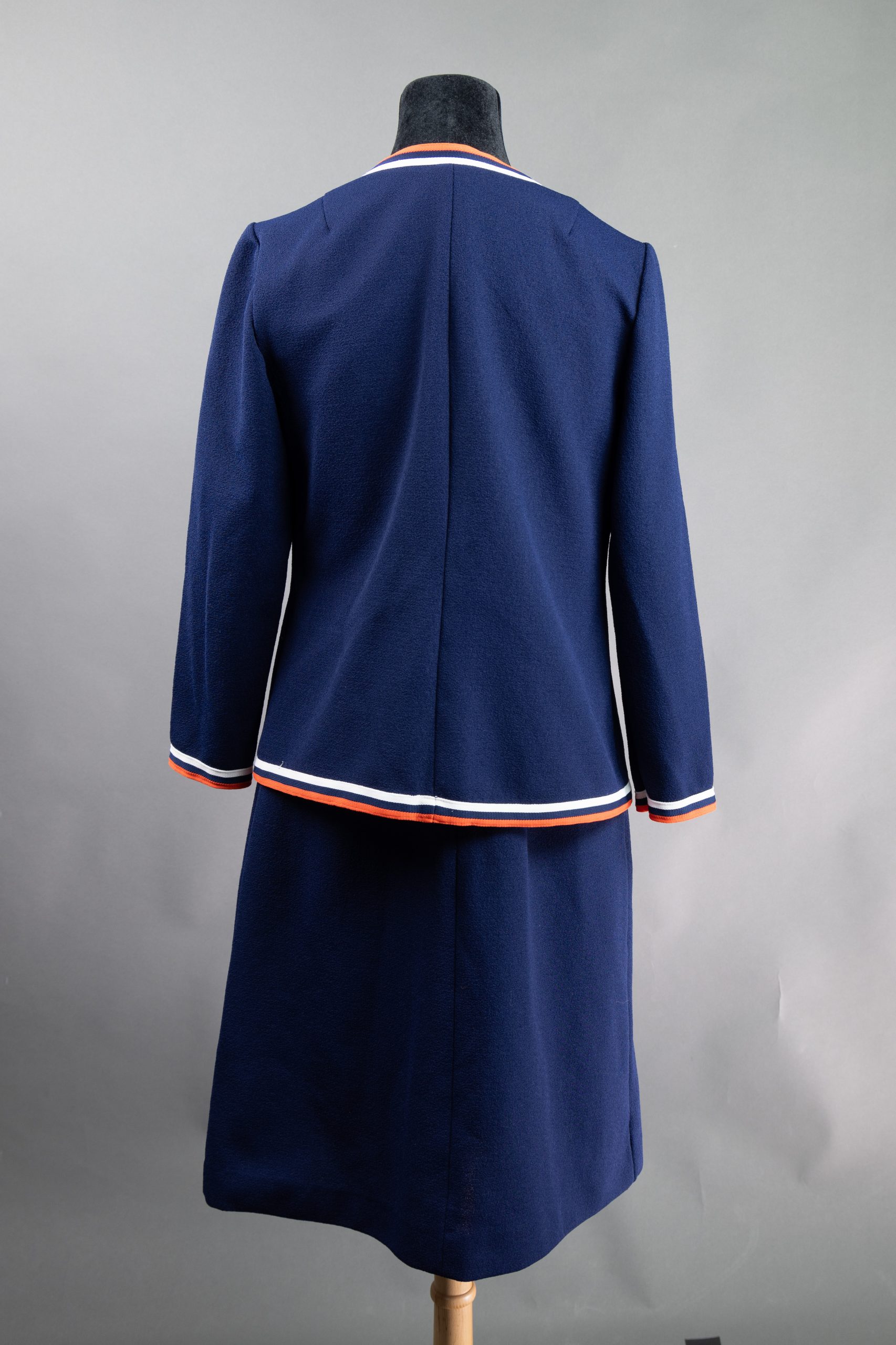
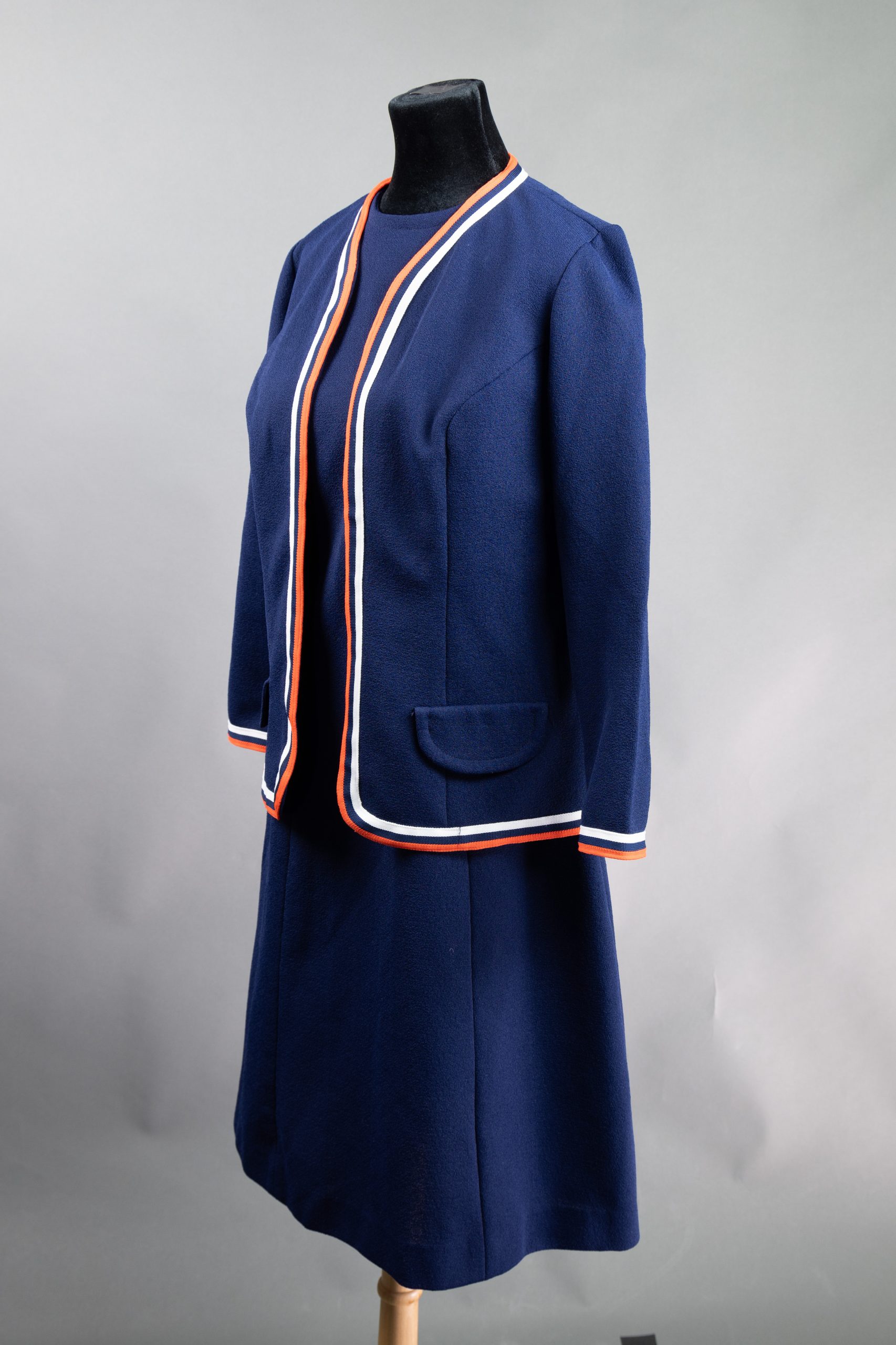
Navy blue sleeveless dress and jacket
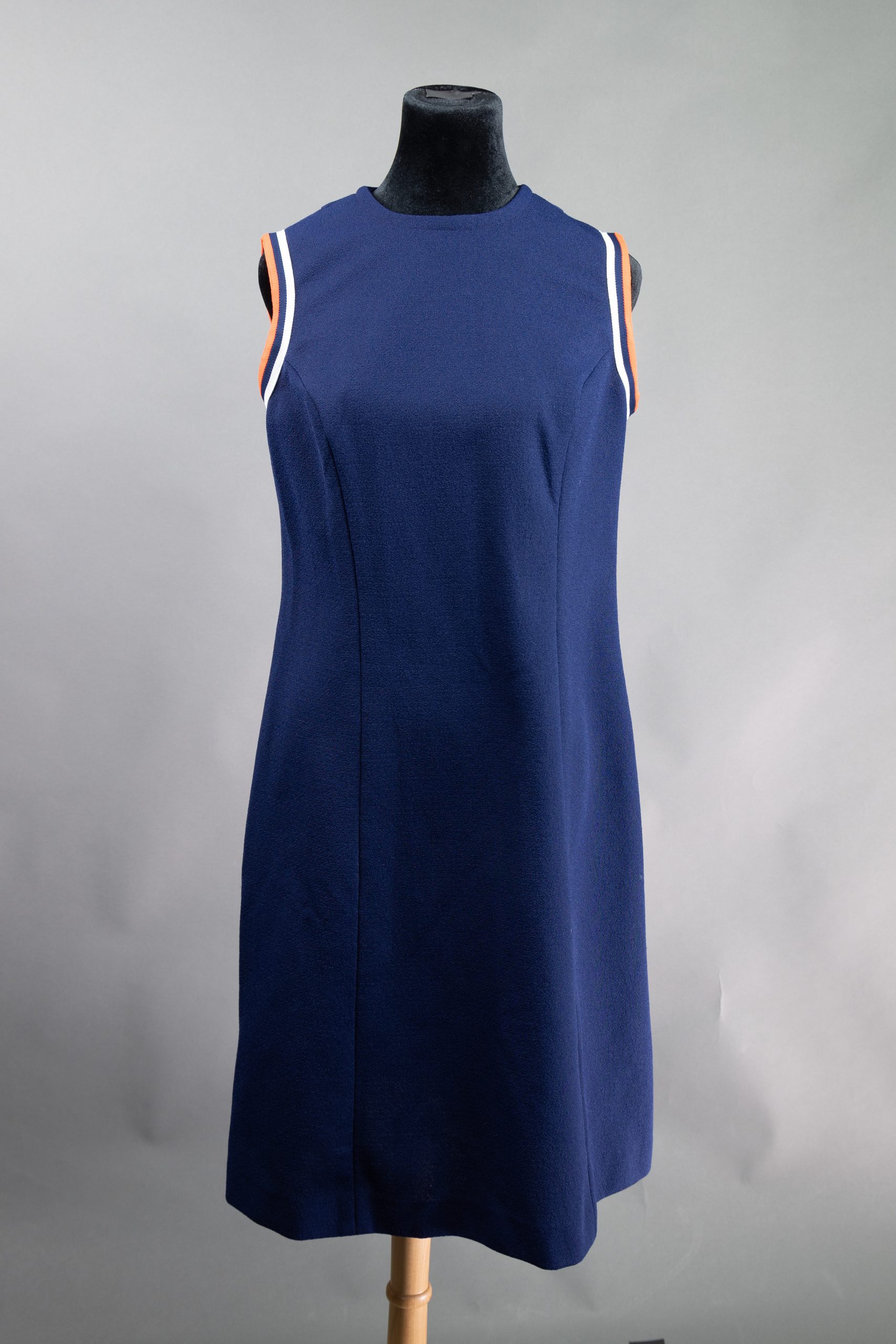
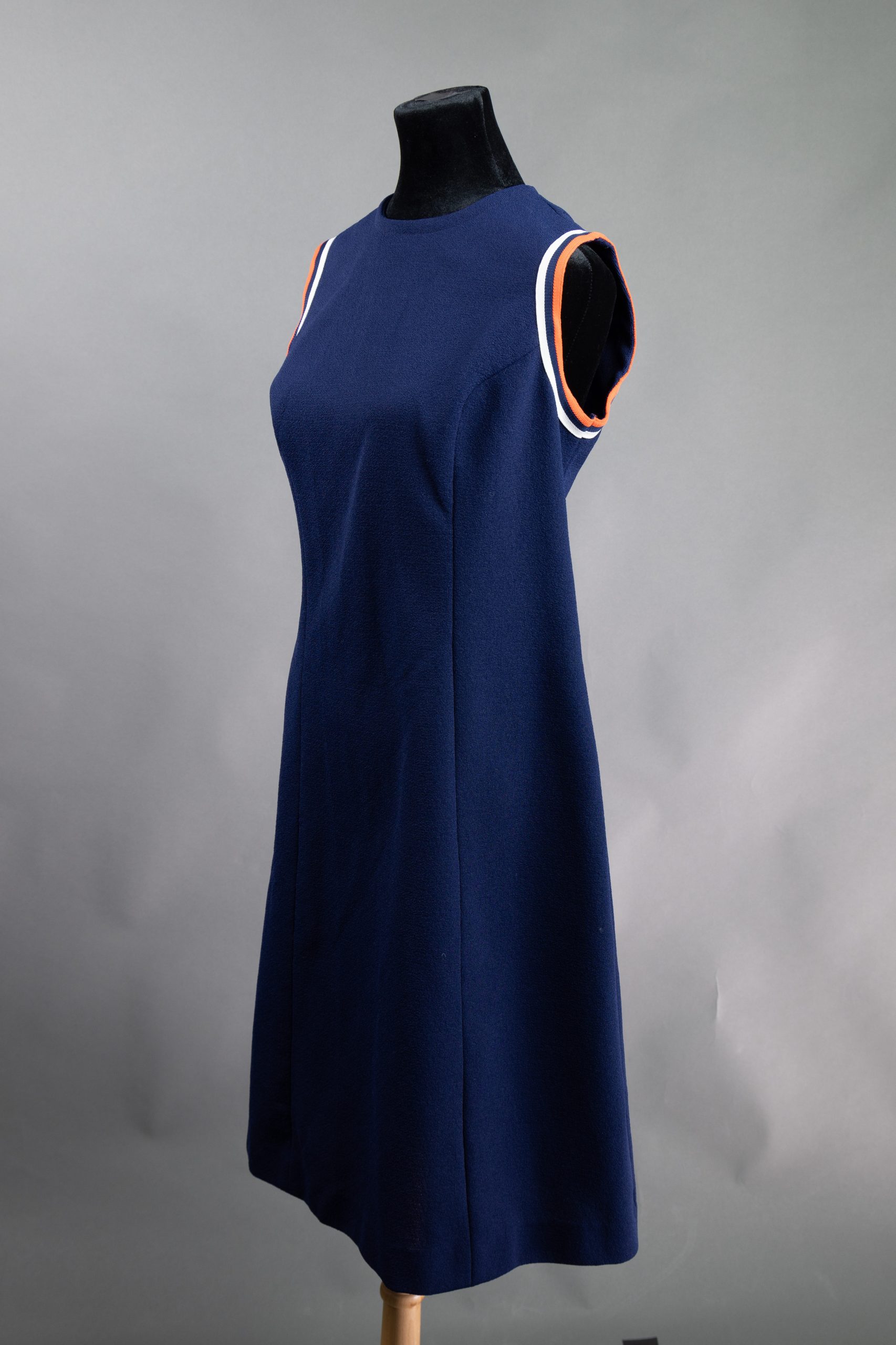
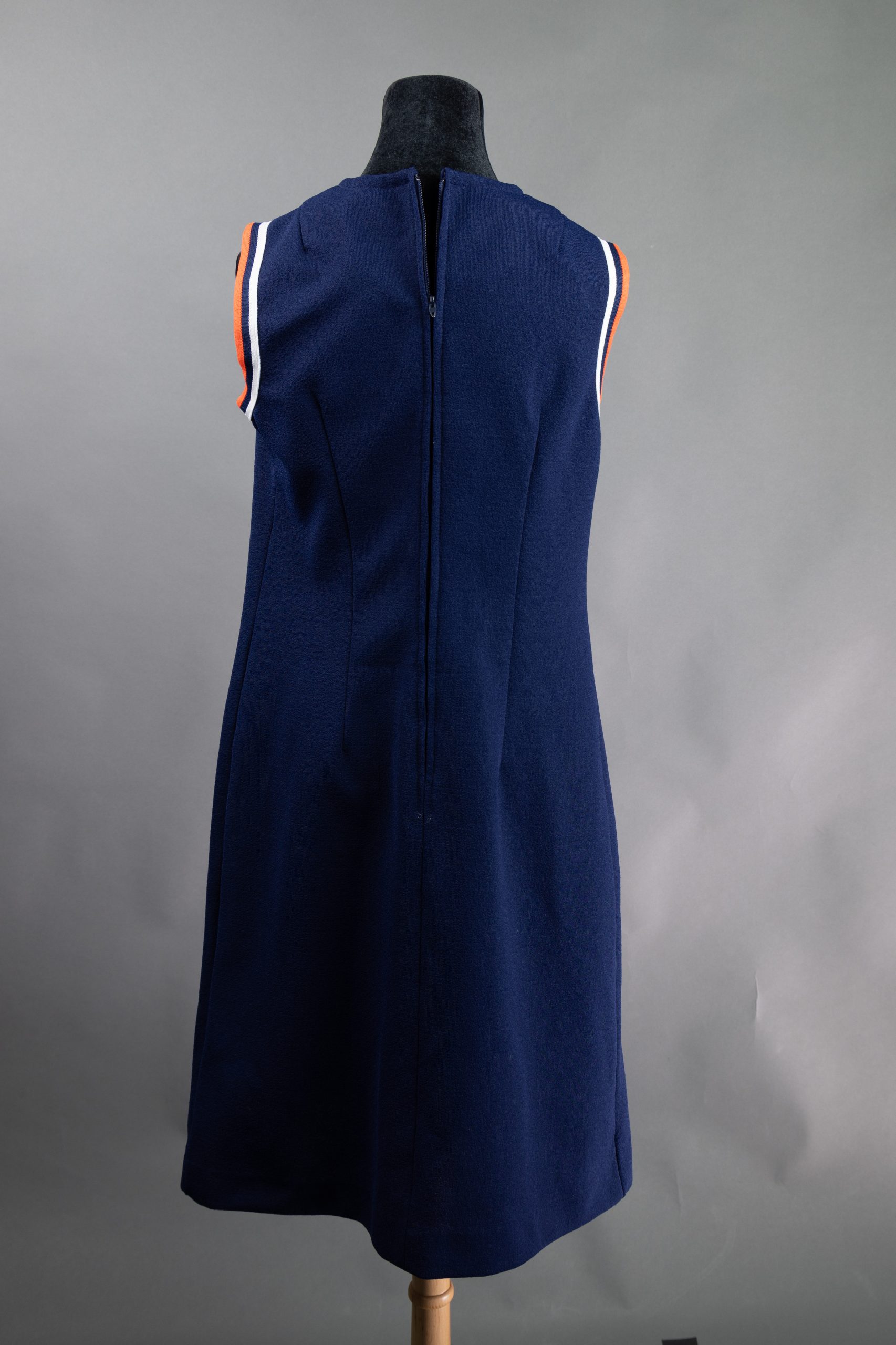
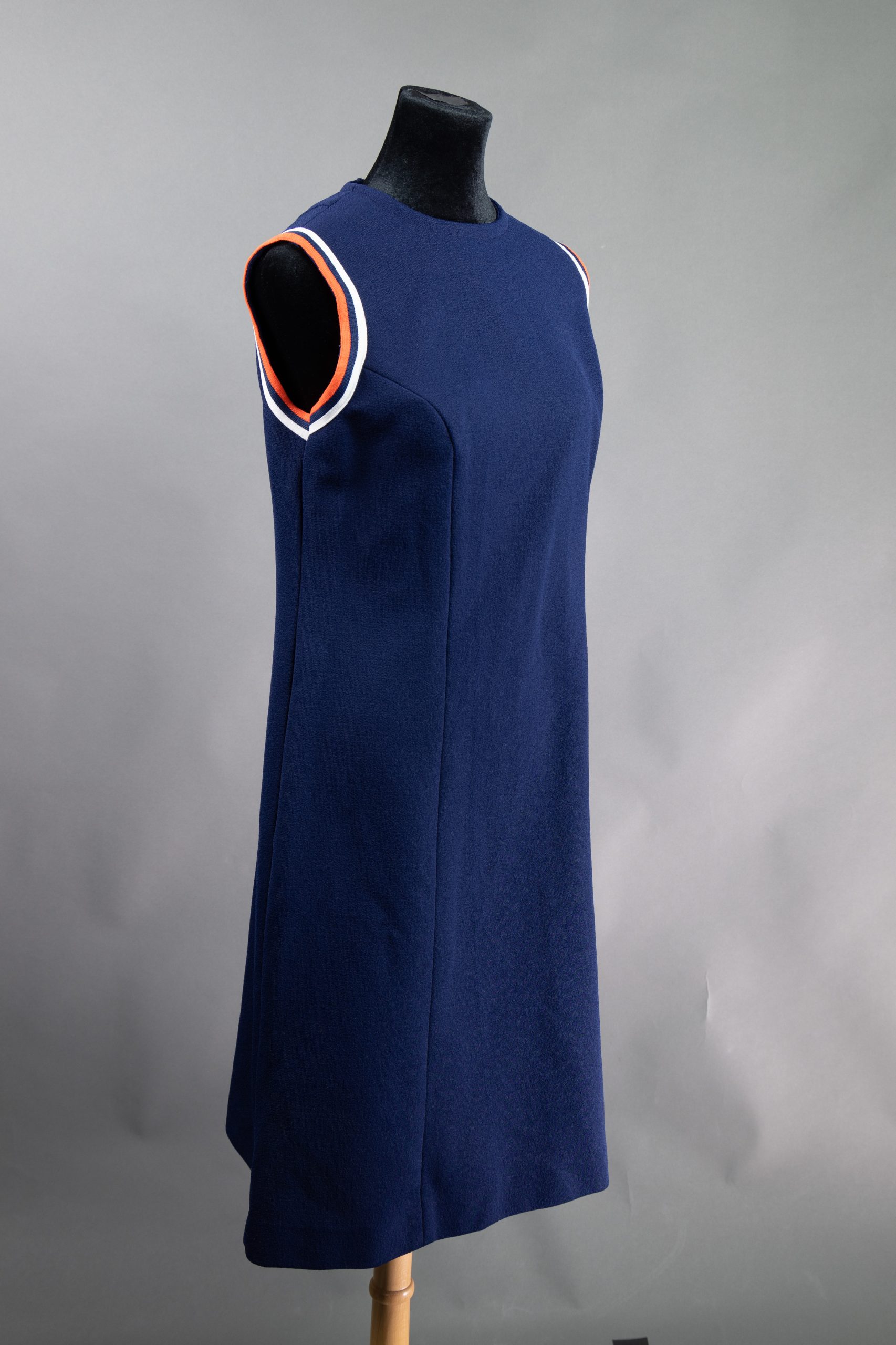
Material: polyester knit
Donor's story
Barbara (Jean) Markovich (1931-2020) resided in Bremerton, WA.
Jean was born in Washington DC. After the death of her father, she and her siblings were raised together in an orphanage in North Carolina where her mother paid to keep the siblings together. After graduating from high school, Jean went to Washington DC to join her mother working at the telephone company. Jean’s talent and love of music led her to be in the telephone company’s “Three Belles” performing group. She married husband William (Mark) Markovich, a chef at the Puget Sound Naval Shipyard in Bremerton, and had five children. While a young mother, Jean earned numerous accolades and awards for her musical endeavors and community volunteering. A lifetime member of the Girl Scouts, she worked as their Field Director for the Olympic Peninsula. She also served on the Executive Board for the Girl Scouts of Western Washington. In 2004, Jean was awarded the “Woman of Achievement” award by the YWCA Kitsap County. She subsequently served on the YWCA Kitsap County Executive Board. Music inspired Jean’s active participation in three Sweet Adeline choral singing chapters and participation in numerous award-winning quartets. Jean toured many different countries throughout the world traveling internationally with the Sweet Adelines.
Description
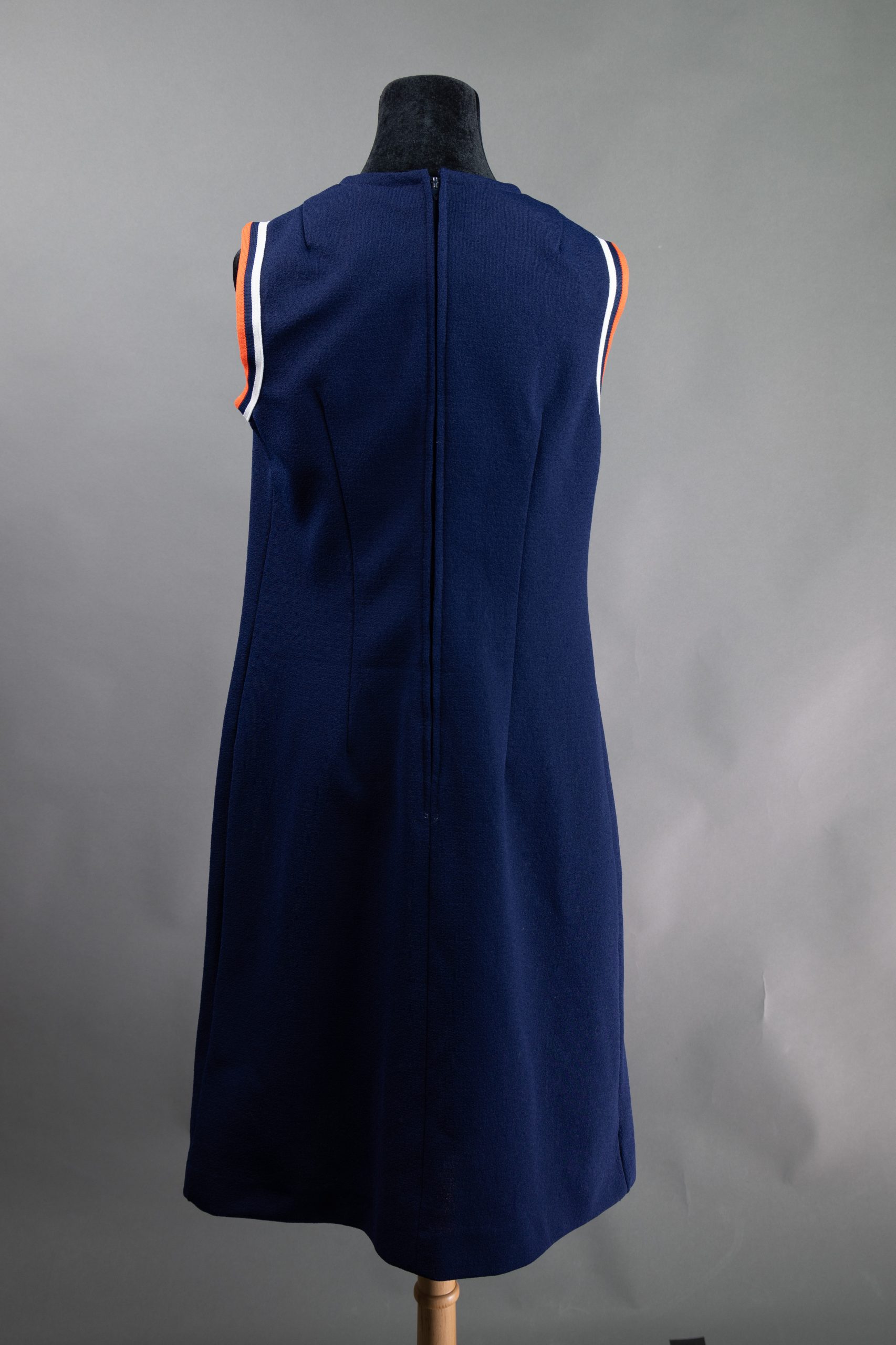
Sleeveless knee-length shift dress with matching short jacket both made of navy blue polyester knit fabric, both unlined. Dress has back zipper and round collar. White and red decorative bands around dress collar, arm holes and jacket edges. Jacket is waist length with long sleeves, no lapels, and decorative pocket flaps. Ensenada label.
Shift dress context:
The 1920s flapper’s sack dress evolved in the 1960s into a modified form called the shift. A shift dress is a simple, short (at or above-the-knee) dress. The bust is fitted with darts, and the skirt is either cut straight or with a slight A-line. The dress lacks waist definition and hangs from the shoulders. Shift dresses were originally sleeveless. In the 1920s designers such as Chanel started to create loose, corsetless dresses which were worn by flappers as the antidote to stiff, corseted Edwardian apparel. When the shift dress became popular in the late 1950s and early 1960s, American youth culture was at its height. The dress represented the young, free and revolutionary attitudes of the time. Designers such as miniskirt pioneer Mary Quant took up the style for street wear and couture designers such as Givenchy and Balenciaga designed shift dresses for their affluent clients. Typically the shift dress is minimalist in its detailing. This lack of embellishment is key to its very simple look. The de-emphasized waist allows women to move around freely without constraints. This style tends to downplay and sometimes conceals female curves but is definitely a comfortable choice.