

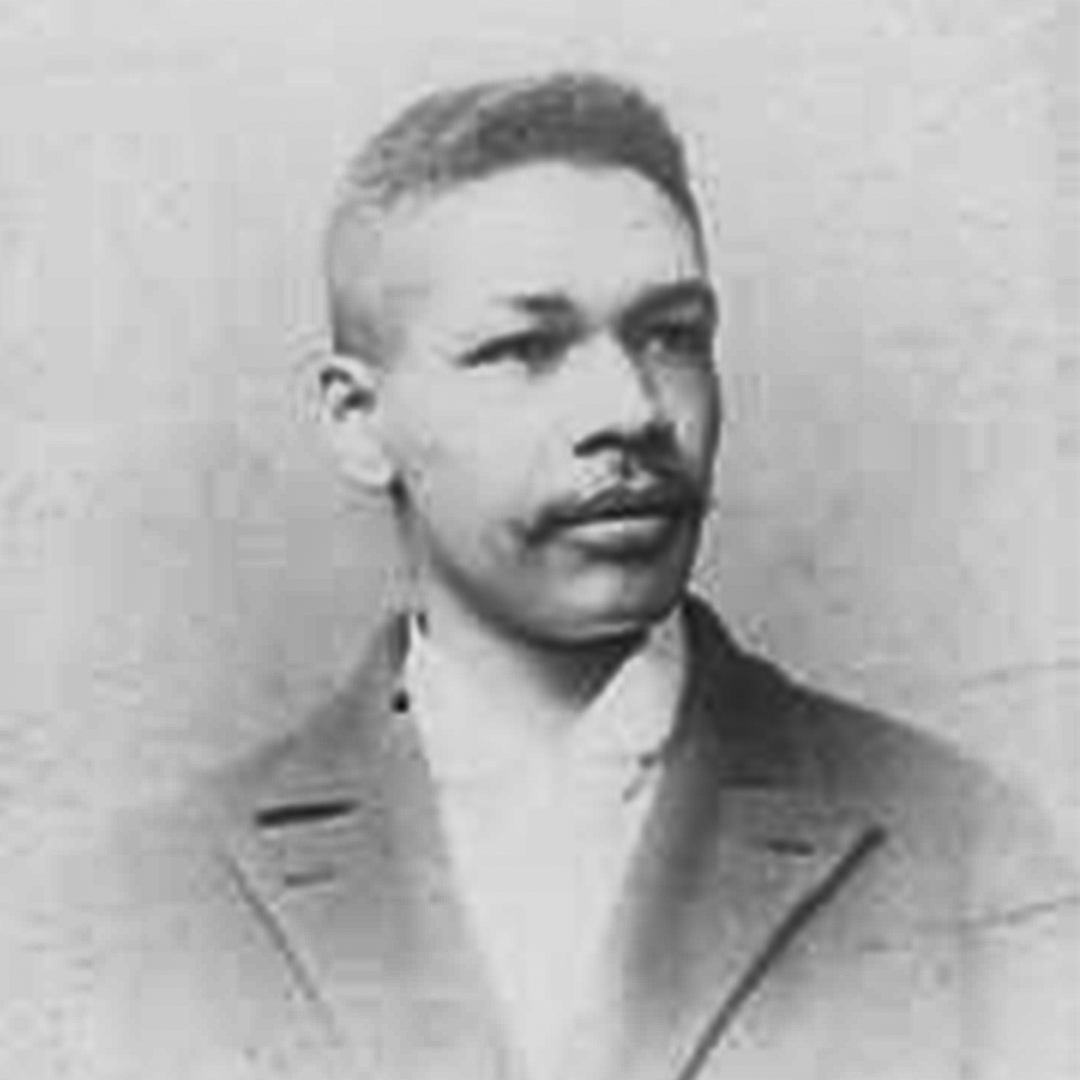
Nathaniel Sargent
Nathaniel Sargent (1863-1954)
Excerpt from Roosevelt Smith’s Kitsap Sun column, “Black History Month: The early Black pioneers of Kitsap County,” February 2, 2022 (archived copy).
Nathaniel Sargent was born on July 4, 1863, on a plantation in Kentucky and after slavery was adopted by a white family. Later on Mr. Sargent attended the University of Illinois. The family moved to Oregon, but Oregon forbade “Negroes” from living there. Apparently, the slogan “Go West, Young Man” was not meant for the African American. So Mr. Sargent migrated without his family to Kitsap County and lived in the county for 72 years. He was a passionate artist and writer. He preferred life as a rancher, homesteading roughly 248 acres. He donated land for a school in the Seabeck-Crosby area. In 1894, he was elected Justice of the Peace in Seabeck. Nathaniel Sargent died in 1954.
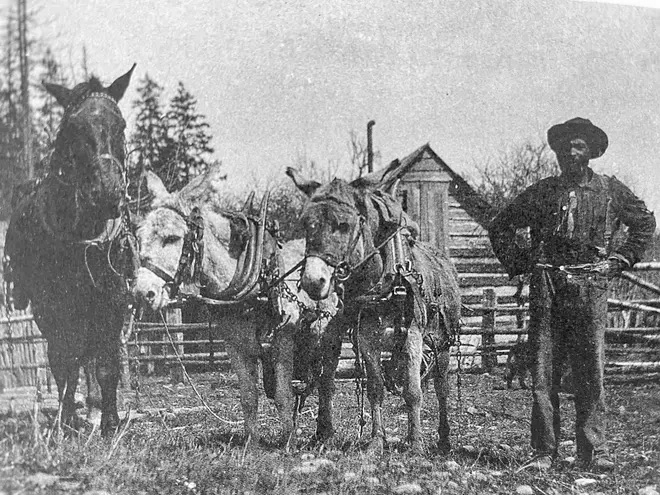
A note from the museum: Several details in this account, including the University of Illinois and Oregon passages, trace back to the museum’s own 1977 book, Kitsap County: A History, and to local accounts gathered in the 1980s. The University of Illinois Archives identifies Jonathan A. Rogan, enrolled in 1887–88, as its first Black student. This conflicts with the account of Sargent attending before his reported arrival in Kitsap County around 1882. Oregon’s 1857 Black exclusion clause was never enforced and was made moot by the Fourteenth Amendment in 1868, but it stayed in the state constitution until 1926 and had its intended effect of discouraging Black settlement. Sources differ on the year he was elected justice of the peace: 1894 or 1897.
In his original column, Roosevelt Smith thanked Dianne Robinson, Pat Thomas and the Kitsap County Black History Committee of 1985.
Photographs courtesy of the Black Historical Society of Kitsap County.
In February 2024 the U.S. Board on Geographic Names renamed Grass Lake, near Tahuya in Mason County, as Nathaniel Sargent Lake, and named a nearby swamp Rodney White Slough for another Black homesteader. Federal maps had labeled the area with a racial slur from 1943 and as “Negro Slough” from 1970. The new names were proposed by the Living Arts Cultural Heritage Project (Alicia Charles and Akuyea Karen Vargas) and approved by Washington’s Committee on Geographic Names and Board of Natural Resources in early 2023, before the federal decision.
Updated October 2026: We replaced an account drawn from the museum’s 1977 book, Kitsap County: A History, because it included racist characterizations and historical claims that needed correction. That earlier text was quoted in the federal lake-naming record.