
Virtual Exhibit
Kitsap Mosquito Fleet
What Was the Mosquito Fleet?
Before early settlers of Puget Sound were able to forge roads through the thick wilderness and build bridges across the rivers and straits, transportation was limited almost entirely to water travel. Entrepreneur boat owners quickly began offering passenger service, mail delivery, and freight hauling. Spurred by demand and plenty of lumber for boatbuilding and fuel, more and more steam-powered vessels plied local waters until Puget Sound boasted the largest Mosquito Fleet in the world.
The Kitsap region was particularly dependent upon the Fleet. Situated between Puget Sound and Hood Canal, its waterways served as aquatic highways. The boats carried passengers, mail, livestock, and freight from just about any shoreside community that could build a dock or place a float, so places like Suquamish, Indianola, and Olalla had direct links to Seattle.
Small, agile steamers remained the mainstay of Sound transportation until the demand for auto carriers led to car ferries in the 1920s. The era ended with the eventual consolidation of service under the Washington State Ferry System.
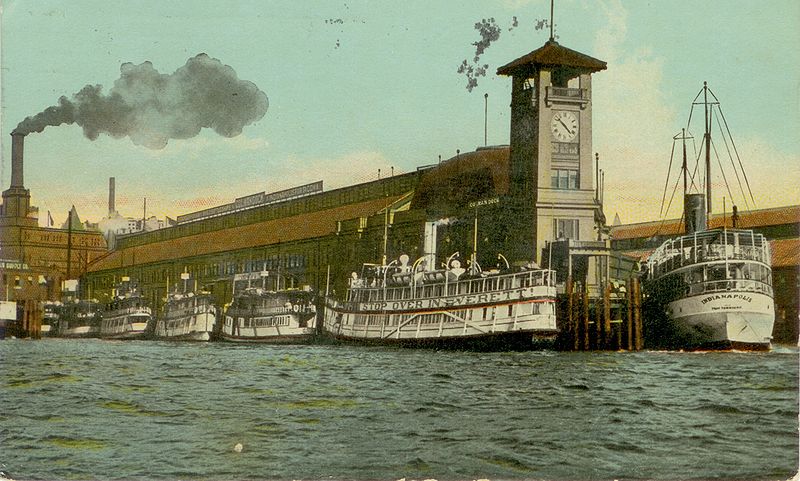
Steamboats at Colman Dock, Seattle, circa 1912. The large steamer on the right is the Indianapolis.
At a Glance
- 2,500estimated vessels, using the broadest definition
- 25approximate number of routes on the Sound around 1900
- 200+miles of saltwater coastline in Kitsap County
Explore the Fleet by Route
The vessels are grouped by the runs they served. Choose a photo or button to read each vessel’s story.
Seattle–Bremerton

Athlon
Originally intended to work on the Columbia River for a Vancouver-based consortium, Athlon was bought by Seattle businessman H.B. Kennedy, who moved her north to Puget Sound. Running between Bremerton and Seattle, she competed for passengers with the Inland Flyer. Later she served Poulsbo and competed with the Hyak.

H.B. Kennedy
Built expressly for the Port Orchard Route, the H.B. Kennedy’s launching coincided with Seattle’s Alaska-Yukon-Pacific Exposition. She was large, fast, and luxurious, carrying 1,000 passengers at 17 knots, making the Bremerton-Seattle run in 45 minutes.

Enetai
Black Ball Line purchased the Santa Rosa out of California. Built in 1927, the Santa Rosa ran between Sausalito and San Francisco. She was renamed Enetai when she came to Puget Sound for service on the Seattle-Bremerton run.

Inland Flyer
The Inland Flyer was the first vessel to provide regularly scheduled ferry service on the Seattle-Bremerton run.

Kalakala
Designed as a futuristic, streamlined vessel, the Kalakala was launched in 1935 on the Seattle-Bremerton run.

Malahat
Originally known as the “Napa Valley”, the Malahat was intended to replace the aging Olympic on the Port Angeles-Victoria run. When traffic on the Bremerton route called for another ferry, she was placed into service there.
Bremerton–Manette

City of Manette
This 50-foot launch served Manette and Bremerton beginning in 1908.

Urania
Urania was just one of the many Mosquito Fleet boats to serve Manette before an auto ferry and bridge connected Manette and Bremerton.

Pioneer
The Pioneer was an early auto ferry that served passengers between Bremerton and Manette before the Manette Bridge was built.
Poulsbo–Seattle

Dauntless
Dauntless was built in Tacoma as a passenger steamer and served various owners and North Puget Sound ports during her career.

Hyak
The Hyak holds a special place in Poulsbo history. From 1911 to 1936, the wooden-hulled steamship Hyak operated in Puget Sound, running from Seattle to Bainbridge Island and Poulsbo, serving Port Madison, Suquamish, Seabold, Keyport, Lemolo, Scandia, and Pearson.

Monticello
Ran on the Poulsbo–Seattle route and the Port Orchard route, serving Port Orchard, Charleston, Bremerton, and Pleasant Beach.
More Runs to Seattle

Kingston–Seattle
Dode
Formerly a schooner, Dode was rebuilt for steam power in 1898. She carried passengers and freight on the Kingston-Seattle run, later extending that run into Hood Canal.

Silverdale–Seattle
Grace
The Grace, operated by the Chico Brothers, was a perfect example of the varying styles and conditions of the Mosquito Fleet.

Bainbridge Island–Seattle
Reliance
The 118-foot-long passenger steamer Reliance was best known for her service to communities on the west side of Bainbridge Island, providing fast, reliable transportation to Seattle.

Sidney–Seattle
Leif Erickson
Built at Stanwood, the 42-foot steamer Leif Erickson carried passengers, mail, and light freight on the Sidney-Seattle route. In 1888, the Gorst family arrived in Seattle from Belle Prairie, Minnesota.

Seattle–Tacoma via Colvos Passage
Virginia V
The fifth vessel in a line of steamers for the West Pass Transportation Company, “V-5” was built at Maplewood. She was fitted with the engine of her predecessor, the Virginia IV. On her run she stopped along the way at Olalla.
Between Kitsap Ports

Carlisle II
Built on Lummi Island in 1917, the Carlisle II was purchased by Horluck Transportation in Port Orchard in 1936 and has been in Kitsap ever since.

Mary F. Perley
Mary F. Perley, built at Samish in 1888, never served Brownsville, but she unwittingly and mysteriously ended her days there.

Chippewa
Few vessels on Puget Sound led as interesting a life as the well-loved Chippewa. Built in 1900 in Toledo, Ohio, she was used as a passenger vessel of the Arnold Transportation System on the Great Lakes.

Thurow
Served Poulsbo, Keyport, Annapolis, Port Orchard, and Bremerton.

Vashon
The Vashon served the Port Orchard route – Port Orchard, Charleston, and Pleasant Beach.
Port Gamble, Port Townsend & Hood Canal

Perdita
Perdita was built in Seattle in 1903 and cruised a short career of just 11 years. She served many communities in the West Sound precincts, including the ports of Cliff House and Seabeck on Hood Canal.

Aloha
Aloha was typical of many motor freighters of her day. She was equipped with a Barlow freight elevator, named for its Bainbridge Island inventor. A platform could be raised or lowered with freight between the upright stanchions to adjust for the extreme tide levels of Puget Sound and Hood Canal. The Aloha carried freight on her lower level.

Tyee
Cyrus Walker of the Pope and Talbot lumber mill in Port Gamble launched the Tyee in 1884. The Tyee likely took passengers from time to time, but her primary purpose was towing logs and ships for the mill.
More to Explore
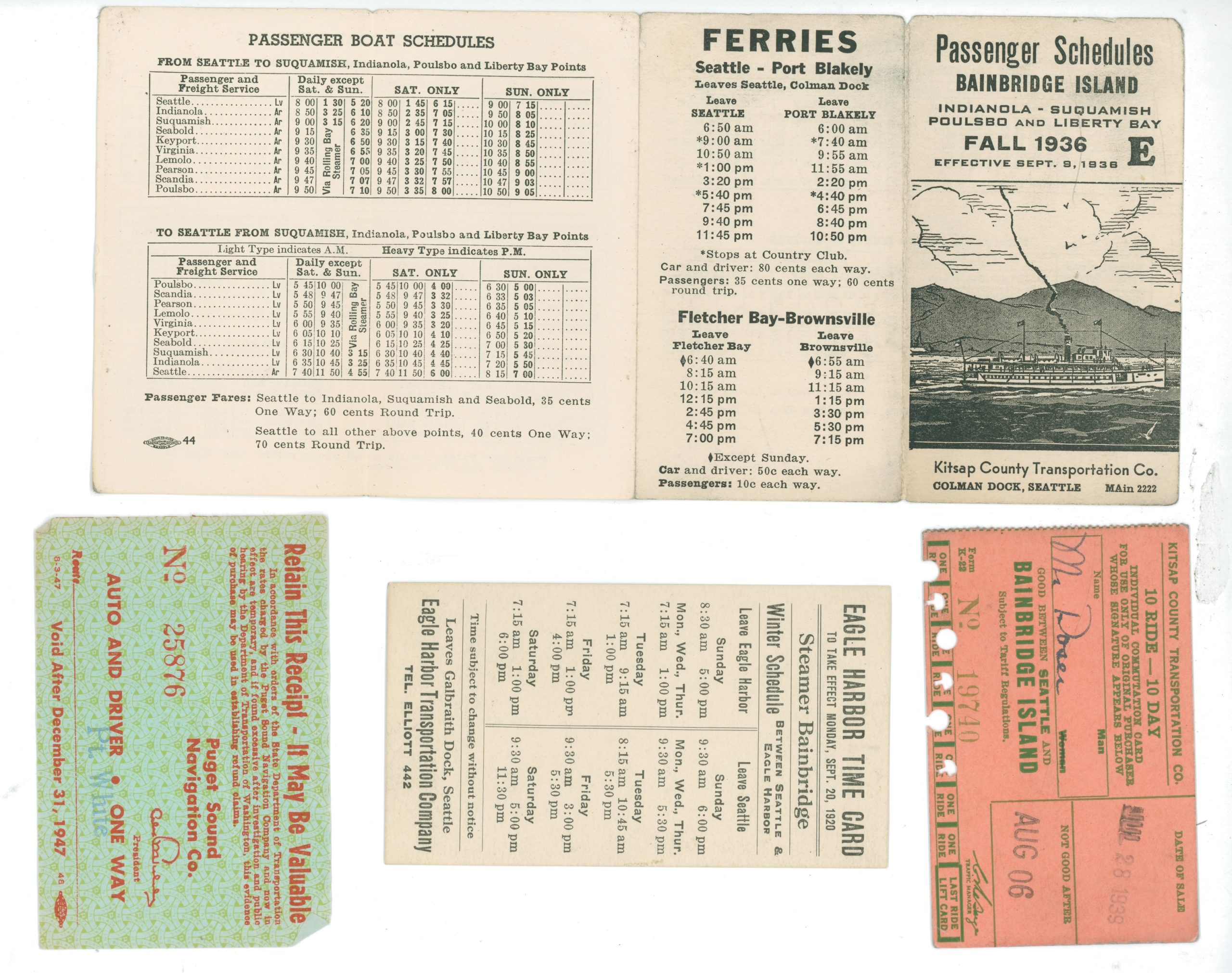
History of the Mosquito Fleet
How steamboats became the highways of Puget Sound, the rivalry between the Black Ball Line and the White Collar Line, and how the Great Depression ended competition on the water.
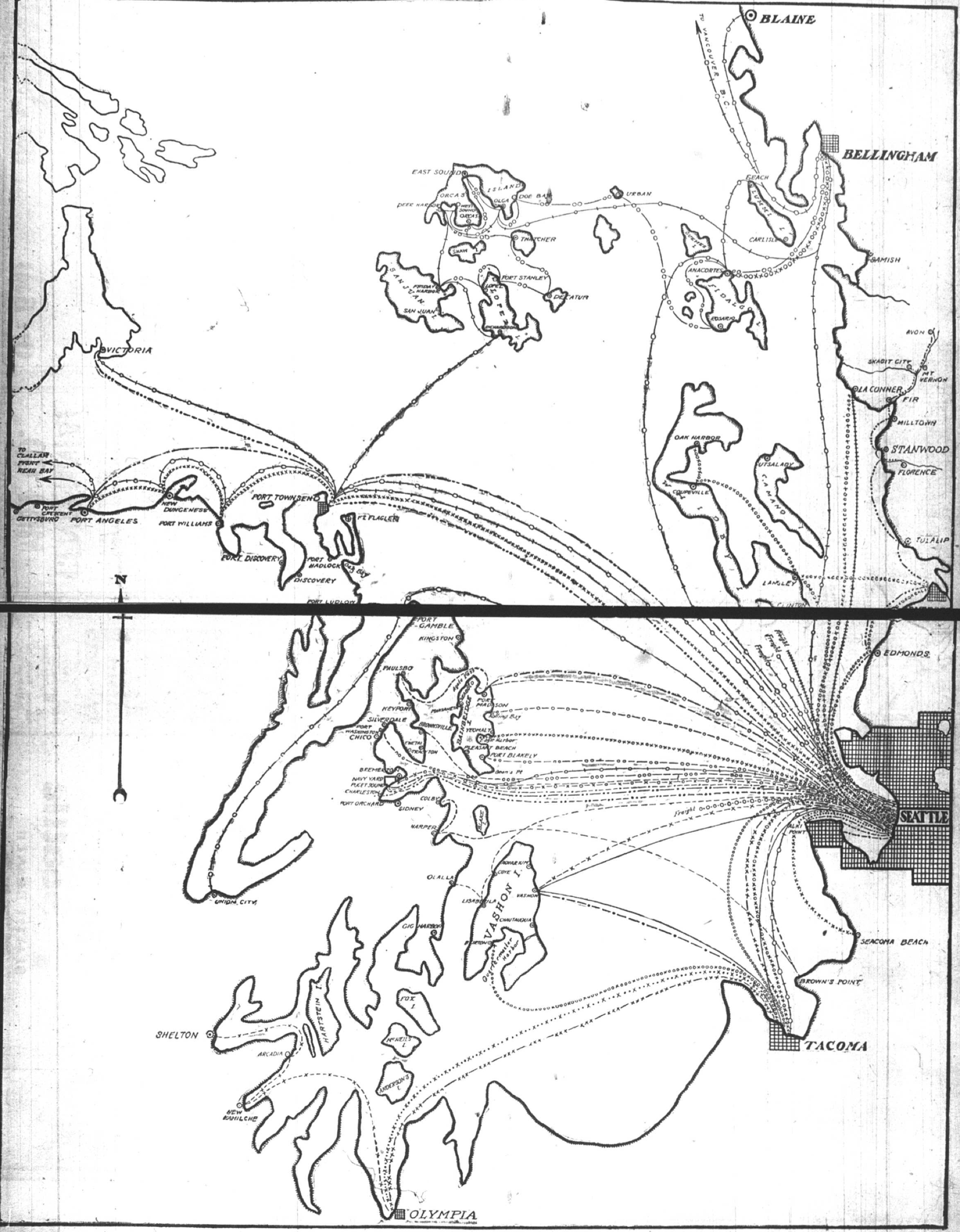
Mosquito Fleet Docks
Solitary pilings along Kitsap’s shorelines mark where the Mosquito Fleet once stopped for passengers. See the list of docks, their locations, and the services that called there.
Sources & credits
Special thanks for written text to Carolyn Neal and Thomas Kilday Janus, Puget Sound Ferries: From Canoe to Catamaran (American Historical Press, 2001).