
A Virtual Exhibit
Common Ground
A history of Bremerton’s parks, from picnic grounds to playfields
In 1901 a ball ground and a dance pavilion went up on the shore of the Port Washington Narrows. Over the next 125 years the city added playfields and forests, a cemetery and a golf course, a blueberry farm and a waterfront fountain. Many of today’s parks were once something else: Army camps, wartime housing, a Navy ammunition depot, a coal dock. Explore how that common ground came to be.
Explore the timeline ↓Explore by park
Children in the outdoor swimming pool at Evergreen Park. Kitsap History Museum, 1972.015.004
Before the Parks
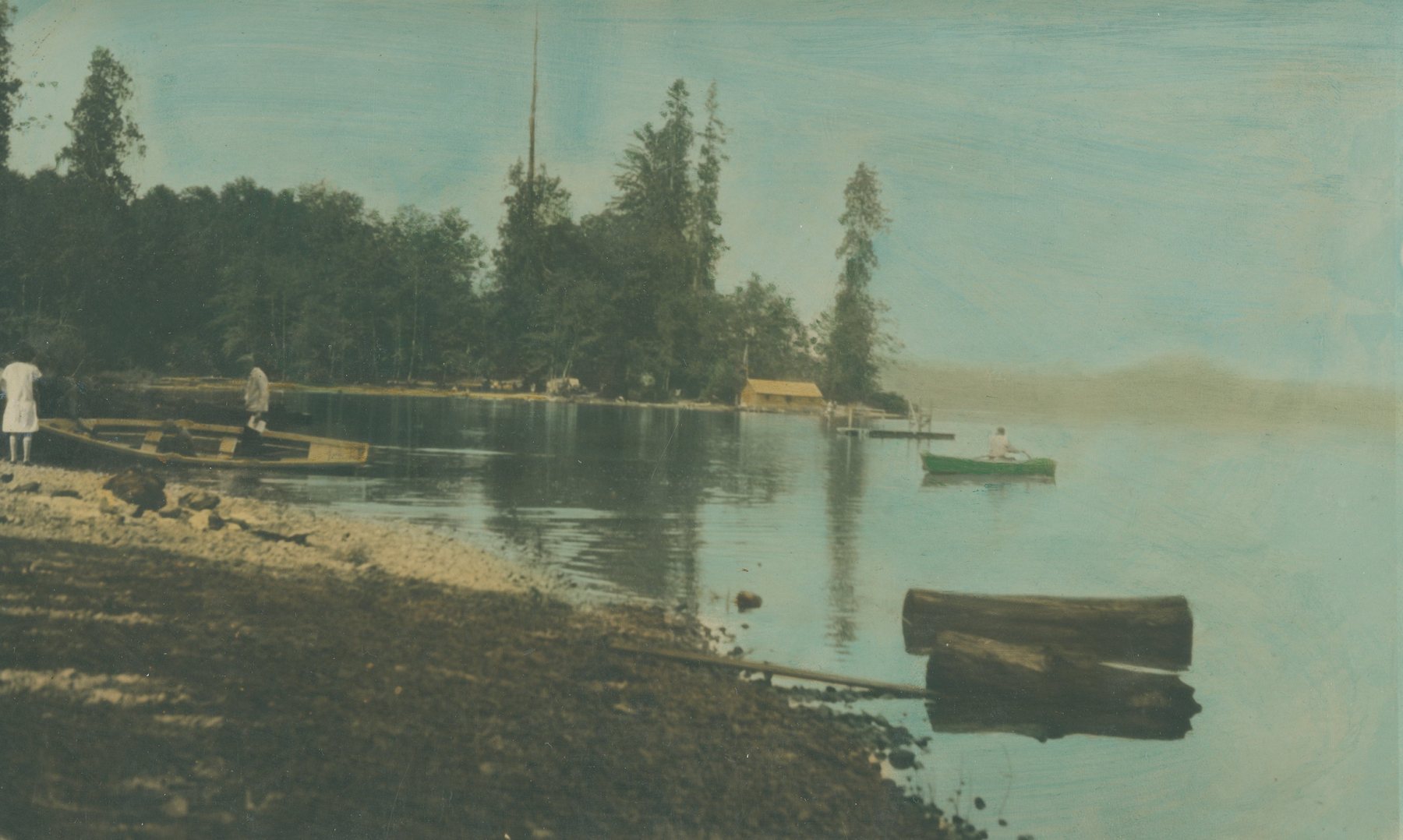
The Suquamish people have lived around these waters for thousands of years, and still do. Long before there was a city of Bremerton, the shore that is now Evergreen Rotary Park was one of their camping places. Ethnographers recorded that people came here to dig clams, hunt ducks and fish, and the remains of a shell midden could still be seen in 1952. Two arrowheads found in the park about 1903 are in the museum’s collection.
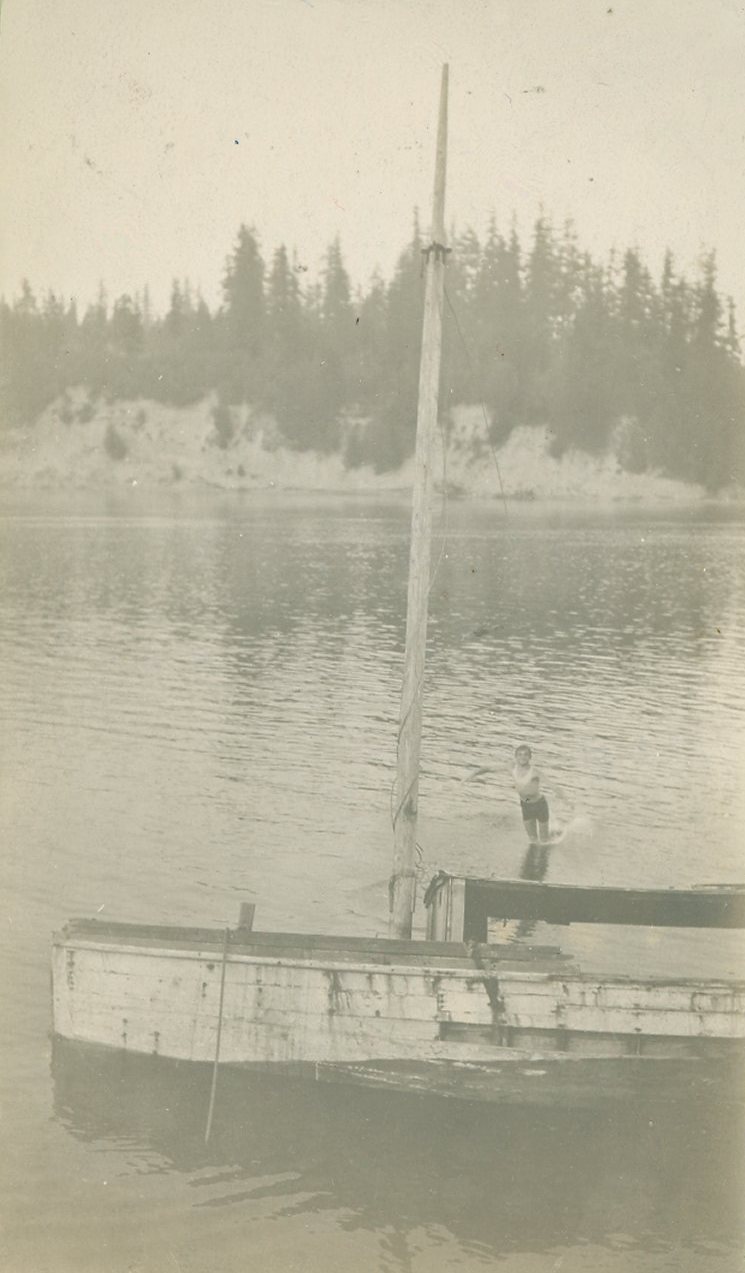
In 1888 Warren Smith, a Civil War veteran, received the government patent for this land as a homestead. Smith Cove and Warren Avenue are named for him. In 1891 the Navy established a new naval station on the shore of Sinclair Inlet, and William Bremer platted a town beside it. The shoreline shown here, photographed in 1898, would become Evergreen Park.
- Long before 1888
Suquamish people camp, fish and dig clams along the Port Washington Narrows.
- 1888
Warren Smith receives the patent for his homestead on the Narrows.
- 1891
The Navy establishes its station on Sinclair Inlet, and William Bremer plats the town of Bremerton.
Parks in this chapterEvergreen Rotary Park
Explore moreKitsap Through Time
Beyond our museumSuquamish Museum (opens in a new tab)
A Picnic Ground on the Narrows
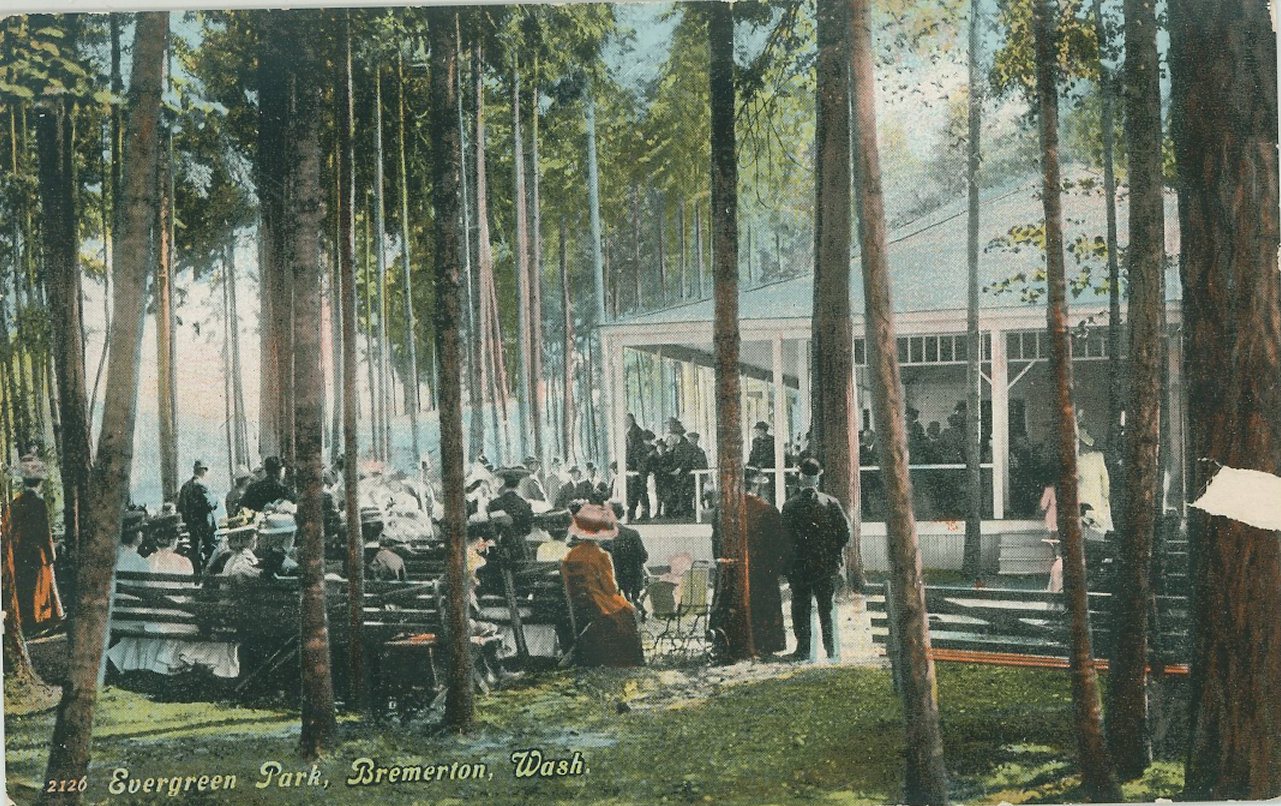
In 1901, the year Bremerton was incorporated, Moffett and Zumwalt leased about 11 acres at Smith’s Point from Warren Smith for ten years. They built a ball ground and a dance pavilion, and the place soon became Evergreen Park. The museum’s “Green Book,” Kitsap County: A History, calls Warren Smith the owner of Evergreen Park, “finest picnic ground in the vicinity.”
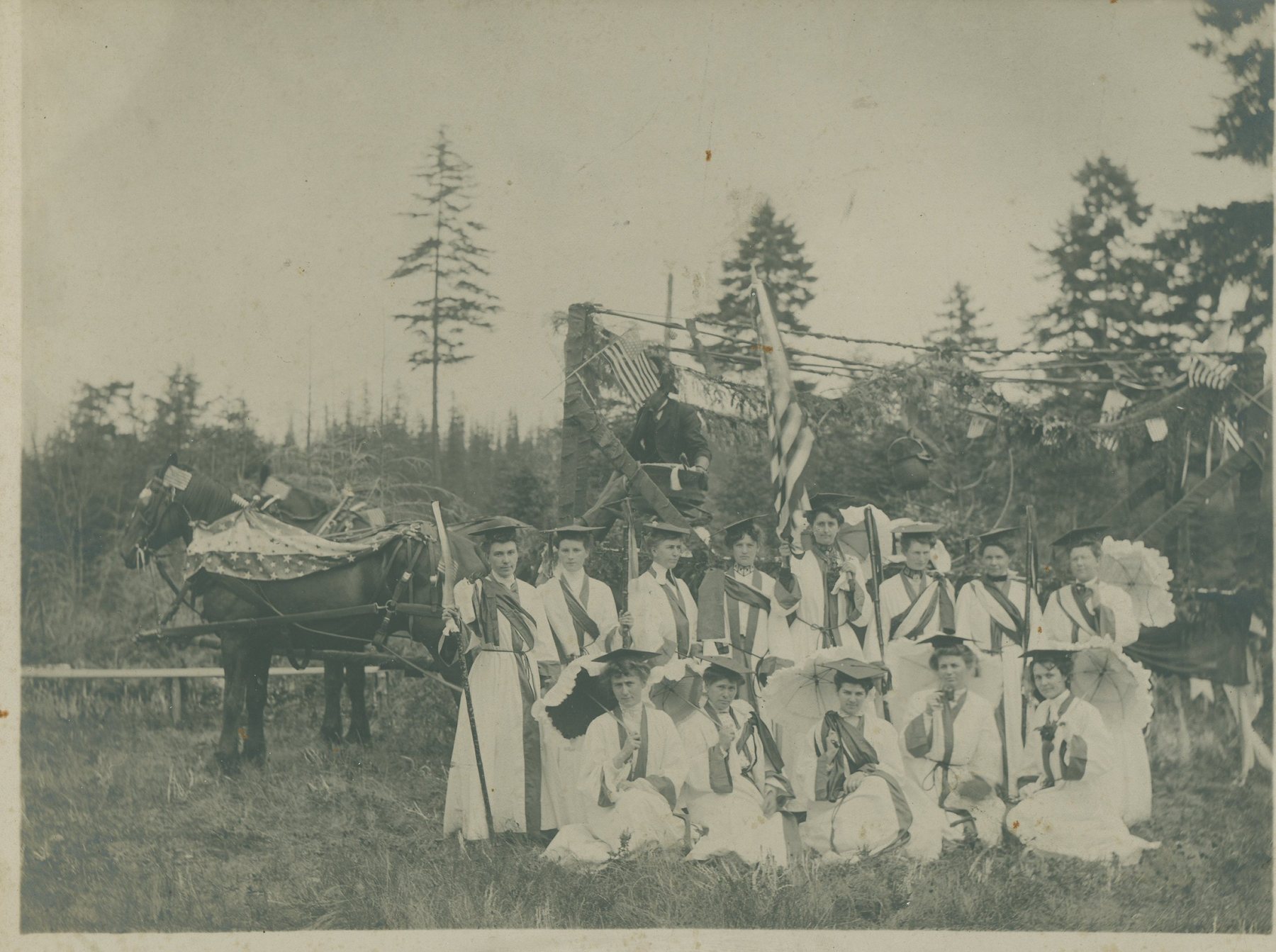
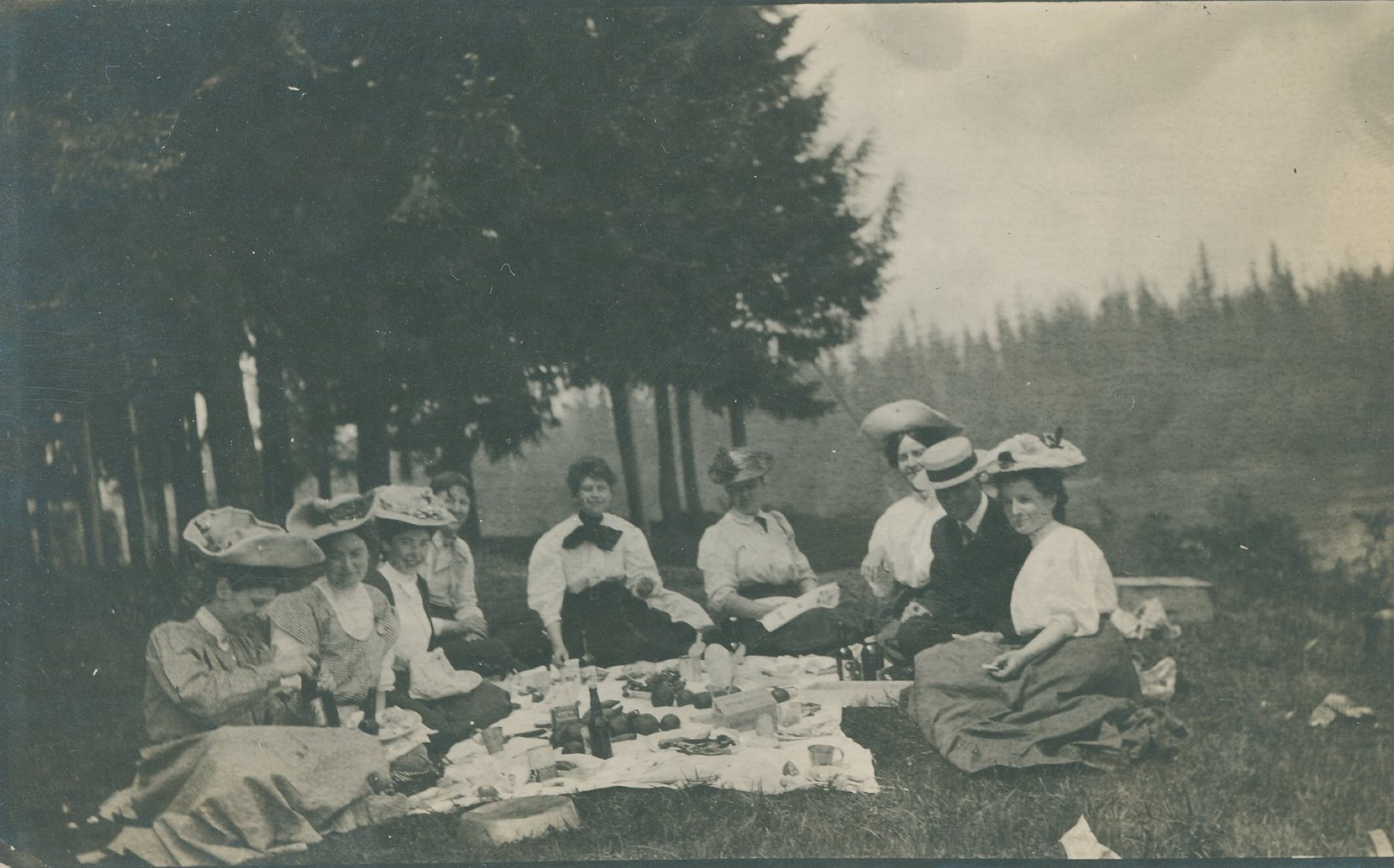
For the next twenty years Evergreen Park was where Bremerton went to celebrate. Families picnicked under the trees, lodges and veterans’ groups celebrated the Fourth of July (shown here in 1904), ball teams played on the field, and the Kitsap County Pioneers’ Association gathered there. The park was dedicated on May 22, 1909. In 1911 it hosted the county fair, the first in twelve years, with about 1,000 people a day.
- 1901
A ball ground and dance pavilion are built at Smith’s Point. Baseball is played at the Dietz and Evergreen Park fields from this year on.
- July 4, 1904
Fourth of July at Evergreen Park, with women associated with the Grand Army of the Republic, the Union veterans’ organization, and a Woodmen of the World float.
- May 22, 1909
Evergreen Park is dedicated.
- 1911
The county fair comes to Evergreen Park, the first fair in twelve years.
- 1916
The Golden Cafe serves lunch for 61 at the Pioneers’ Association gathering in the park. The receipt survives in the museum’s collection.
- About 1921–22
The first airplane to land at Evergreen Park touches down.
Parks in this chapterEvergreen Rotary ParkIvy Green CemeteryWarren Avenue Playfield
Charleston’s Park on the Ridge
Forest Ridge Park sits on land that was part of Andrew Abrahamson’s early claim. The site was dedicated to the city in 1927, the year Charleston merged with Bremerton. While Charleston was still its own city, the park’s cabin served as its community center. The Boy Scout hall in the park, Don Serry recalled, had been part of Charleston’s old city hall and was moved up the hill.
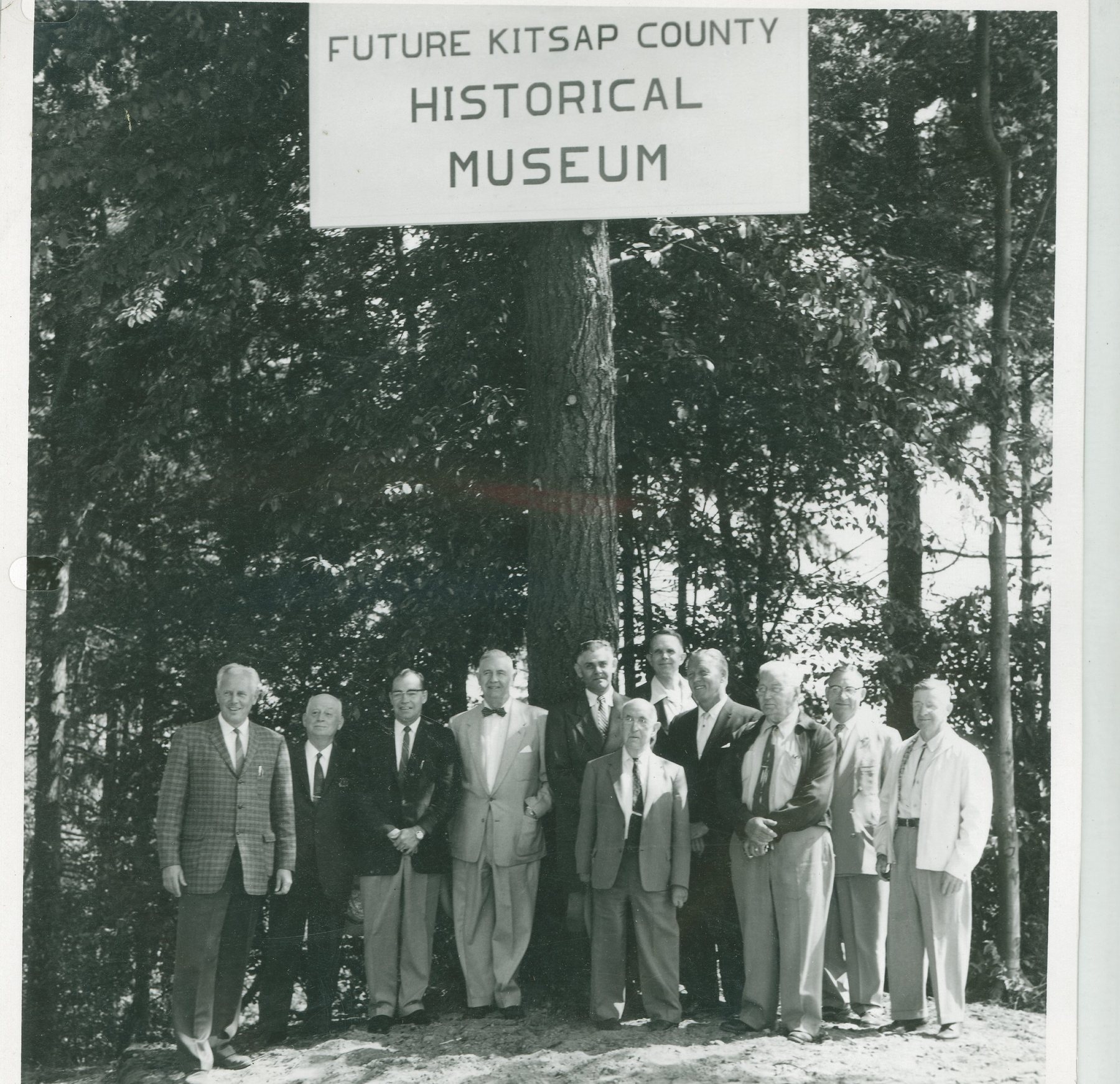
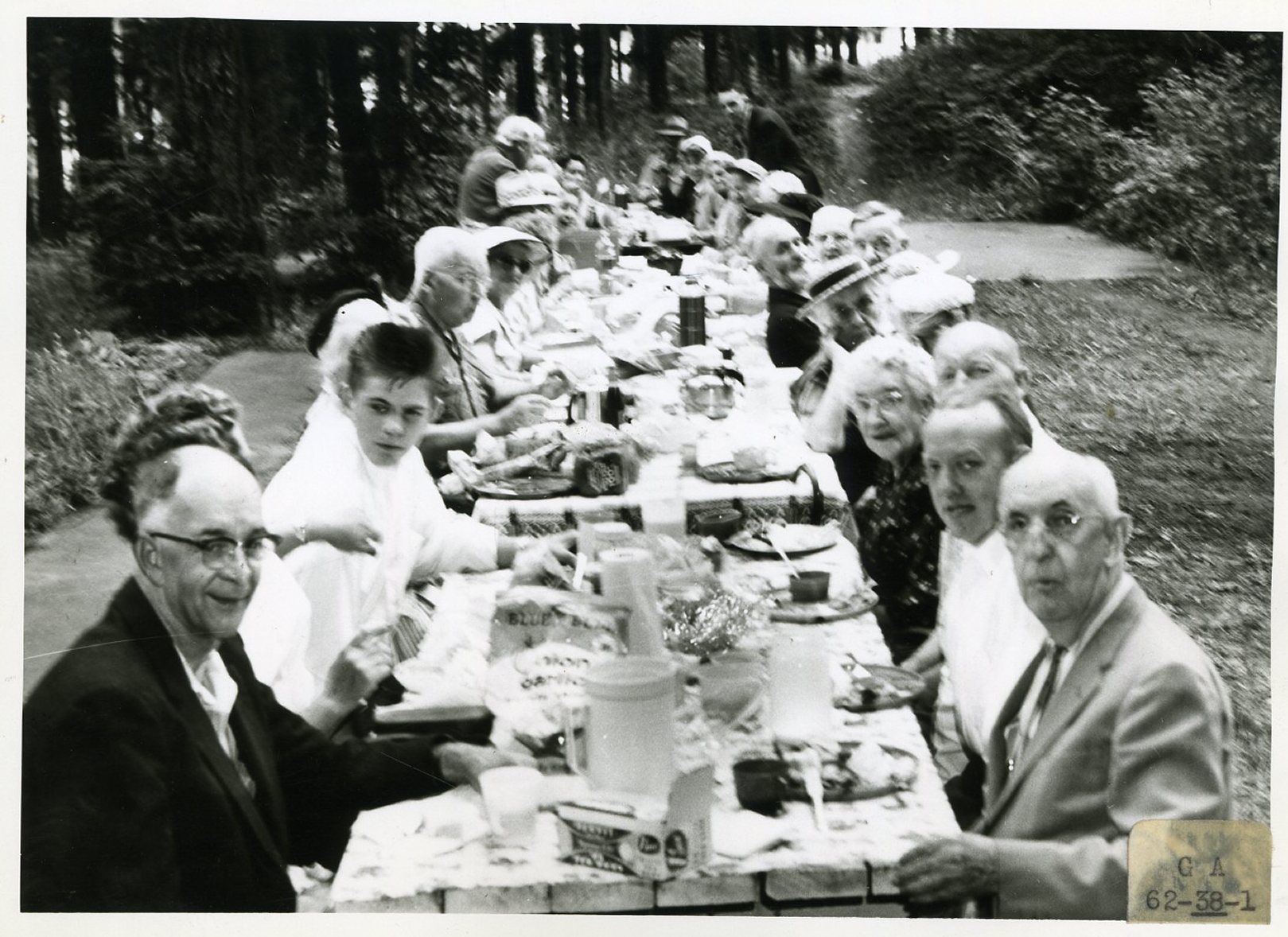
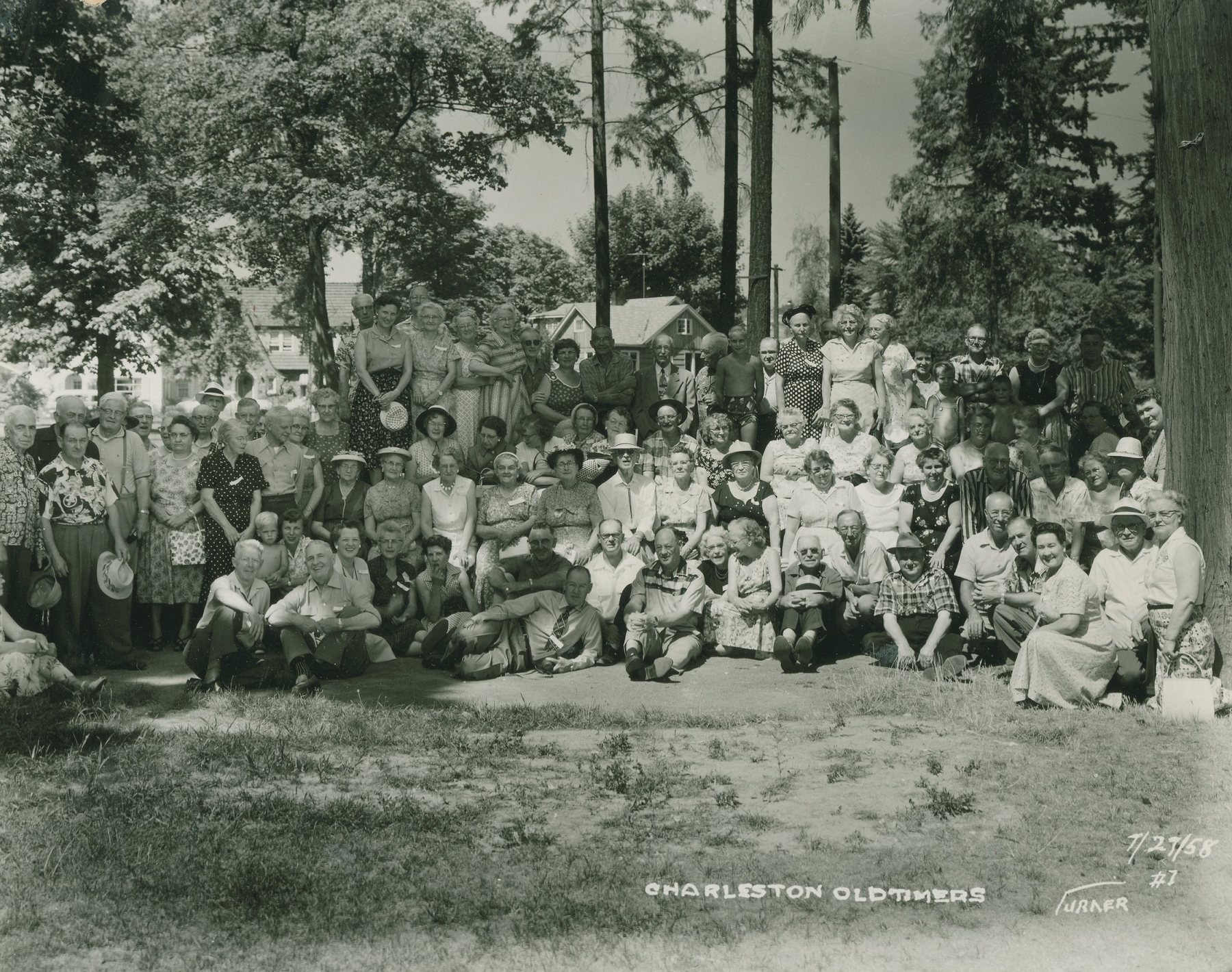
The park has a special place in this museum’s story. On June 22, 1960, shown here, a site in Forest Ridge Park was dedicated for a future county historical museum, under a sign that read “Future Kitsap County Historical Museum.” In the end the museum found other homes, but members of the Historical Association came back for a picnic in the park the next year.
“The Scout Hall was up in Forest Ridge Park, which is a block away, and I used to see all these kids walking up to the Scout meetings.”
Don Serry, who joined Troop 512 at the hall in 1935, in a 2008 oral history
- 1927
The Forest Ridge site is dedicated to the city.
- Undated
The Charleston Business Men’s Club offers $25 for “a new name for Olympic Gateway Park,” launched at a potluck at “the Boy Scout Hall in the park.” It may have been an earlier name for Forest Ridge Park.
- June 22, 1960
A Forest Ridge site is dedicated for a future Kitsap County Historical Museum.
- About 1964
Radio station KBRO-FM raises a 400-foot tower in the park.
Parks in this chapterForest Ridge Park
Explore moreCharleston Remembered
A Park Board, Then a War
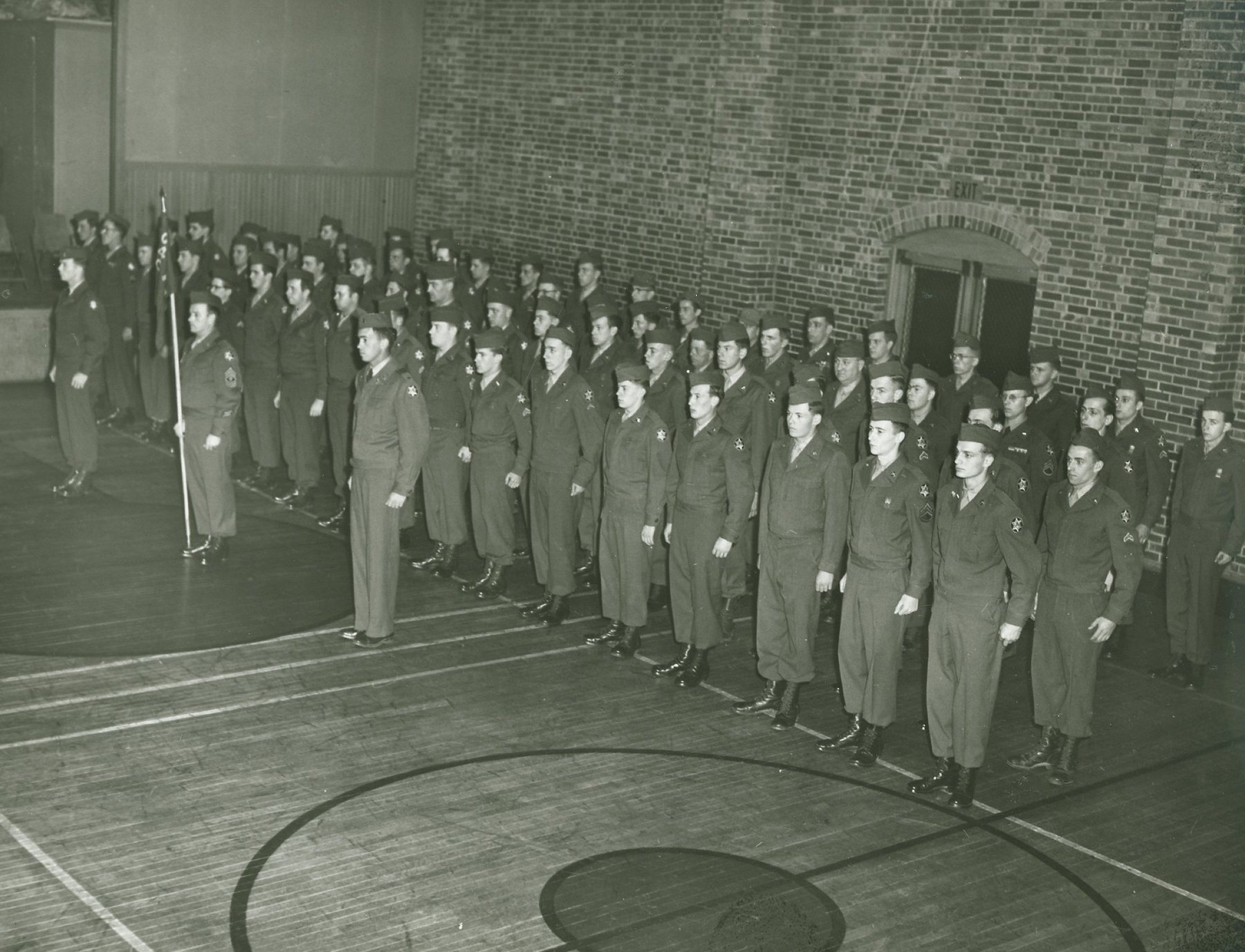
By 1940 the Navy Yard was hiring thousands of workers and Bremerton was bursting at the seams. In February 1941 Mayor Homer Jones appointed the city’s first Park and Recreation Board, an idea that grew out of a Bremerton High School PTA committee, and Les Walters became the first recreation director. A Civic Recreation Center was built with federal money.
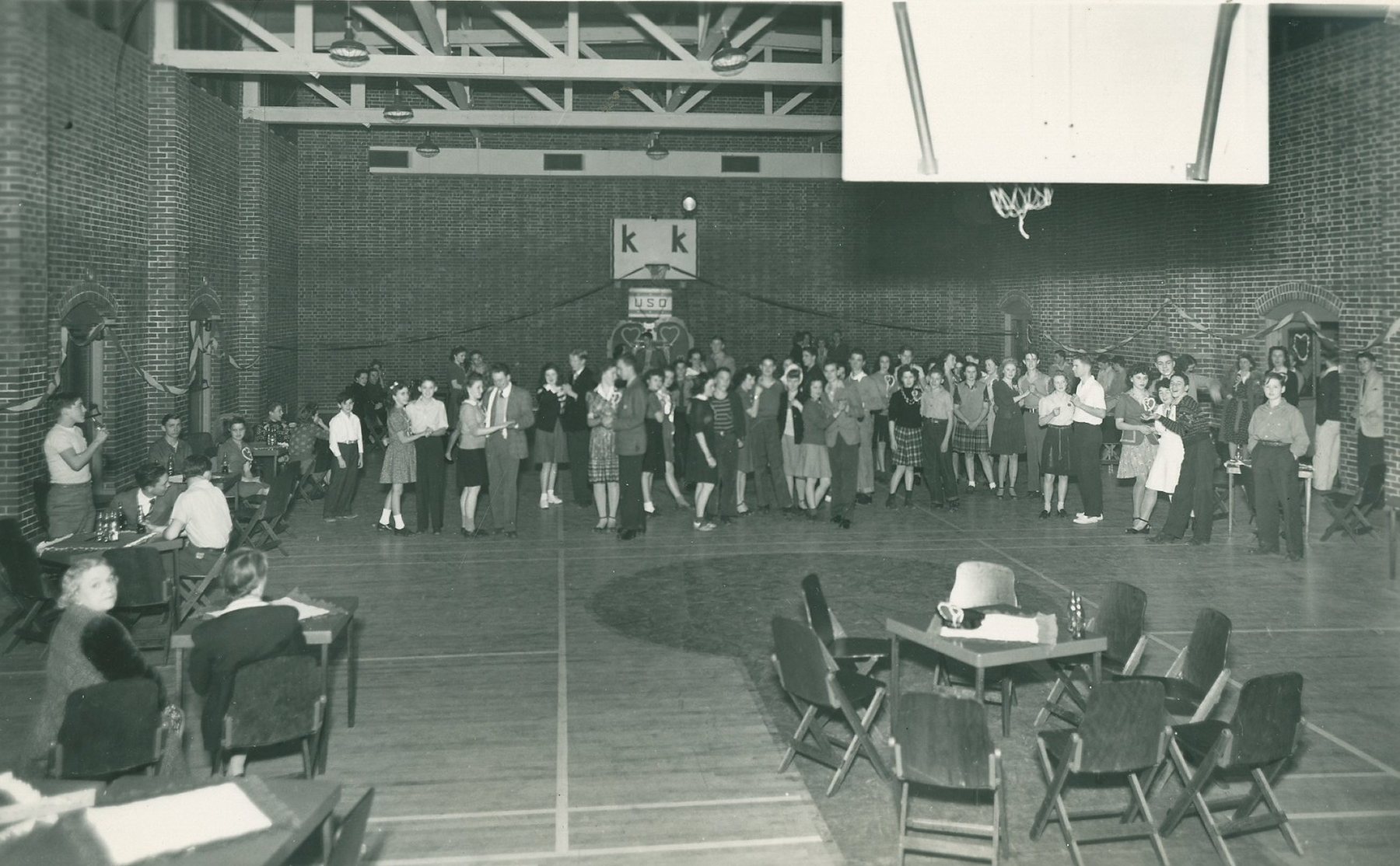
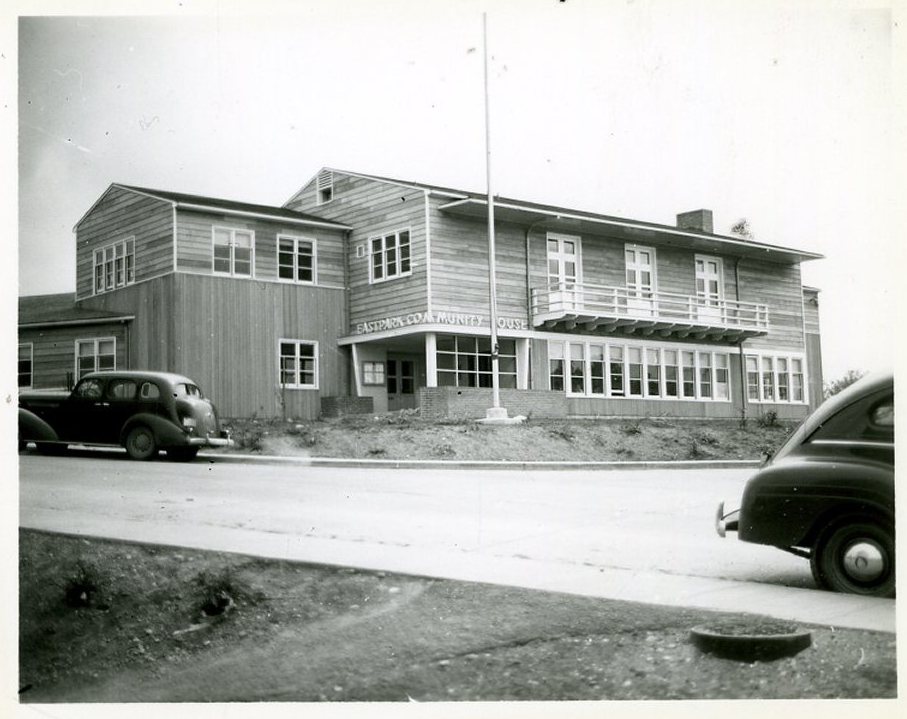
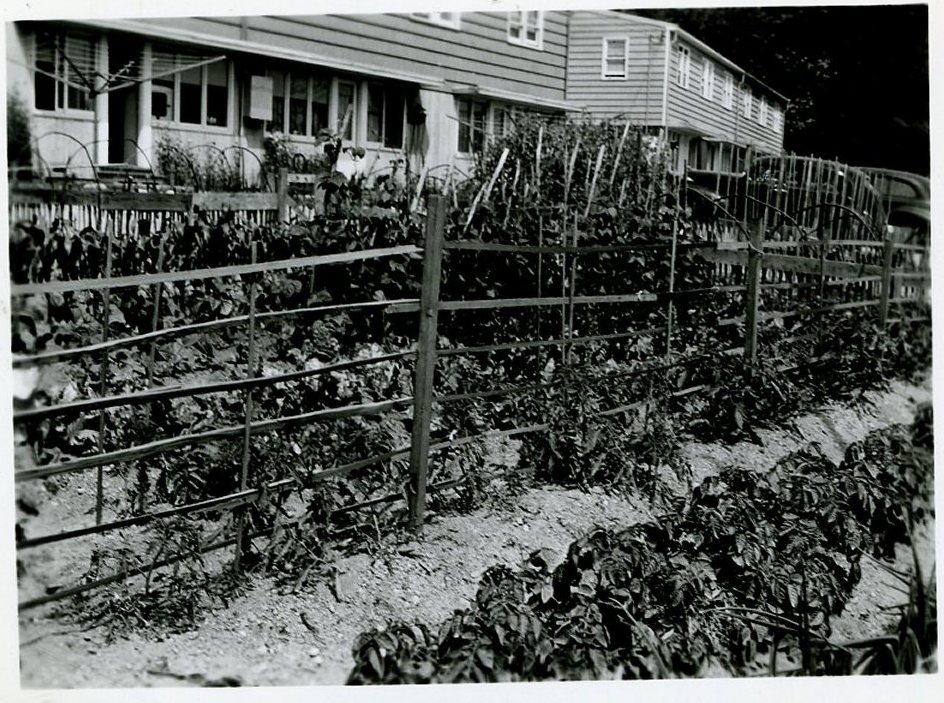
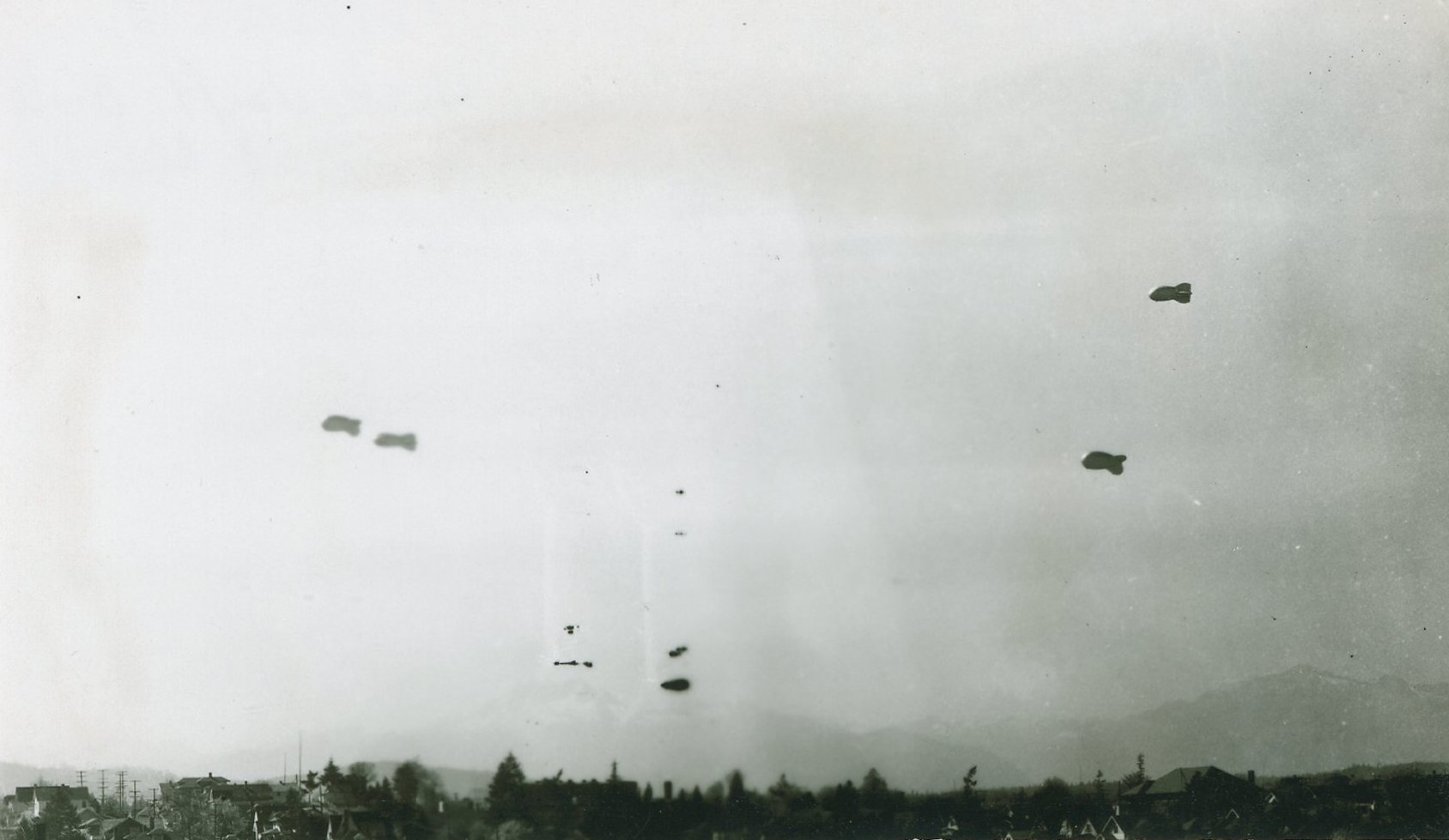
Ten months later came Pearl Harbor. Playgrounds and school grounds were taken over for Army barracks, barrage balloons and gun sites to protect the shipyard. Roosevelt Field became an armed camp. Forest Ridge Park became an Army camp too, and a lodge in the park became Army headquarters. Meanwhile the Bremerton Housing Authority built whole neighborhoods for war workers: Eastpark, with 560 units, opened in August 1941, and Sheridan Park followed in 1942. Several of these wartime neighborhoods would later become city parks. Their community halls were busy too: the Sheridan Park Recreation Center, shown here in 1945, held dances and even hosted the Army.
“That whole hillside was covered with barracks. … You can wander around through that park up there and you’ll see these concrete pads that are there, and they put picnic tables and fireplace deals on ’em and made places where people could have picnics. But there were barracks there at one time with guys living in them.”
Don Serry, remembering Forest Ridge Park during World War II, in a 2008 oral history
Listen (0:32)“There was a barracks building there in the park, and the soldiers that operated the balloon lived there in that barracks. … But the barrage balloon was not in the park, it was on the school ground. … I can remember we took Christmas packages to them at Christmas in the barracks.”
Robert Bryan, who grew up near Hillcrest School and later became a judge, in an oral history Hear the full interview (opens in a new tab)
- February 1941
Mayor Homer Jones appoints Bremerton’s first Park and Recreation Board.
- August 1941
Eastpark defense housing opens, with 560 homes.
- 1942
The Housing Authority builds Sheridan Park, partly in Stephenson Canyon.
- During the war
Don Serry’s Scout patrol clears a spot on the hill near its Scout hall for a tennis court. “By gosh, the Army found it and put a barrage balloon on it,” he remembered.
- 1943
Sheridan Park Community Hall opens.
Parks in this chapterForest Ridge ParkSheridan ParkEast ParkStephenson Canyon
Explore moreSinclair HeightsOral Histories
Beyond our museumPuget Sound Navy Museum (opens in a new tab)
The Pendergast Years
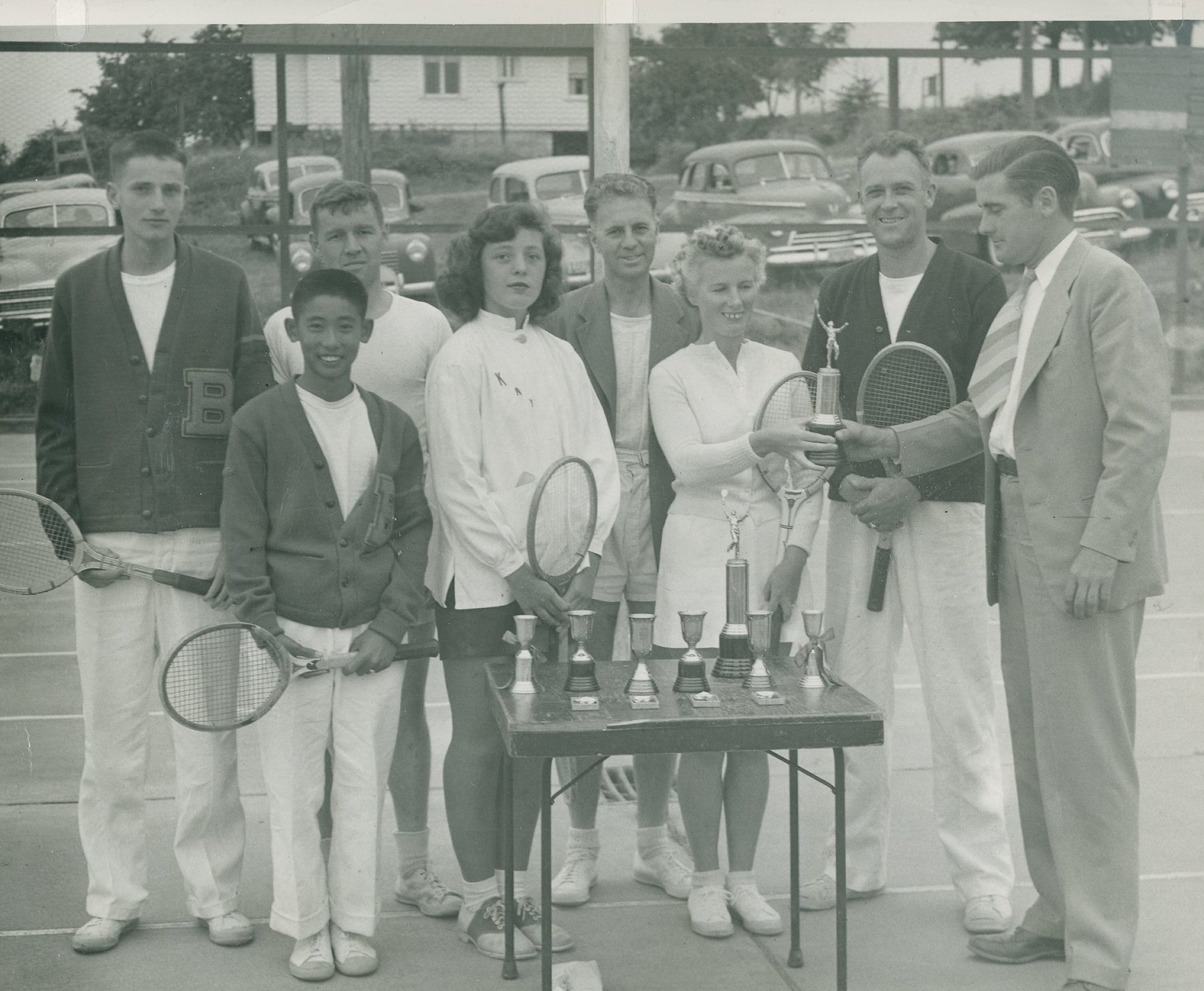
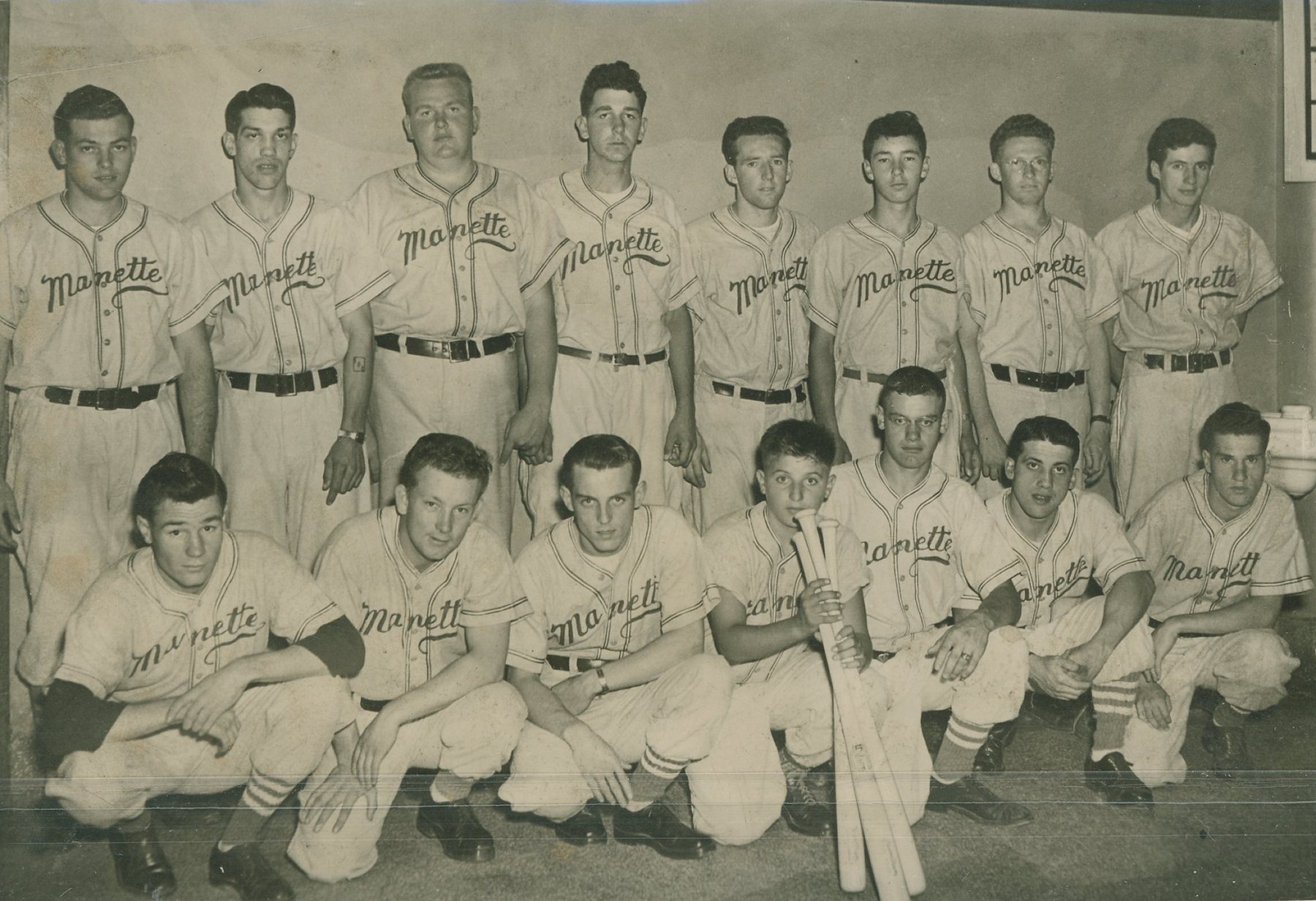
In 1947 the city appointed Andrew “Andy” Pendergast its Parks Superintendent. He led the department for about thirty years, and a plaque in the regional park that now carries his name gives his years as 1947 to 1977. Pendergast, shown here presenting a tennis trophy, was a national leader in softball, and under him Bremerton’s parks became, above all, places to play.
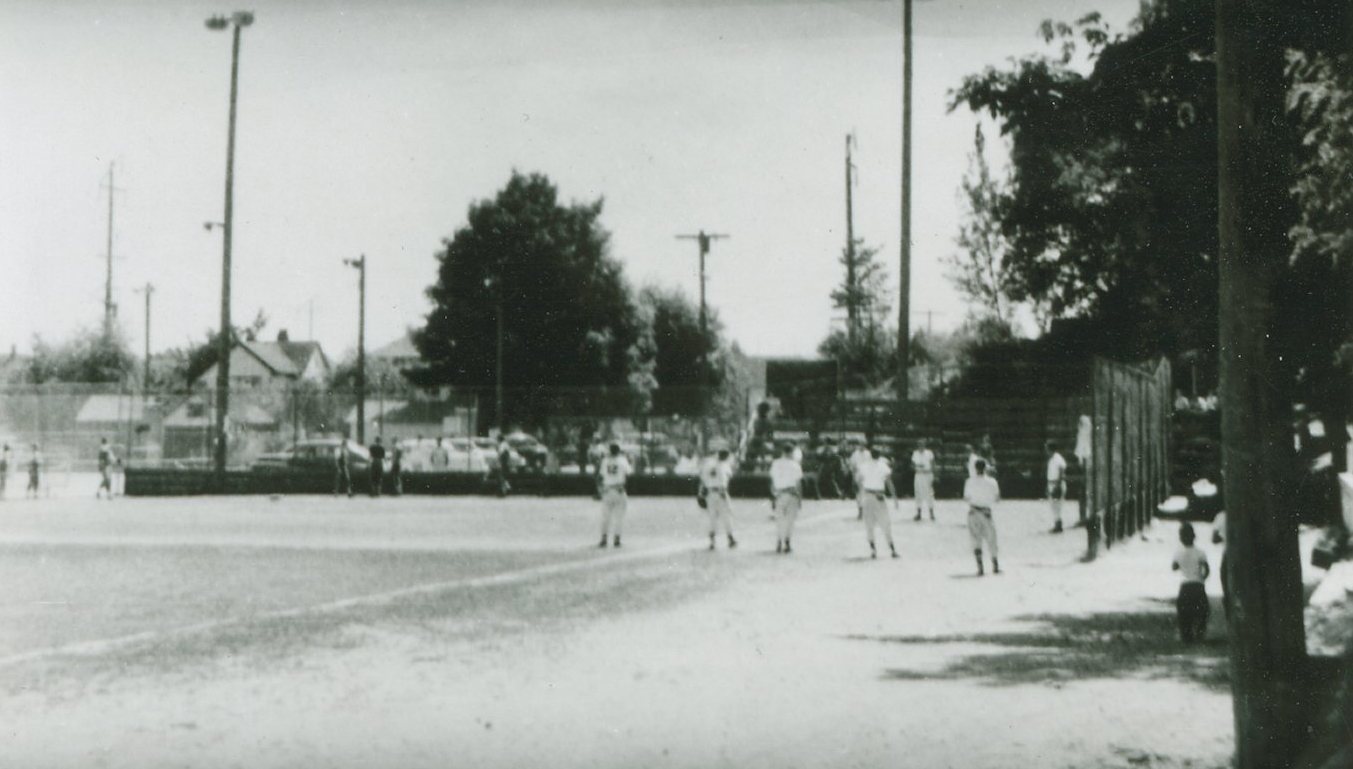
His crews added stands at Warren Avenue, lights at the Manette and Warren Avenue playfields, lighted horseshoe courts at Evergreen Park, and restrooms at Manette and Forest Ridge. In 1953 an outdoor swimming pool, Memorial Pool, was built at Evergreen Park. Service clubs did much of the building. The Lions Club spent years turning a landfill on Lebo Boulevard into a playfield, and, as Margaret Biedel remembered it, Rotary helped the Lions finish paying for the pool. By 1975 the city counted 22 park sites covering 445 acres, plus a municipal golf course.
Listen (0:28)“When you first joined, the Lions Club had gotten bogged down in trying to finance what was the outside swimming pool that was one of their major projects for a while. … And Rotary, I think, finally helped them finish that project.”
Margaret Biedel, on the Evergreen Park pool, in a 2005 oral history with her husband, Dr. Clark W. Biedel Hear the full interview (opens in a new tab)
- 1947
Andy Pendergast becomes Parks Superintendent.
- 1953
Memorial Pool is built at Evergreen Park. It was unheated, and stayed open about 26 years.
- 1964
The Lebo Boulevard field is dedicated as “Lions Playfield.” Pendergast is master of ceremonies.
- 1966
Otto Jarstad Park in Gorst is dedicated, named for a city public works supervisor and father of Mayor Glenn Jarstad.
- 1967
Bataan Park is named. The Filipino-American community and veterans’ groups dedicate it in 1976 to those who died in World War II, especially in the Bataan Death March.
- 1971
Gold Mountain’s Cascade Course opens on city watershed land. Local golfers had been driving to Tacoma to play.
- 1975
An F-8 Crusader jet is moved into N.A.D. Park, which by then had a nature trail “designed for the blind.”
- 1976
The city buys the Kiwanis Park site, the old Union High School and Coontz Junior High grounds, from the school district.
Parks in this chapterPendergast Regional ParkWarren Avenue PlayfieldManette ParkLions ParkEvergreen Rotary ParkGold Mountain Golf ComplexN.A.D. Park and N.A.D. Marine ParkBataan ParkKiwanis ParkOtto Jarstad Park
Explore moreFilipino American Pioneers
From War Housing to Parkland
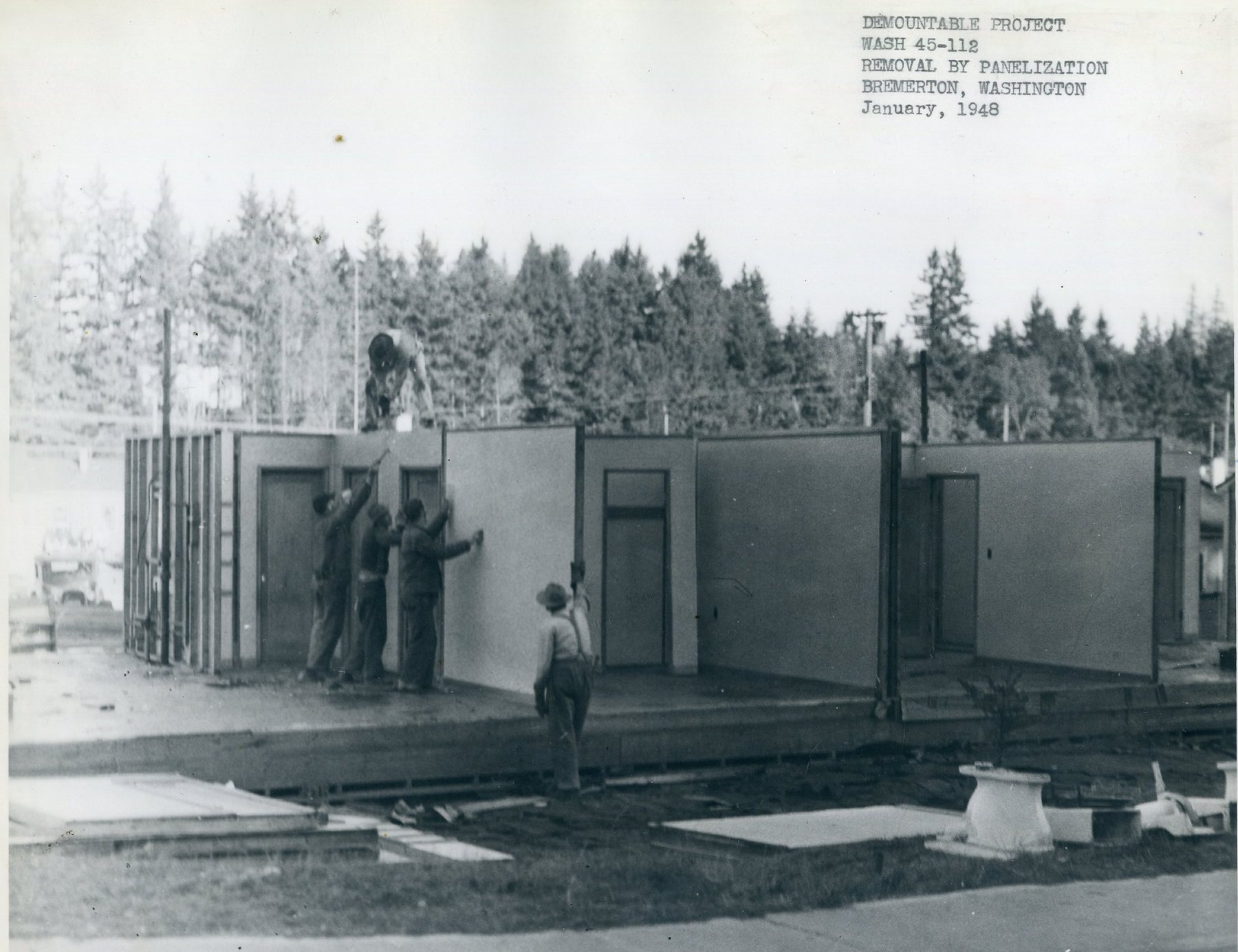
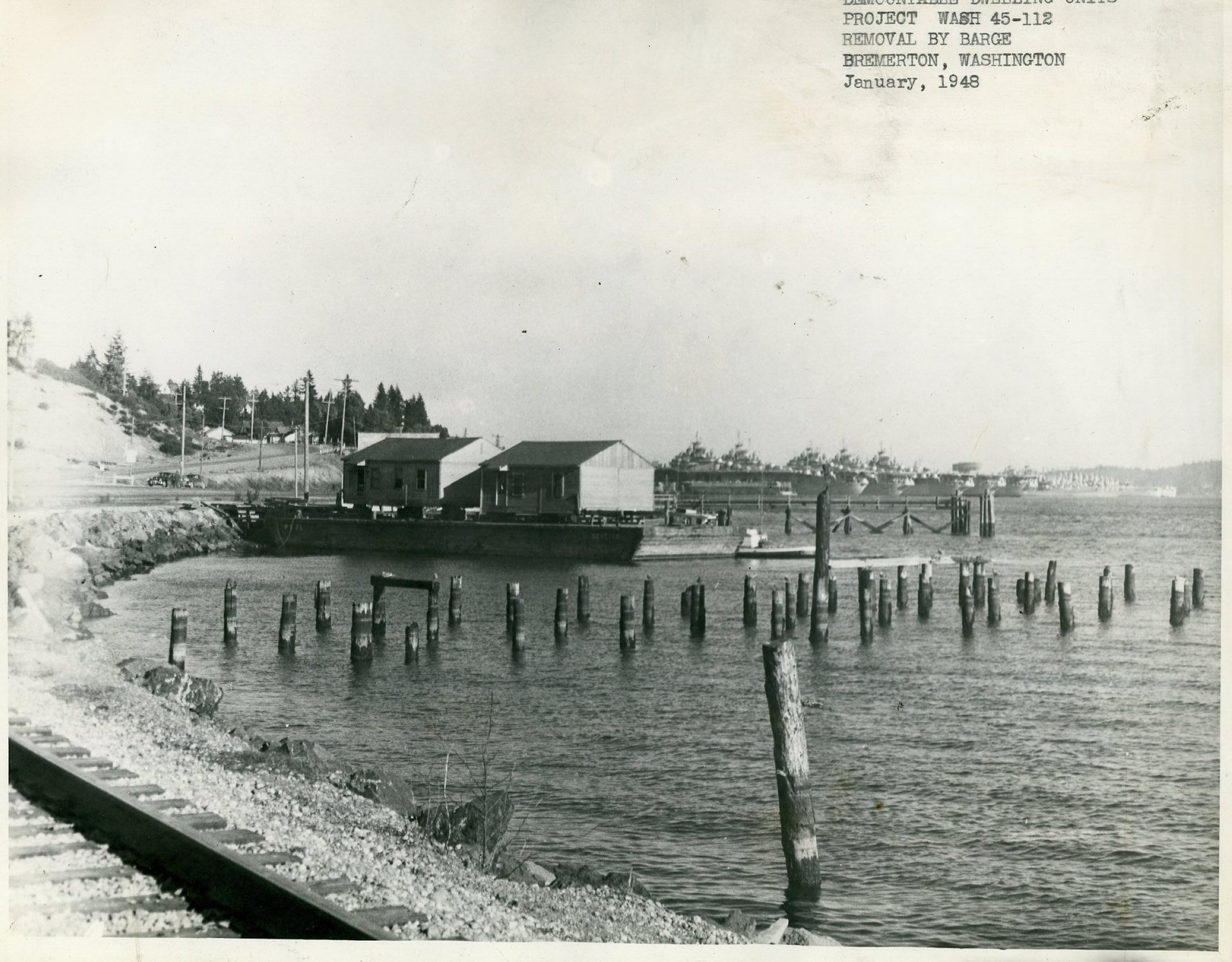
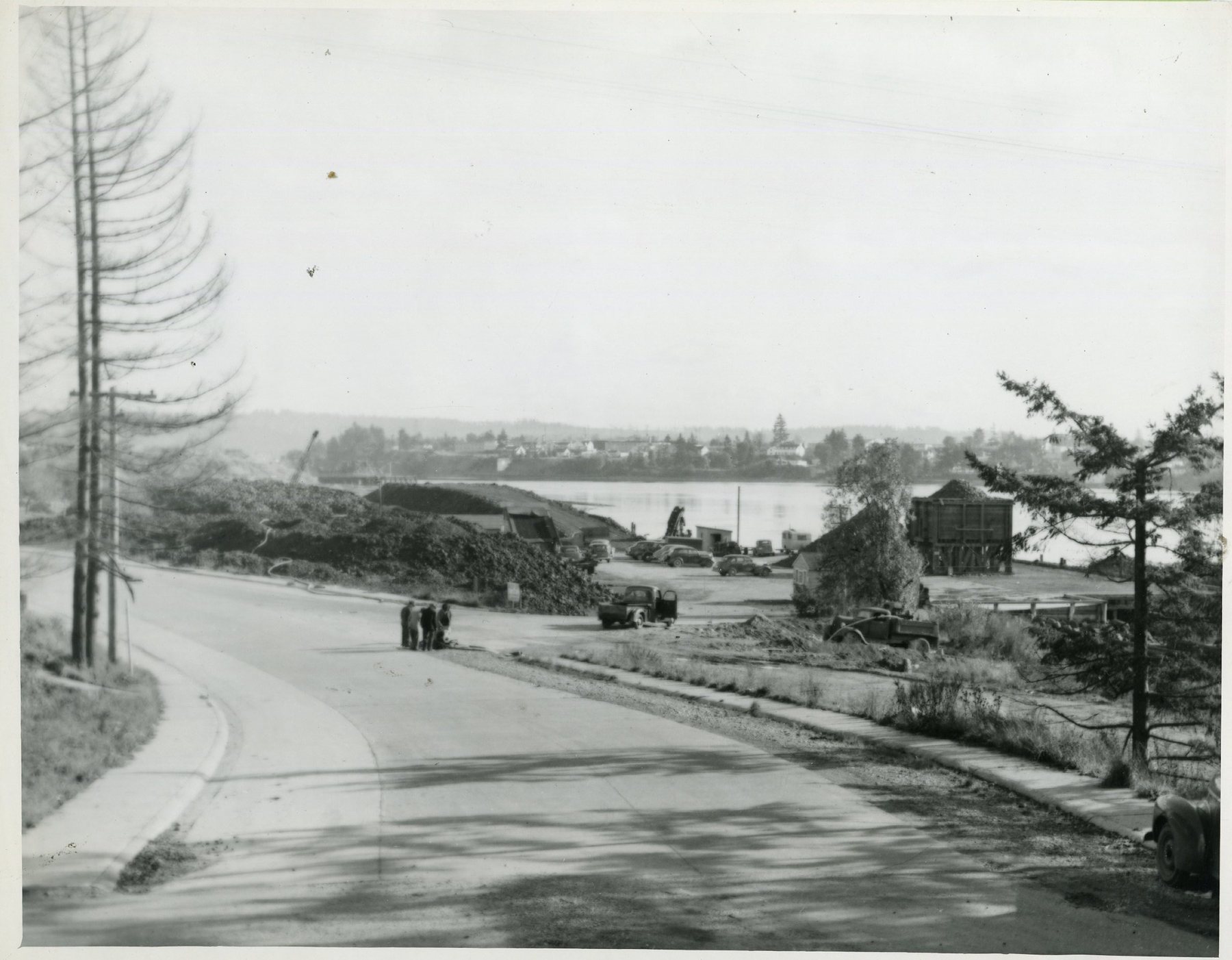
After the war, the temporary housing began to come down. Many homes were taken apart, as shown here in January 1948, and the land the federal government had used for housing and defense became the backbone of Bremerton’s park system. According to Fredi Perry’s history of the city, in 1948 Bremerton took over three surplus properties from the federal Public Housing Administration: Sheridan Park, Stephenson Canyon, and Lebo Field with its old coal dock. The Sheridan Park community building came to the city on June 30, 1948, and is still a community center today.
Lions Park, on Lebo Boulevard, is built on a former landfill, and its pier is the old coal dock. In 1971, 17.6 acres of the old Eastpark housing project were deeded to the city to be used only for parks and recreation; the city later built its indoor pool there. Navy land followed too. The Naval Ammunition Depot on Ostrich Bay, bought by the government in 1904, closed in 1959, and parts of it became N.A.D. Park and N.A.D. Marine Park.
- June 30, 1948
The city acquires the Sheridan Park community building from the Public Housing Administration.
- 1959
The Naval Ammunition Depot closes.
- 1967
The city acquires the Eastpark Nature Area, once Navy land, under an agreement that it never be developed.
- April 5, 1971
17.6 acres of the former Eastpark housing project are deeded to the city under the federal Lands to Parks program.
Parks in this chapterSheridan ParkLions ParkEast ParkN.A.D. Park and N.A.D. Marine ParkStephenson CanyonMadrona Trails
Farms, Forests and the Waterfront
From the late 1970s, Bremerton’s new parks looked less like ball fields. In 1979 the city bought White’s Blueberry Farm on Sylvan Way, a commercial farm with more than 2,400 blueberry bushes, and some of those bushes still grow in Blueberry Park. The blueberry sorter Henry White built for his farm is in the museum’s collection, and is on display in our Rural Heritage Building during the Kitsap County Fair.
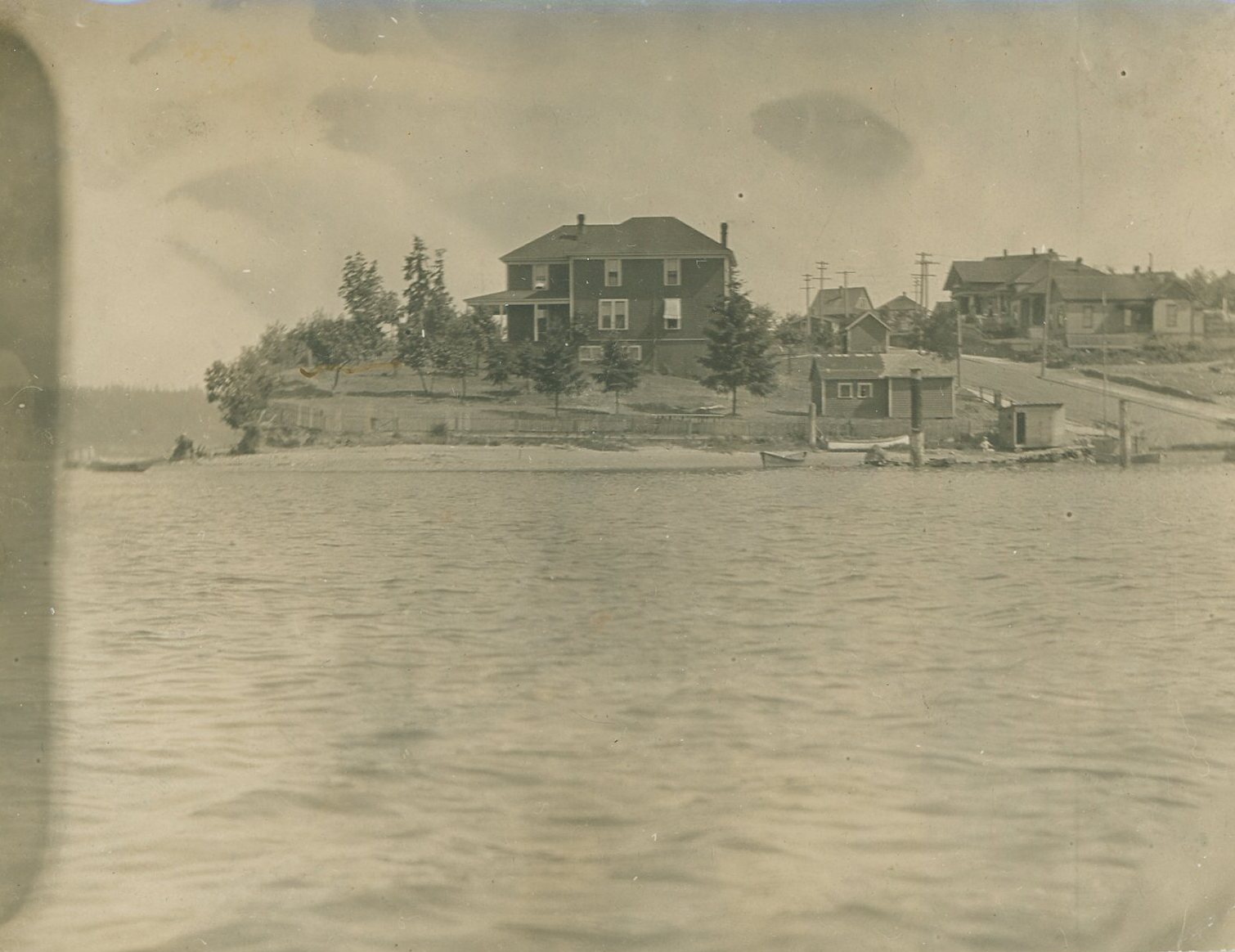
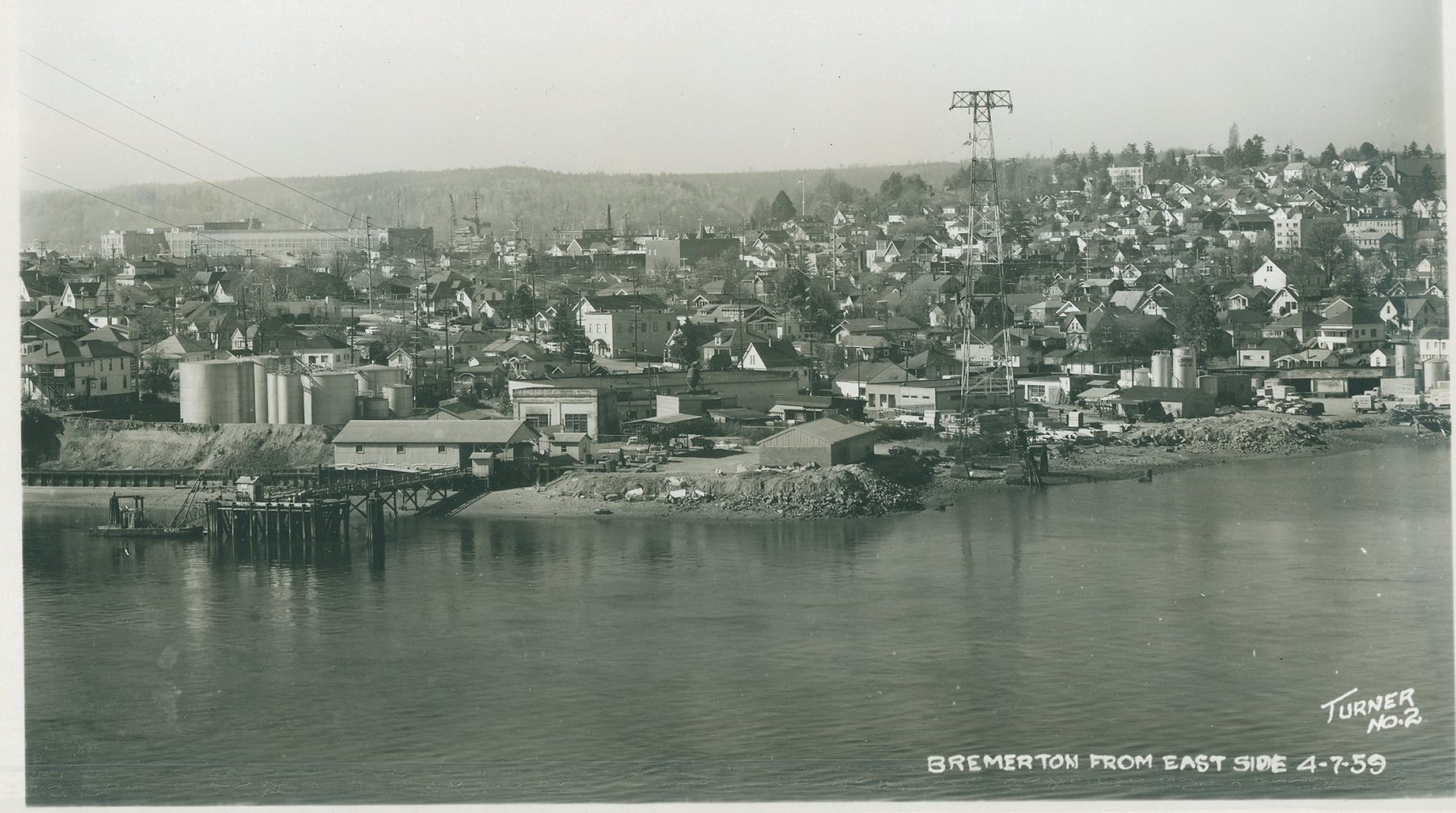
Downtown, the city turned back toward the water. The Louis Mentor Boardwalk was built along the shore in 1991–92, honoring the shipyard’s 100th birthday. Harborside Fountain Park opened in May 2007, and the Puget Sound Naval Shipyard Memorial Plaza, beside the shipyard, in 2009. At Evergreen Park, the city bought the neighboring Chevron bulk-fuel property, a tank farm from 1946 to 1988, cleaned it up, and added it to the park. The 1959 photograph shown here looks across to the shore where Evergreen Park is today.
“When they talked about getting rid of things so that no one could get too close to the Shipyard fence, they took down that whole block and put in the rocks and plants and fountains for that park.”
Morna Blessing Patterson, on Harborside Fountain Park, in an oral history Hear the full interview (opens in a new tab)
- 1979
The city buys White’s Blueberry Farm for a neighborhood park.
- 1987
The city acquires the land for Lulu D. Haddon Park.
- 1991–92
The Louis Mentor Boardwalk is built in honor of the shipyard’s centennial. Bricks for a centennial memorial plaza are sold, each with its buyer’s message.
- 1995
The first phase of Pendergast Regional Park is completed, with ball fields, soccer fields and a playground.
- 1996
Gold Mountain’s second course, the Olympic Course, opens.
- 2005
The city buys the former fuel depot next to Evergreen Park, and later cleans the soil and groundwater.
- May 2007
Harborside Fountain Park opens downtown.
- 2008–09
Blueberry Park is rebuilt with rain gardens, porous paving and a planted roof, and the PSNS Memorial Plaza opens.
Parks in this chapterBlueberry ParkLouis Mentor BoardwalkHarborside Fountain ParkMemorial PlazaEvergreen Rotary ParkPendergast Regional ParkGold Mountain Golf ComplexLulu D. Haddon Park
Parks for Everyone
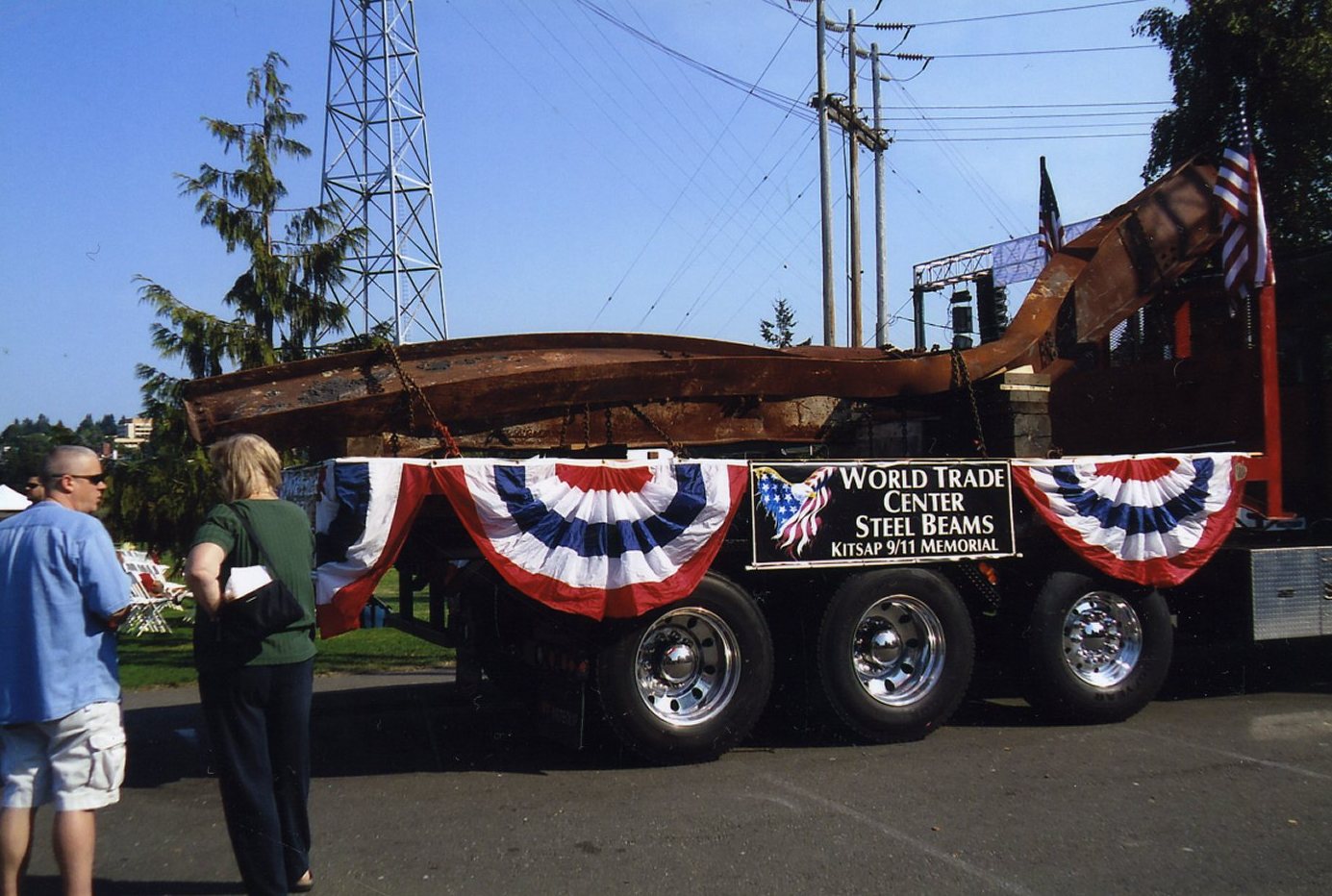
On September 11, 2013, the Kitsap 9-11 Memorial was dedicated at Evergreen Rotary Park, built around steel beams from the World Trade Center, with Bremerton VFW Post 239 as its steward. A year later the same park opened Kitsap County’s first playground for children of all abilities, after a three-year effort by the group Bremerton Beyond Accessible Play.
Many of the old “playfields” have become “parks.” When Manette Playfield was renamed in 2017, the parks director explained that the city’s fields had been laid out as lawns for athletics, and as they were rebuilt with trails, play areas and gathering places, the old name no longer fit. Manette Park reopened in 2019 after a $1.6 million renovation, and work continues across the system. More than a century after those early picnics at Smith’s Point, the city is still adding to its common ground.
- 2011
Lions Park is rebuilt with a more natural shoreline and two softball fields instead of four. The Lions Club gives $50,000 toward the work.
- September 11, 2013
The Kitsap 9-11 Memorial is dedicated at Evergreen Rotary Park.
- August 2014
Kitsap County’s first all-abilities playground opens at Evergreen Rotary Park.
- 2015
The Eastpark Nature Area takes the name Madrona Trails, for its rare grove of madrona trees.
- 2016
Lillian A. & James Walker Park is dedicated.
- 2019
Manette Park reopens after its renovation.
- 2025
Lulu D. Haddon Park is updated with a new playground, sport court, restroom and picnic shelter.
Parks in this chapterEvergreen Rotary ParkManette ParkLions ParkLulu D. Haddon ParkMadrona TrailsLillian A. & James Walker Park
Parks With a Name
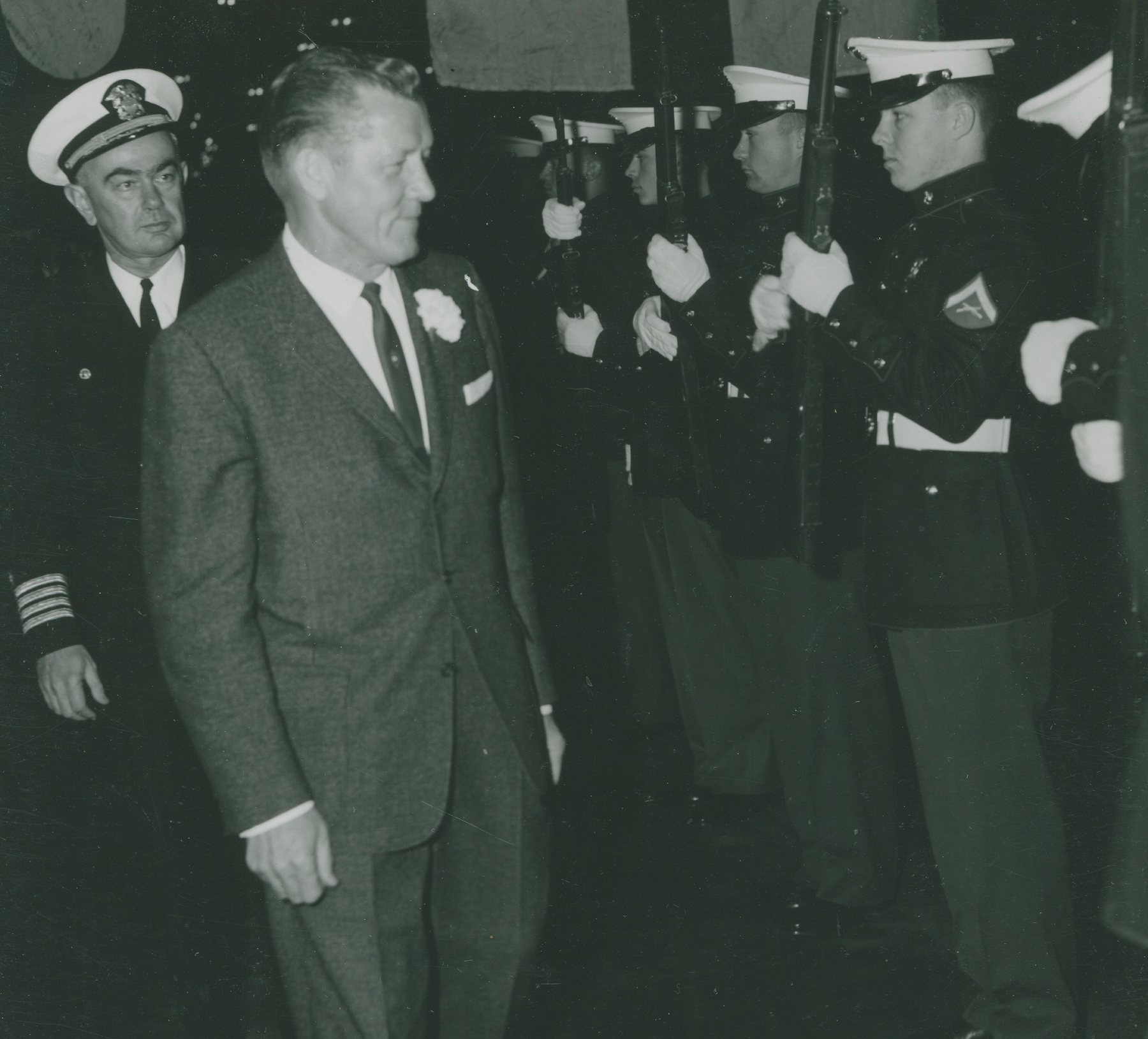
Many of Bremerton’s parks honor people who shaped the city: a homesteader, a mayor, a legislator, civil rights pioneers, a parks superintendent. Here are some of the names you will see on park signs, and who they were.
When Lulu D. Haddon Park was dedicated, her family turned out in force. Her nieces remembered what council member Dave Farr said that day.
Listen (0:14)“When he gave his little speech, he said, “Well, now I know why there’s always so many people on this field. It’s all of her family.””
Lulu Haddon’s nieces, Mary Helen Davis Torpey and Betty Lou Davis Mullay, in a 2008 oral history Hear the full interview (opens in a new tab)
-
Warren Smith
Warren Avenue and Smith Cove →
Civil War veteran and homesteader whose land on the Narrows became Evergreen Park.
-
Andy Pendergast
Parks Superintendent from 1947 for about thirty years, and a national softball leader. The first phase of the regional park on Union Avenue was completed in 1995.
-
Lulu D. Haddon (1881–1964)
State representative, one of the sponsors of the state’s original junior-college bill, and Bremerton’s Commissioner of Finance. In 1948 she served on the committee that found the first space for a county historical museum: this one. A school at 15th and Lafayette carried her name, and her family recalls that when it was torn down, the park on the corner took the name.
-
H. O. “Whitey” Domstad
Mayor of Bremerton from 1955 to 1964, a Navy retiree well known as a boxing referee. His plaza overlooks the east end of the Manette Bridge.
-
Lillian A. and James Walker
Lillian A. & James Walker Park →
Bremerton’s civil rights pioneers. The city bought the park land in 2011 and dedicated it on June 17, 2016. Meet the Walkers →
-
Otto Jarstad
City public works supervisor who lived on the site with his family, including future Mayor Glenn Jarstad. Dedicated in 1966.
-
The Lent family
Named for the family of Ernest B. Lent. In World War II a barge ferry carried Sheridan Park residents from here to the shipyard. A memorial honors Medal of Honor recipient John D. “Bud” Hawk.
-
Louis Mentor
Mayor in the early 1990s. The boardwalk honors the shipyard’s 100th birthday in 1991.
-
Hal Fischler
Founding father of the Navy League in Bremerton.
-
The Bataan defenders
Dedicated by the Filipino-American community and veterans’ groups to those who died in World War II, especially in the Bataan Death March.
Keep Exploring
The museum’s collection holds hundreds of photographs of Bremerton’s parks and the wartime neighborhoods that became them, many of them in our online collection. Researchers are welcome to make an appointment.
Sources: Kitsap County: A History (Kitsap County Historical Society, 3rd ed. 2012); Fredi Perry, Bremerton and Puget Sound Navy Yard; City of Bremerton parks plans, guides and records; the Kitsap Sun; the museum’s collection, oral histories and research files. Research by Kitsap History Museum staff and volunteers.