
Common Ground: A History of Bremerton’s Parks
Explore by park
Evergreen Rotary Park
A picnic ground on the Narrows since 1901
1500 Park Ave., on the Port Washington Narrows
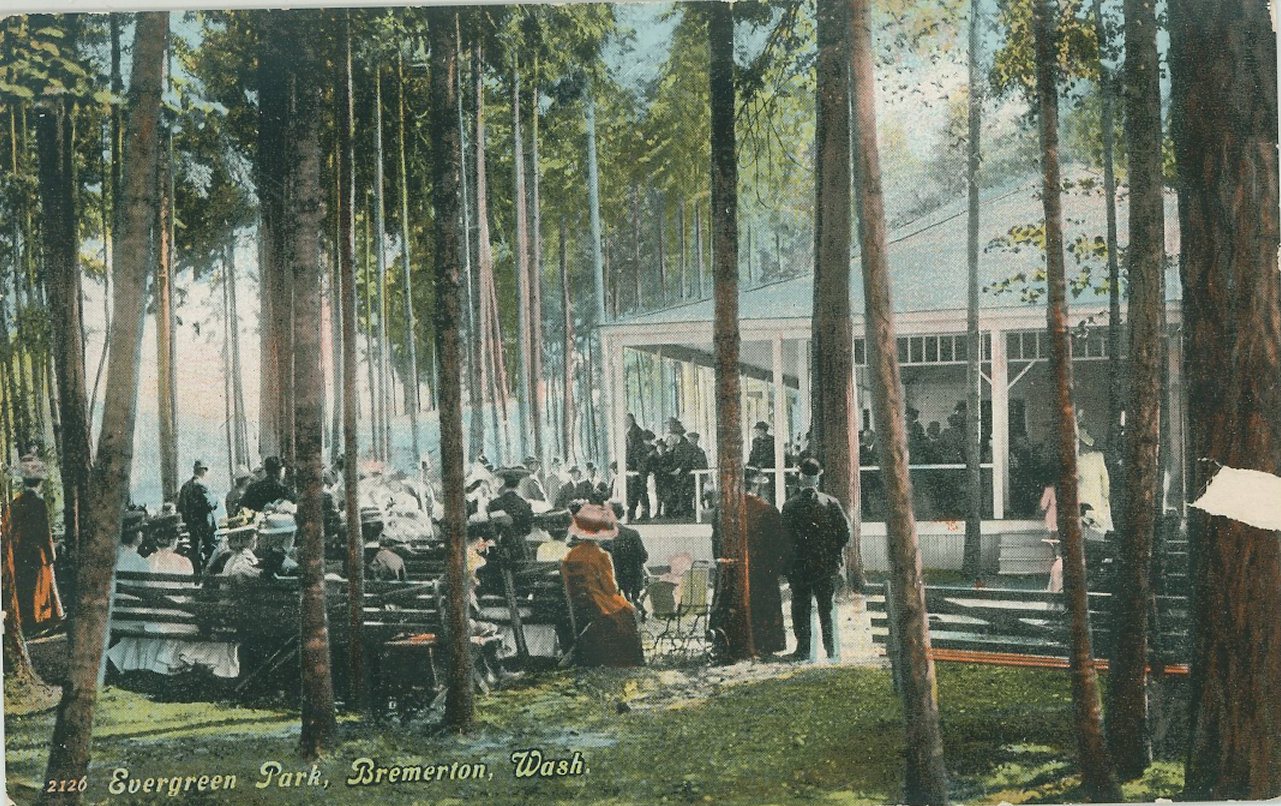
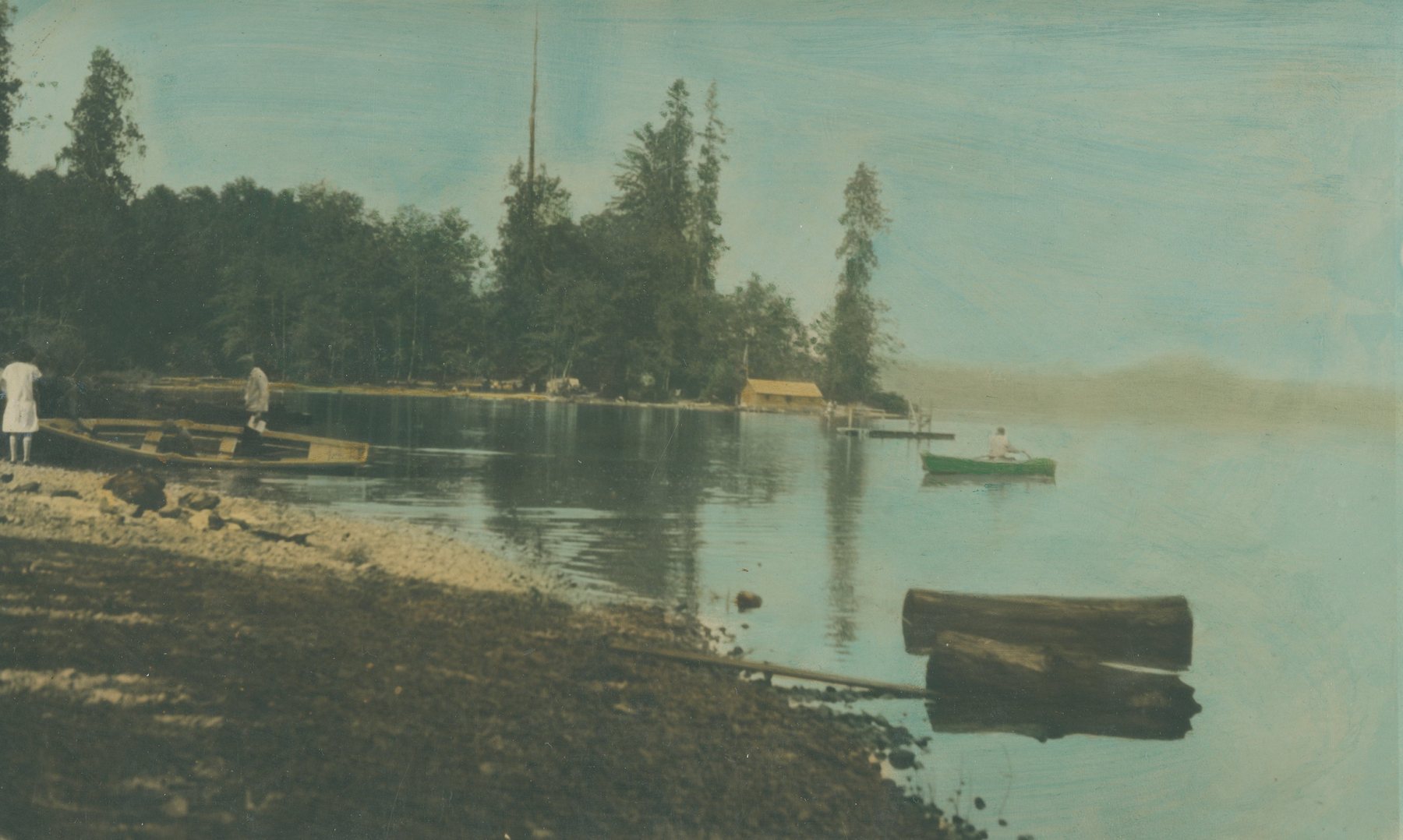
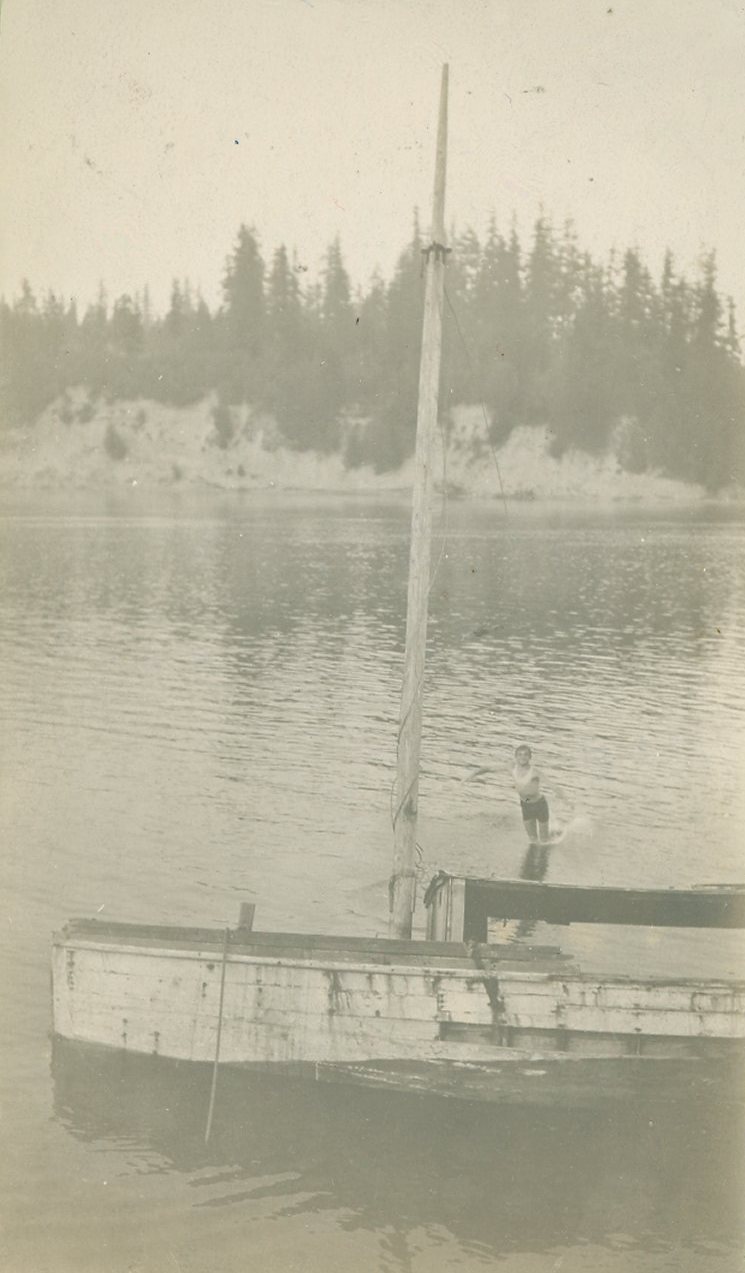
Long before there was a city of Bremerton, this shore was a Suquamish camping place. Ethnographers recorded that people came here to dig clams, hunt ducks and fish, and the remains of a shell midden could still be seen in 1952. Two arrowheads found in the park about 1903 are in the museum’s collection.
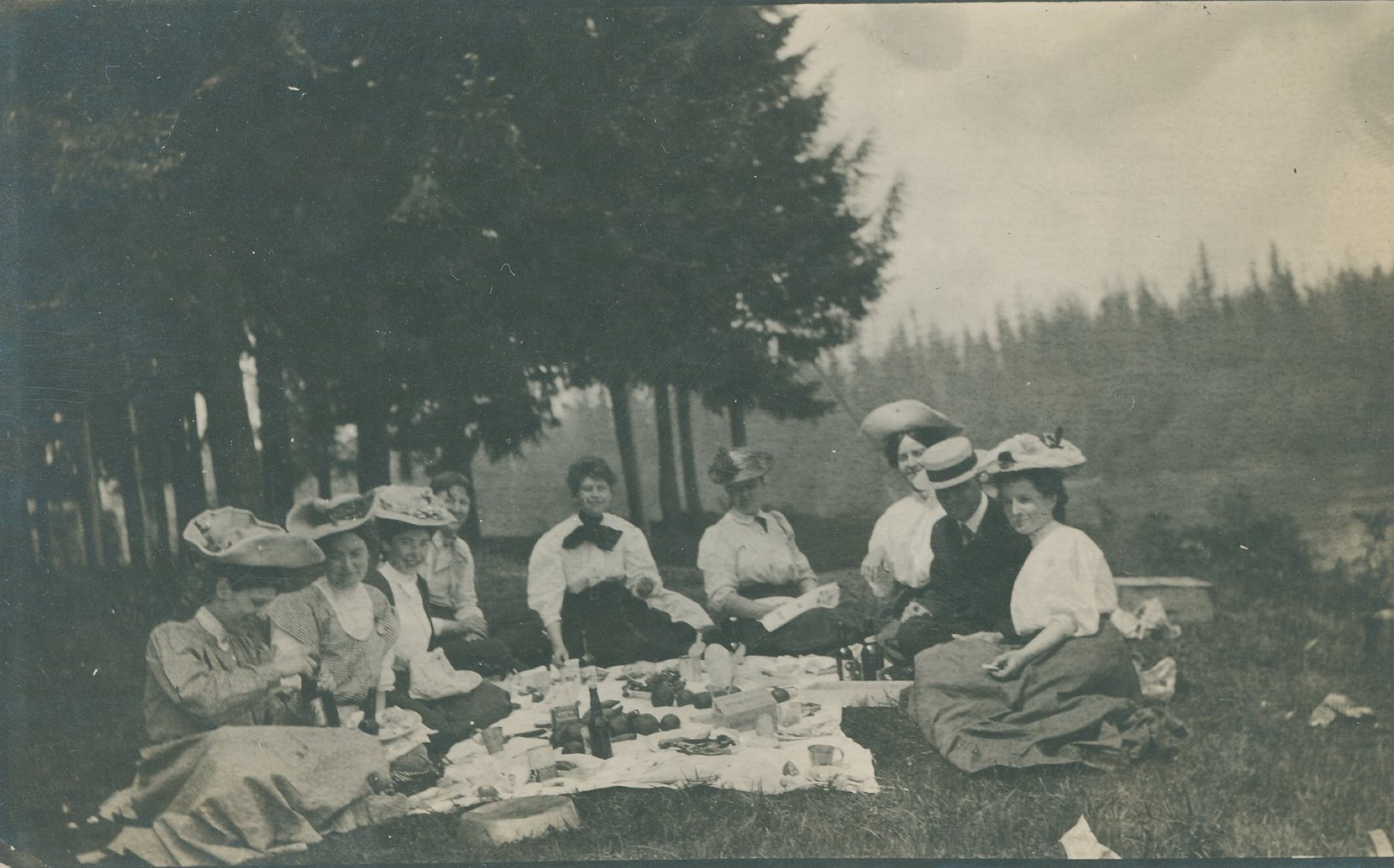
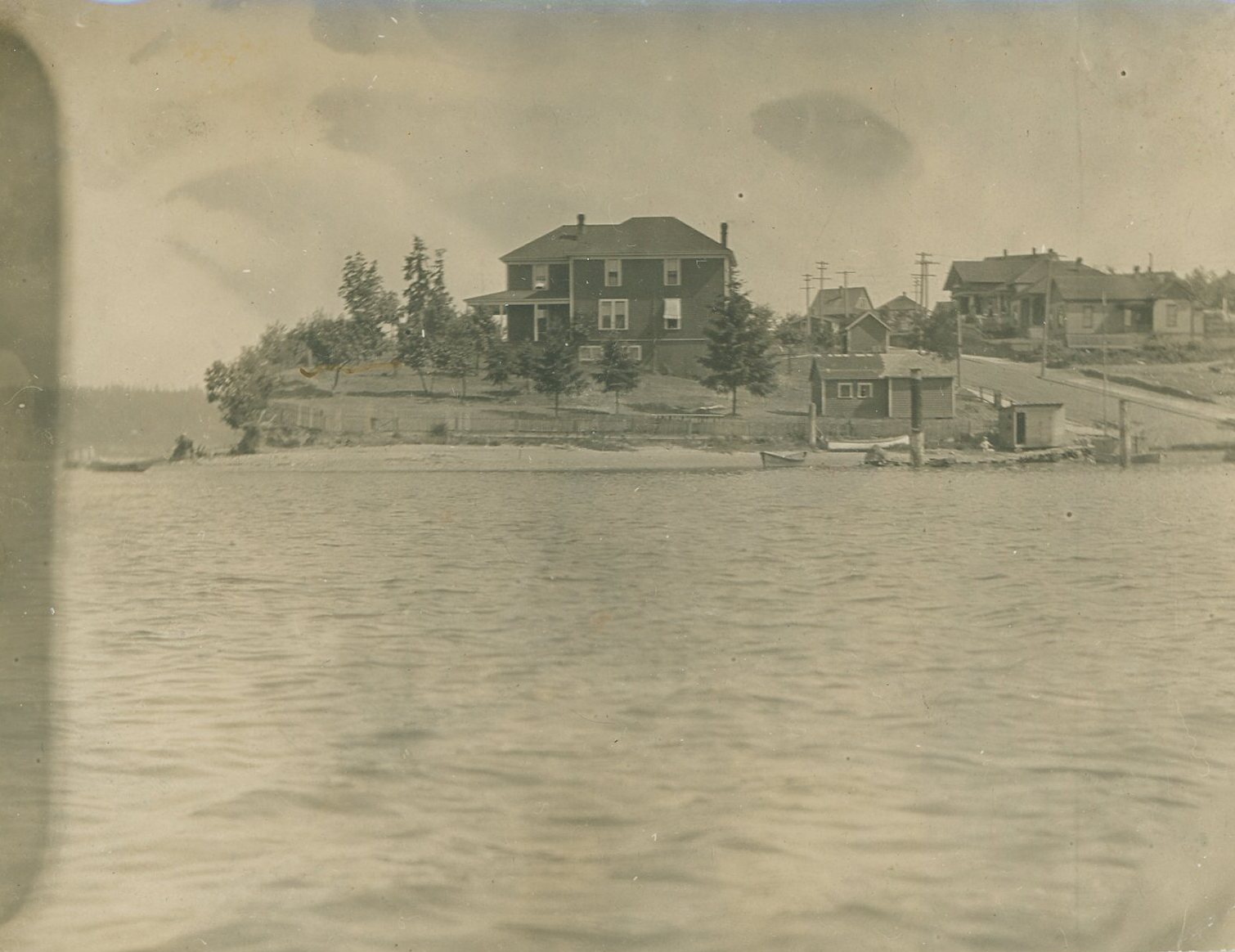
In 1888 Warren Smith, a Civil War veteran, received the government patent for this land as a homestead. Smith Cove and Warren Avenue are named for him. In 1901 Moffett and Zumwalt leased about 11 acres at Smith’s Point from him and built a ball ground and a dance pavilion. The museum’s “Green Book,” Kitsap County: A History, calls Smith the owner of Evergreen Park, “finest picnic ground in the vicinity.” The park was dedicated on May 22, 1909, and in 1911 it hosted the county fair, the first in twelve years, with about 1,000 people a day.
Not everything at the park was a picnic. Zena Schlupe, a young teacher in Charleston, remembered walking to Evergreen Park for lunch with four other teachers around 1905. They asked an elderly man where to find water. He led them to a small building at the edge of the park and pushed her into a room, saying, “Get in there and dish it out.” She saw piles of bottles lying on their sides and darted back outside, calling to the others, “Come on out of there. We’re in a ‘blind pig’!” That was the old name for a place selling liquor illegally, what later came to be called a speakeasy. The teachers ate their dry lunch on the bandstand. Hers is the only account of it we have found.
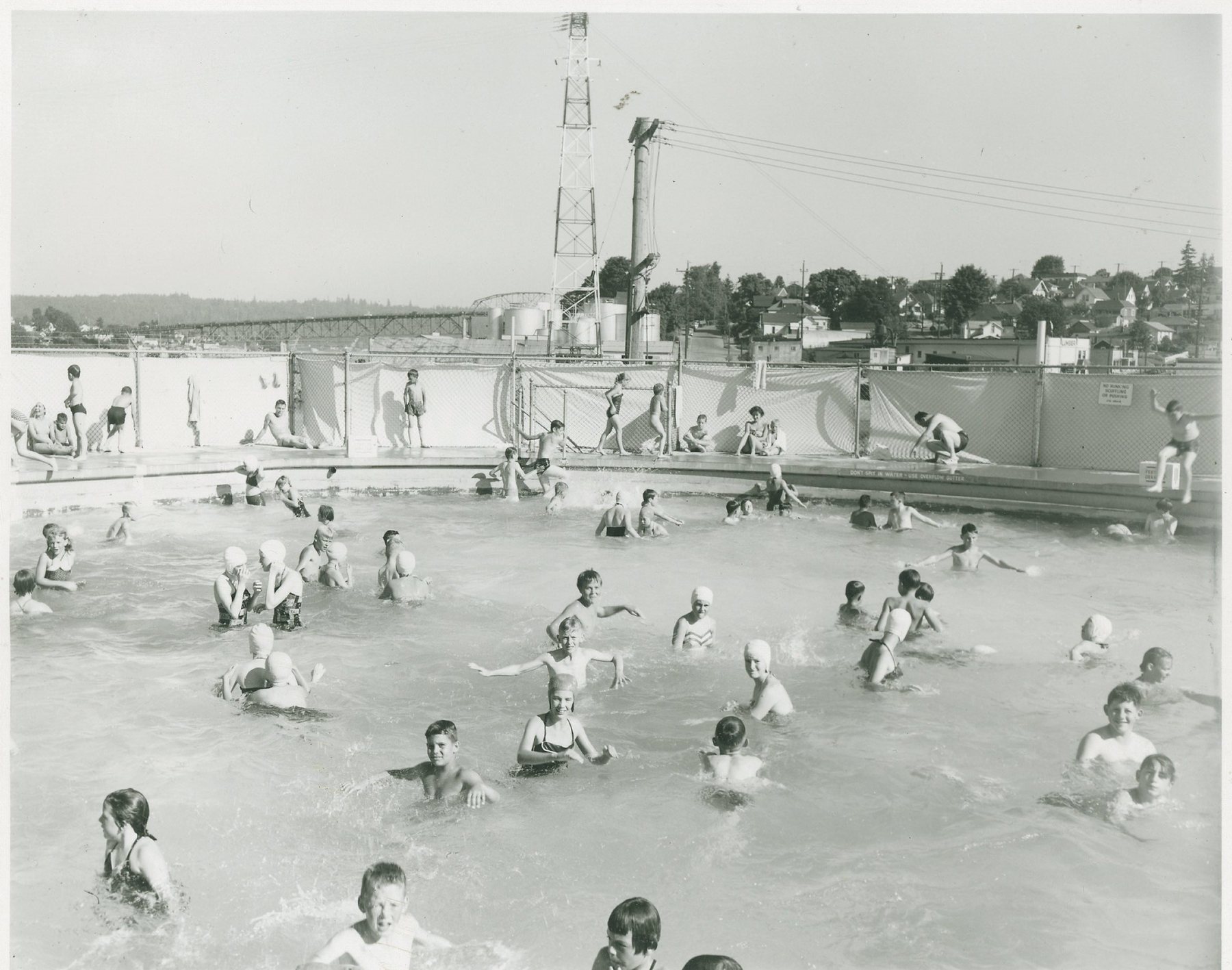
Under Parks Superintendent Andy Pendergast the city added lighted horseshoe courts, and in 1953 an outdoor swimming pool, Memorial Pool, was built in the park. A dedication certificate in the museum’s collection says the pool honored the veterans of World War II and that the Bremerton Lions Club helped build it. Margaret Biedel remembered the Lions getting bogged down paying for it, and, she thought, Rotary helping them finish. The pool stood just southwest of the park’s old wading pool, and photographs show it overlooking the water, with the hillside across the Narrows beyond.
It was never heated. Museum volunteer Claudia Hunt, in a 2014 “Time Capsule” photo feature for the Kitsap Sun, called it “the world’s coldest swimming pool”: unheated concrete painted shades of blue and green, where “two generations of small children took swimming lessons and turned their own shades of blue.” It closed after about 26 years, when the city’s indoor pool opened in East Bremerton in 1979.
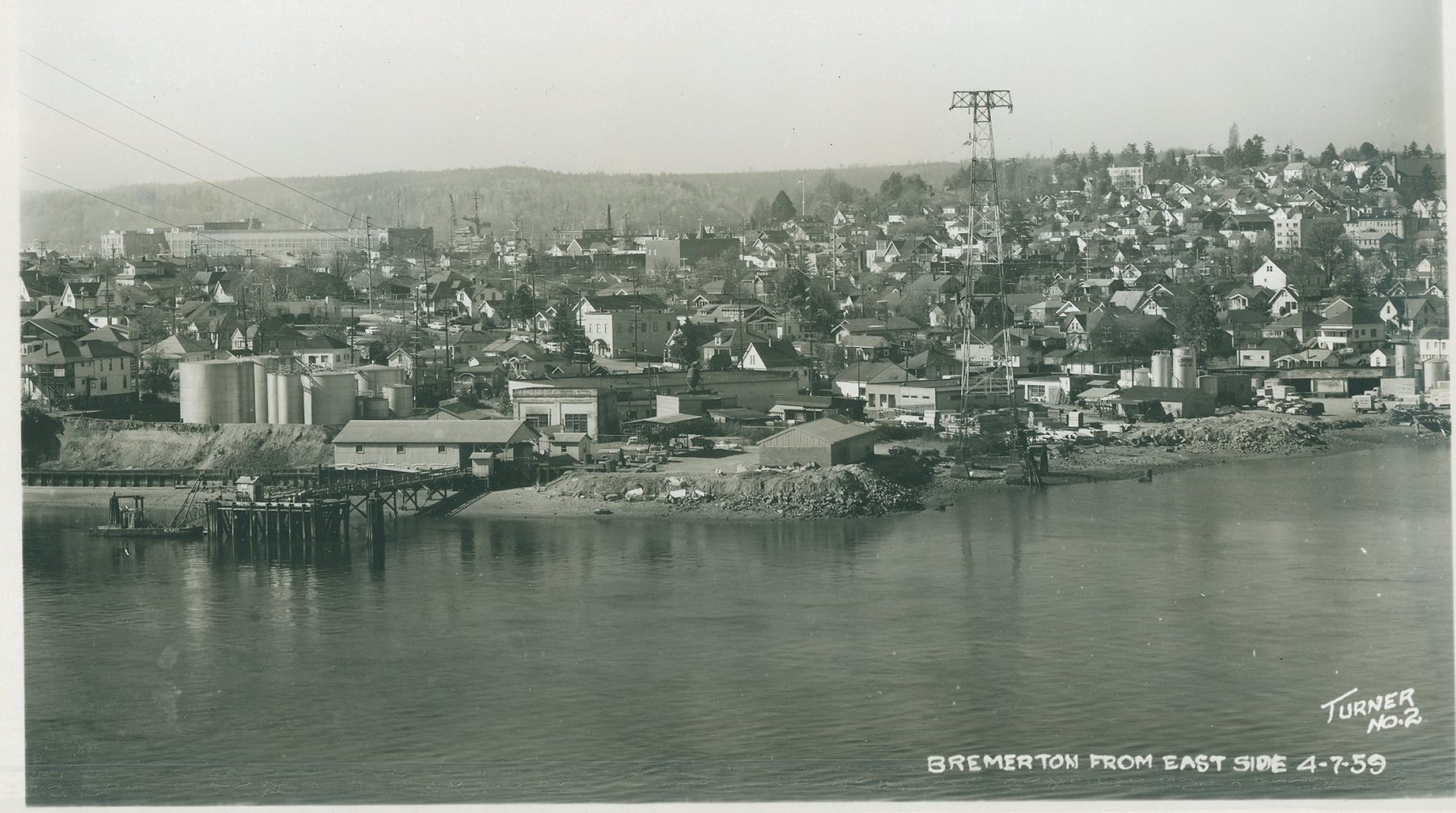
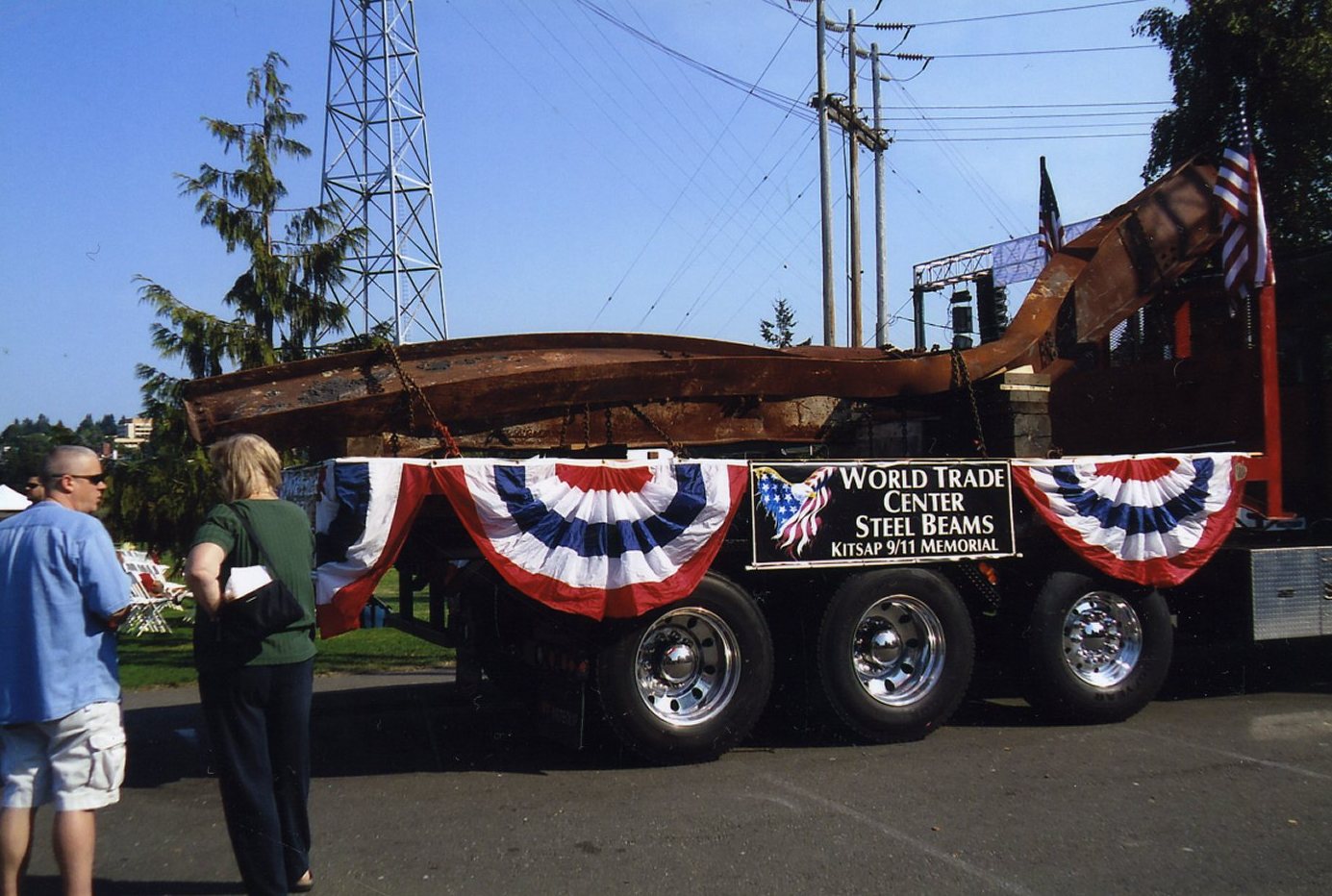
In 2005 the city bought the former Chevron bulk-fuel property next door, a tank farm from 1946 to 1988. It treated the soil and groundwater there in 2009–2011 and added the land to the park. On September 11, 2013, the Kitsap 9-11 Memorial was dedicated here, built around steel beams from the World Trade Center, with Bremerton VFW Post 239 as its steward. A year later the park opened Kitsap County’s first playground for children of all abilities, after a three-year effort by Bremerton Beyond Accessible Play. The park also has a World War I memorial, with plaques listing Bremerton service members who died in that war, and two saluting guns from USS West Virginia.
Listen (0:28)“When you first joined, the Lions Club had gotten bogged down in trying to finance what was the outside swimming pool that was one of their major projects for a while. … And Rotary, I think, finally helped them finish that project.”
Margaret Biedel, on the Evergreen Park pool, in a 2005 oral history with her husband, Dr. Clark W. Biedel Hear the full interview (opens in a new tab)
Through the years
- Long before 1888
Suquamish people camp, fish and dig clams along this shore.
- 1888
Warren Smith receives the patent for his homestead on the Narrows.
- 1901
A ball ground and dance pavilion are built at Smith’s Point.
- July 4, 1904
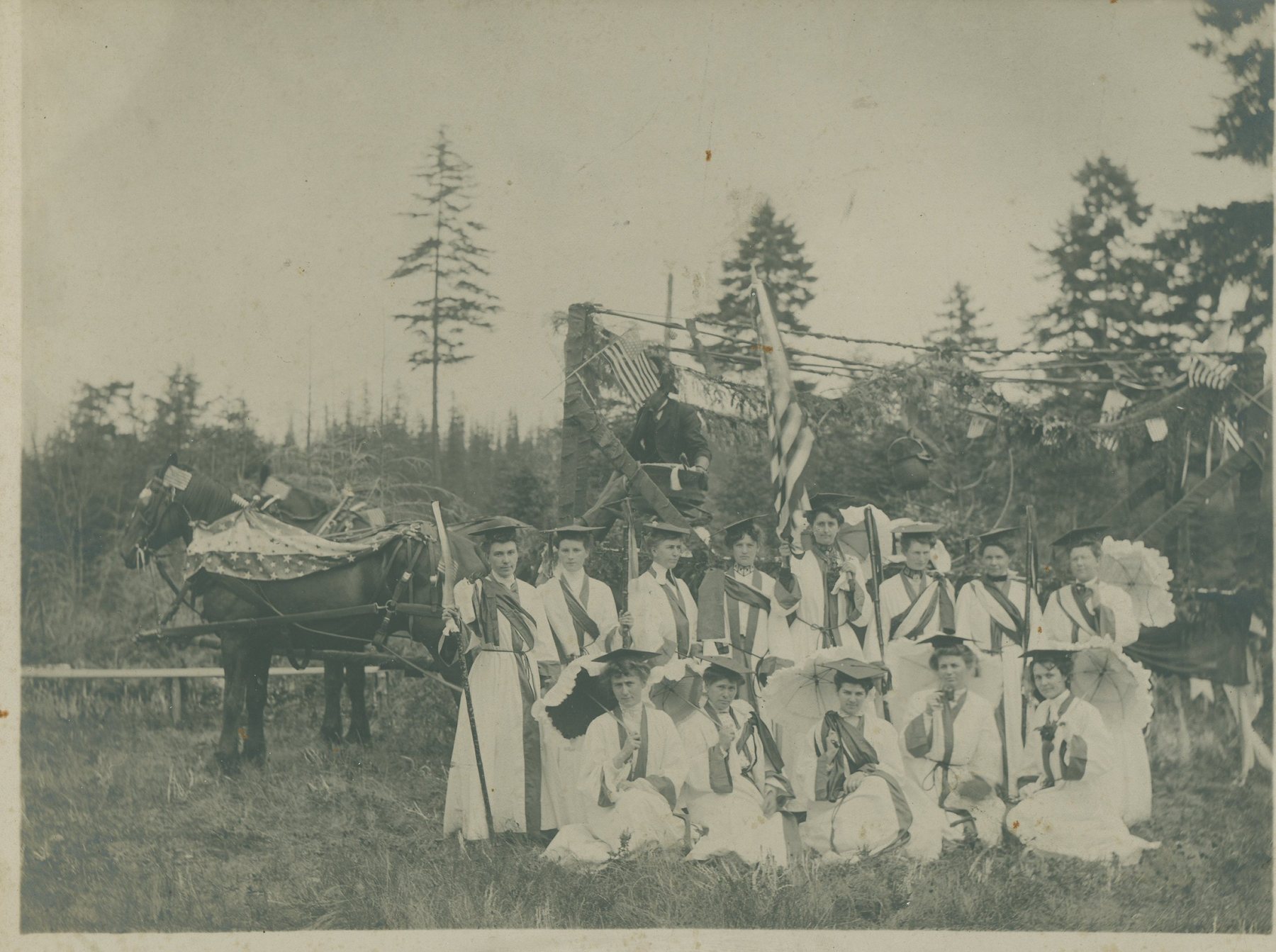
Fourth of July in the park, with women associated with the Grand Army of the Republic and a Woodmen of the World float.
- About 1905
Teacher Zena Schlupe stumbles into a “blind pig,” a place selling liquor illegally, at the edge of the park.
- May 22, 1909
Evergreen Park is dedicated.
- 1911
The county fair comes to the park, the first fair in twelve years.
- 1916
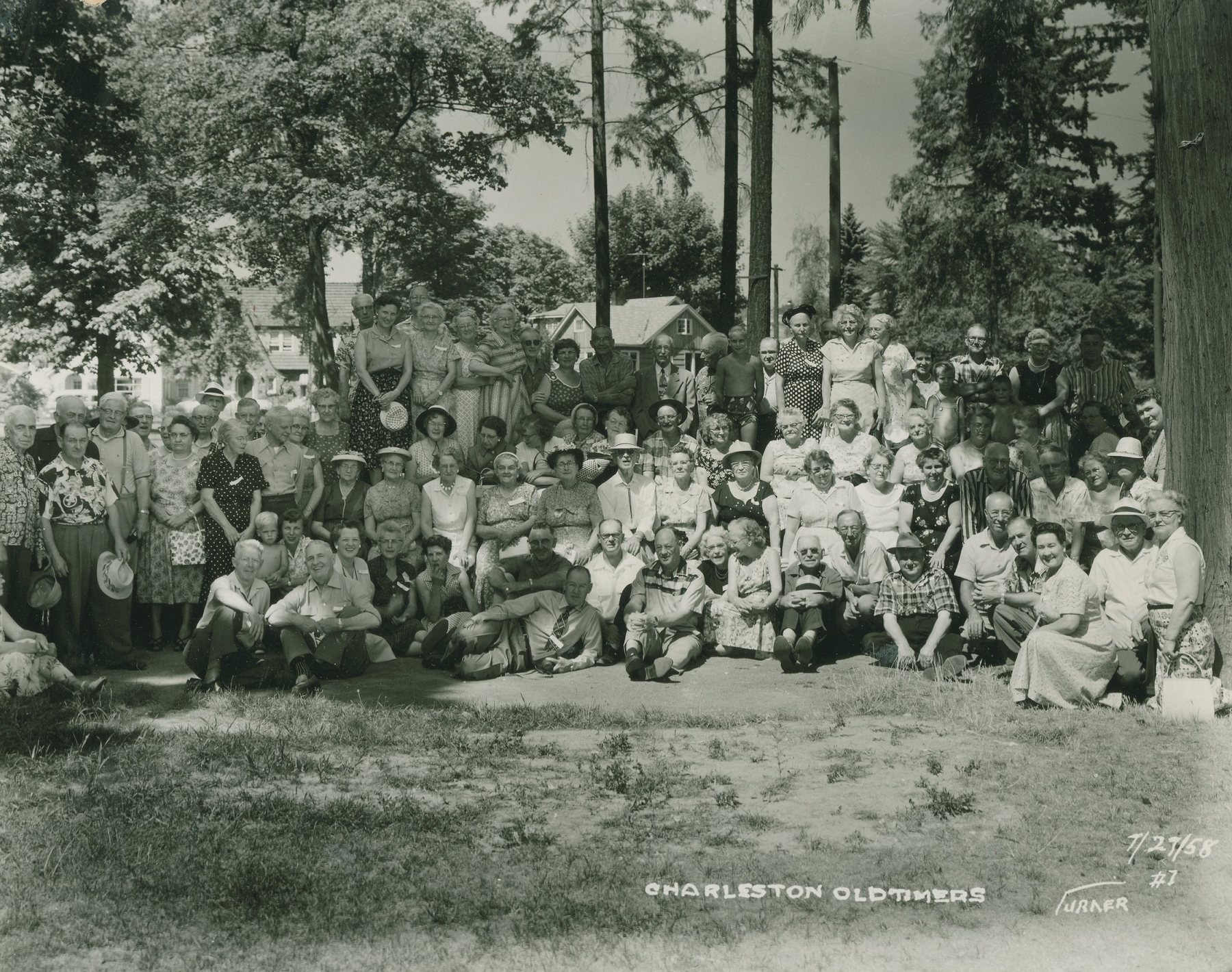
The Golden Cafe serves lunch for 61 at the Pioneers’ Association gathering in the park. The receipt survives in the museum’s collection.
- About 1921–22
The first airplane to land at Evergreen Park touches down.
- 1953
Memorial Pool is built, honoring the veterans of World War II.
- 1979
Memorial Pool closes when the city’s indoor pool opens in East Bremerton.
- 2005
The city buys the old fuel depot next door to expand the park.
- September 11, 2013
The Kitsap 9-11 Memorial is dedicated.
- August 2014
Kitsap County’s first all-abilities playground opens here.
In the timelineBefore 1901: The shoreline1901: Picnic grounds1947: Playfields1979: Farms & waterfront2013: Parks today
Beyond our museumSuquamish Museum (opens in a new tab)