
Common Ground: A History of Bremerton’s Parks
Explore by park
Blueberry Park
A family blueberry farm that became a neighborhood park
737 Sylvan Way
Garden rows at Blueberry Park, from a set of color slides in the museum’s collection (shown here in black and white). Kitsap History Museum, 2017.020.002
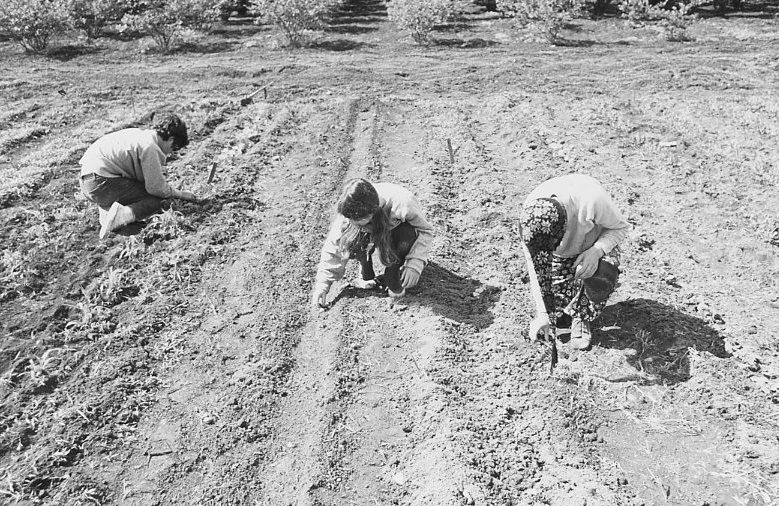
Blueberry Park was once Tanglewood Farm. Henry E. White, a machinist who came to Bremerton for a job at the Navy Yard, bought twenty acres of logged-off land in Sheridan Heights about 1940, where a shingle mill had once stood. The family built a house and cleared the land a patch at a time. They tried strawberries, raspberries and blackberries before White settled on blueberries, and in the end the farm had five acres of them.
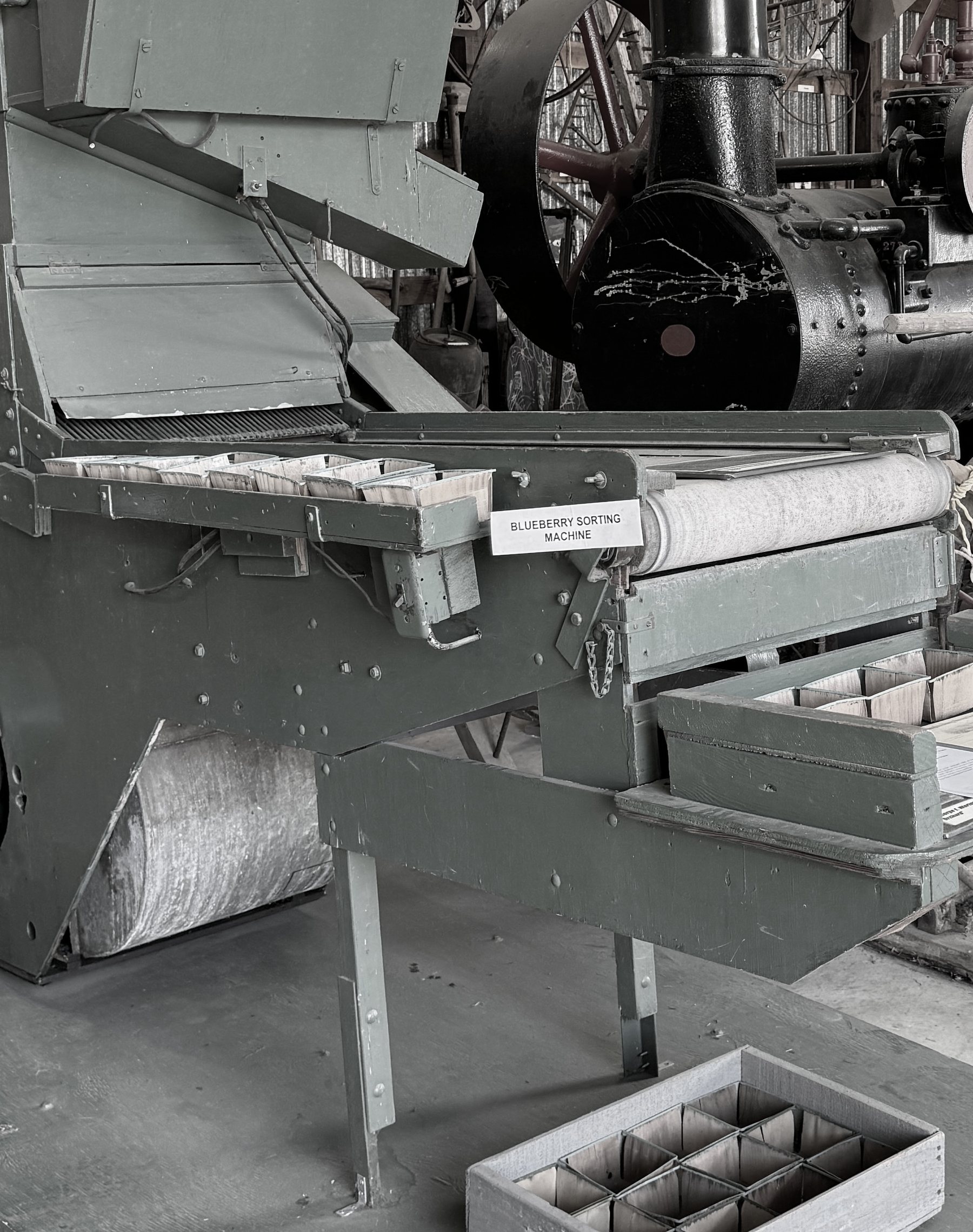
Customers drove up to the berry shed to buy fresh fruit. Because the pickers picked unripe berries along with the ripe ones, White designed and built a machine to sort them, with hand tools and a quarter-inch electric drill, the only power tool he owned. That blueberry sorter is now in the museum’s collection, and is on display in our Rural Heritage Building during the Kitsap County Fair. A note added to his son’s account says White hired 130 young people, on their summer break from school, to pick the crop.
In 1979 the city bought a seven-acre parcel known as White’s Blueberry Farm for a neighborhood park. The farm had been a commercial operation with more than 2,400 blueberry plants, and some of those bushes still grow in the park. Paul White remembered that his father’s loyal customers wanted to buy his plants when the city bought the farm.
In 2008–09 the park was developed with features that handle rainwater naturally: porous paving, rain gardens and a shelter with a planted roof. It is also home to the city’s P-Patch community garden.
“These customers would see a vision of industry, with pickers bringing in their pickings, others sorting these luscious berries and the ripe fruit accumulating in buckets. Definitely a “hands on” operation.”
Paul White, Henry White’s son, in his account of the farm and its sorting machine
Through the years
- About 1940
Henry White buys twenty acres of logged-off land in Sheridan Heights.
- Over the years
The family clears the land and settles on blueberries: five acres of them.
- After 1954
White builds his blueberry sorting machine.
- 1979
The city buys seven acres of White’s Blueberry Farm for a park.
- 2004
The sorter goes on display at the Kitsap County Fair.
- 2008–09
The park is built with rain gardens, porous paving and a planted roof.
In the timeline1979: Farms & waterfront