
Common Ground: A History of Bremerton’s Parks
Explore by park
Forest Ridge Park
Charleston’s park on the hill
3100 1st St. and Carol Arends Pkwy.
Forest Ridge Park sits on land that was part of Andrew Abrahamson’s early claim, which later became the Capitol Hill Addition, the park, and the sites of the Marion Avenue School and the Olympic Multi-Service Center. The site was dedicated to the city in 1927, the year Charleston merged with Bremerton. While Charleston was still its own city, the park’s cabin served as its community center. The Boy Scout hall in the park, Don Serry recalled, had been part of Charleston’s old city hall and was moved up the hill.
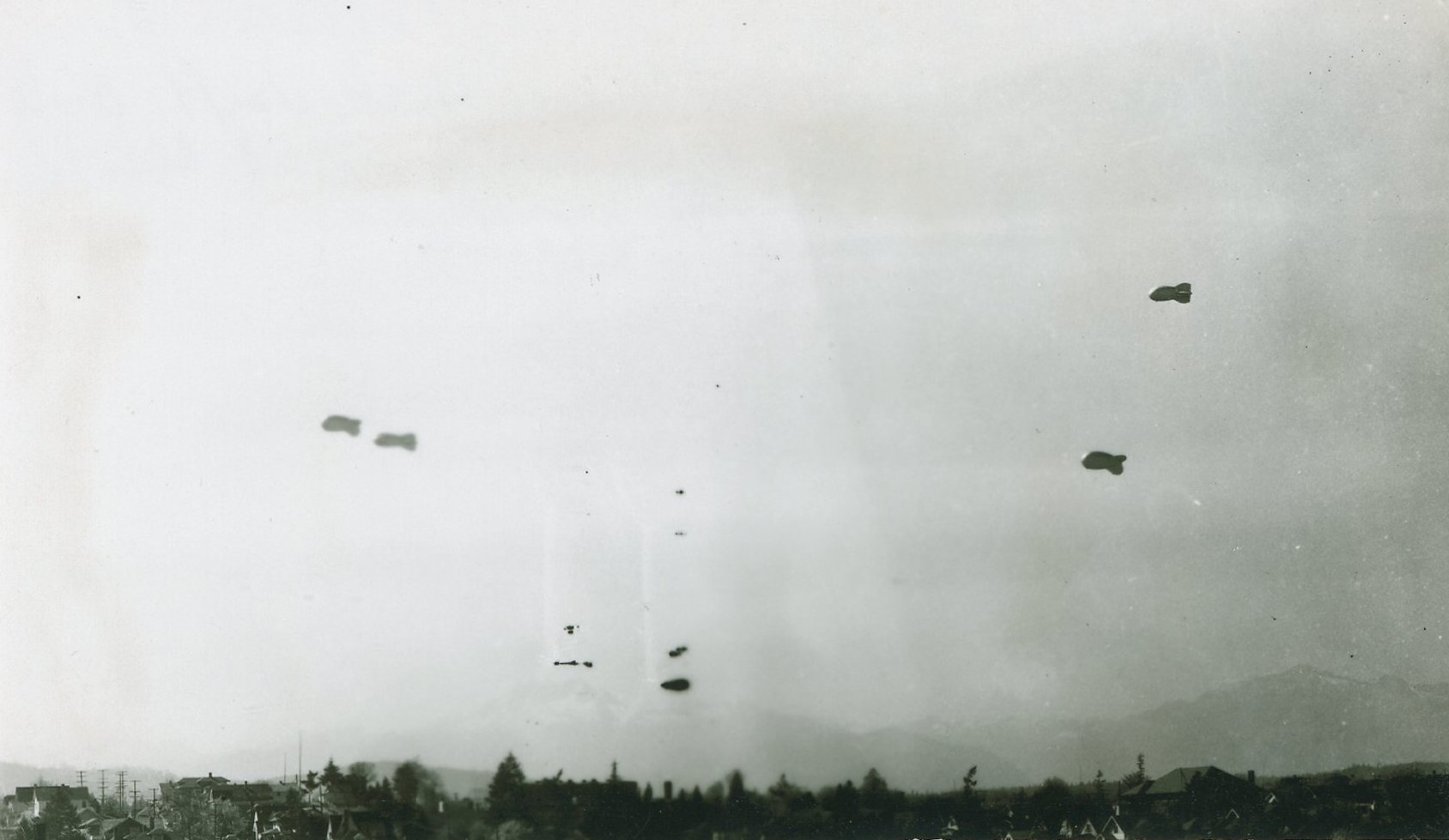
In World War II the park became an Army camp, and a lodge in the park became Army headquarters. Don Serry remembered barracks covering the hillside, and Robert Bryan, who grew up below the park near Hillcrest School, remembered the soldiers who ran a barrage balloon on the school ground.
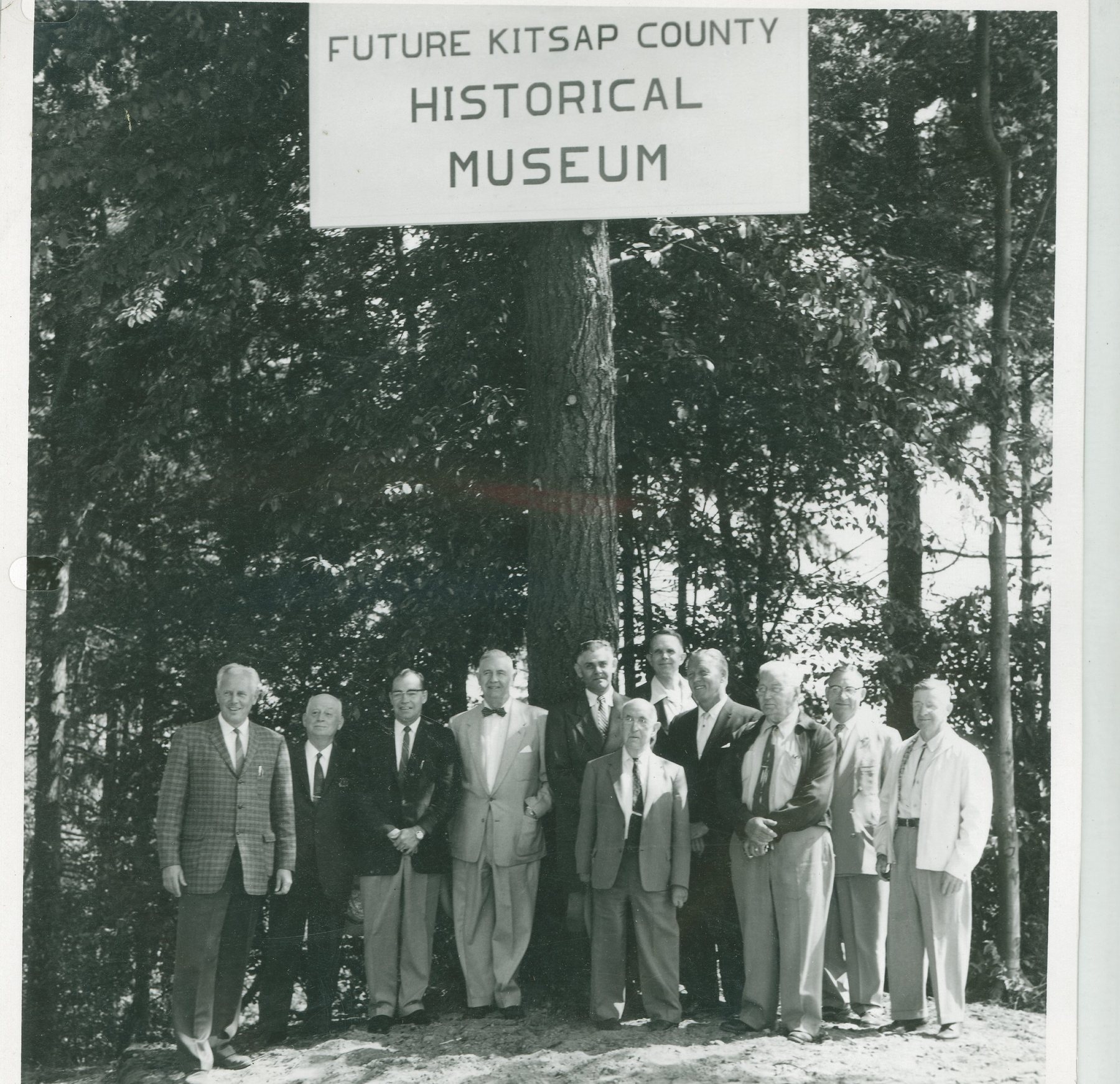
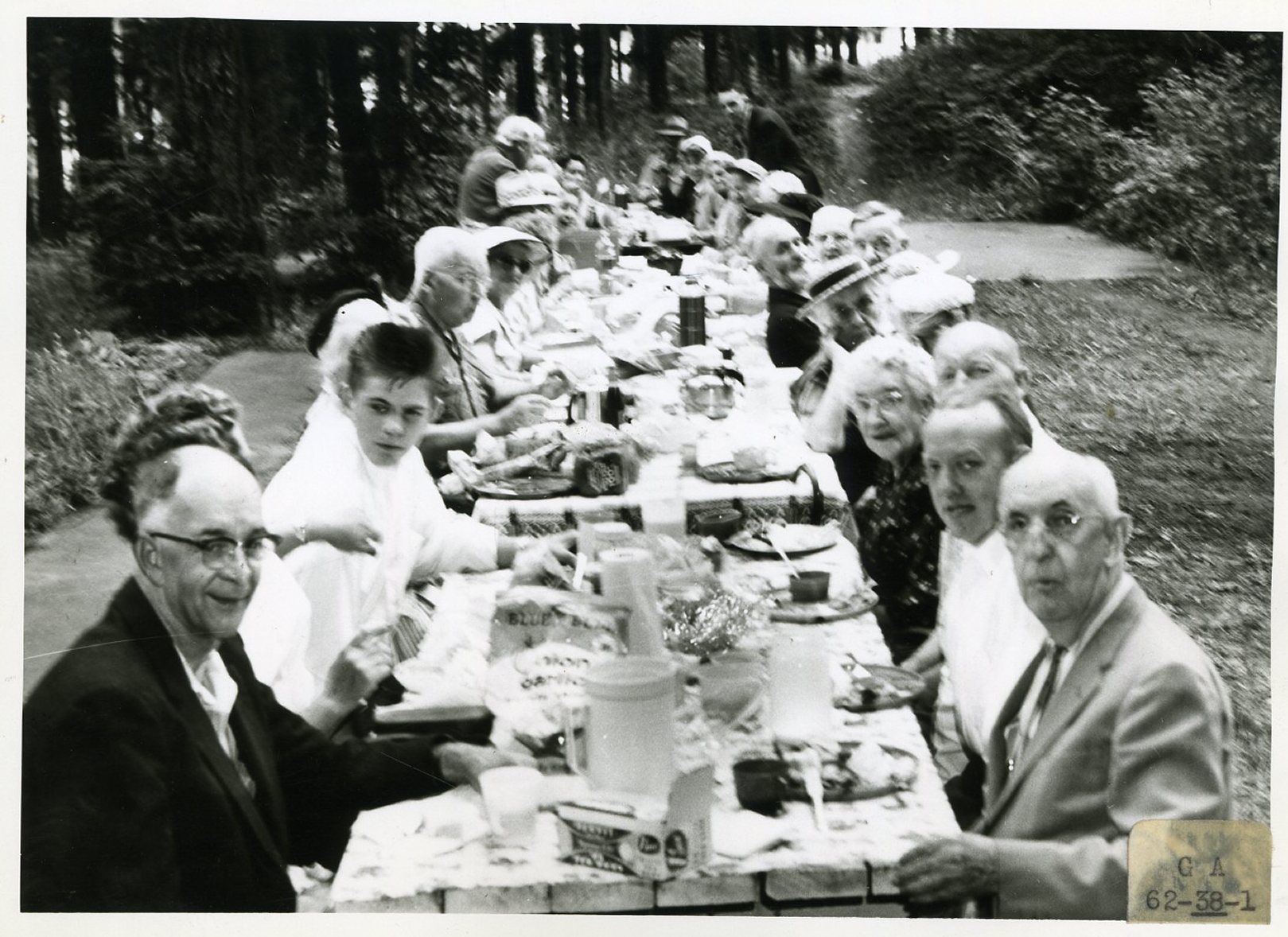
After the war, Parks Superintendent Andy Pendergast’s crews added restrooms. In 1960 the park nearly became home to this museum: on June 22, a site in the park was dedicated for a future county historical museum, under a sign that read “Future Kitsap County Historical Museum.” The museum found other homes in the end, but members of the Historical Association came back for a picnic in the park the next summer. About 1964, radio station KBRO-FM put up a 400-foot tower in the park.
“The Scout Hall was up in Forest Ridge Park, which is a block away, and I used to see all these kids walking up to the Scout meetings.”
Don Serry, who joined Troop 512 at the hall in 1935, in a 2008 oral history
“That whole hillside was covered with barracks. … You can wander around through that park up there and you’ll see these concrete pads that are there, and they put picnic tables and fireplace deals on ’em and made places where people could have picnics. But there were barracks there at one time with guys living in them.”
Don Serry, remembering Forest Ridge Park during World War II, in a 2008 oral history
Listen (0:32)“There was a barracks building there in the park, and the soldiers that operated the balloon lived there in that barracks. … But the barrage balloon was not in the park, it was on the school ground. … I can remember we took Christmas packages to them at Christmas in the barracks.”
Robert Bryan, who grew up near Hillcrest School and later became a judge, in an oral history Hear the full interview (opens in a new tab)
Through the years
- 1927
The Forest Ridge site is dedicated to the city.
- Undated
The Charleston Business Men’s Club offers $25 for “a new name for Olympic Gateway Park,” launched at a potluck at “the Boy Scout Hall in the park.” It may have been an earlier name for Forest Ridge Park.
- 1935
Don Serry joins Boy Scout Troop 512 at the Scout hall in the park.
- During the war
Don Serry’s Scout patrol clears a spot on the hill near its Scout hall for a tennis court. “By gosh, the Army found it and put a barrage balloon on it,” he remembered.
- June 22, 1960
A site in the park is dedicated for a future Kitsap County Historical Museum.
- July 16, 1961
The Kitsap County Historical Association picnics in the park.
- About 1964
Radio station KBRO-FM raises a 400-foot tower in the park.
In the timeline1927: Forest Ridge1941: Parks at war1947: Playfields
Explore moreCharleston RememberedOral Histories